xCraft’s net worth in 2026 sits at approximately $2.92 million based on public market capitalization—though the company’s internal crowdfunding valuation claims $35–53 million. Here’s why the numbers differ and what actually drives xCraft’s revenue today.
This article breaks down what xCraft is genuinely worth in 2026, what the company owns, how it makes money, and where it stands against the broader drone industry.
Company Overview
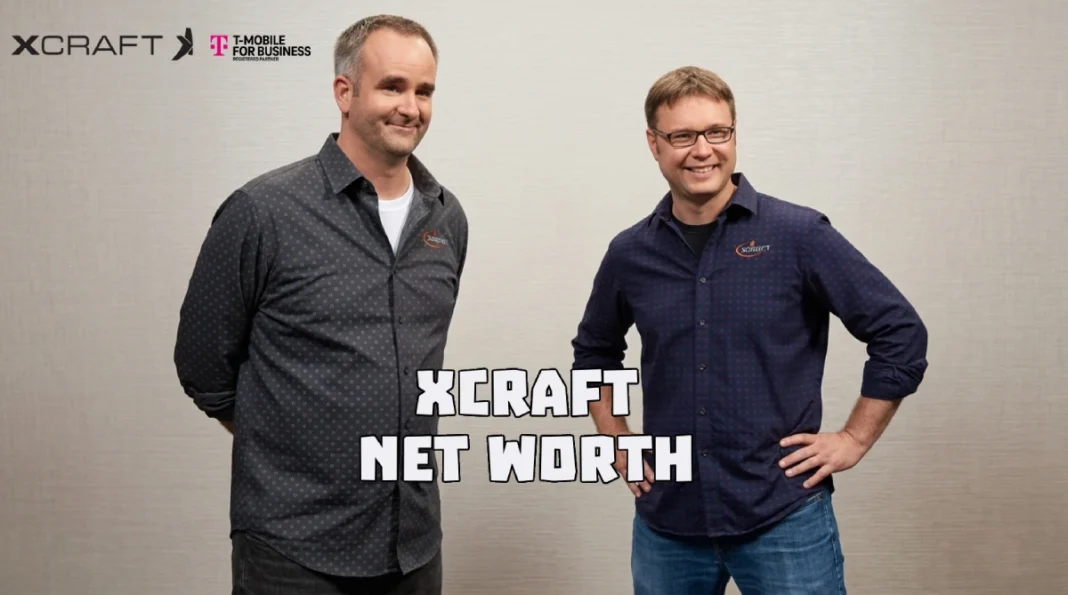
xCraft was founded in 2014 by JD Claridge and Charles Manning in Sandpoint, Idaho. Claridge, an aerospace engineer who previously worked at Quest Aircraft, invented the company’s signature product: the X PlusOne, a hybrid drone capable of vertical takeoff and landing (VTOL) that tilts mid-air to fly horizontally like a fixed-wing aircraft. This design gives it a significantly longer range and faster speeds than a conventional quadcopter.
Manning, who also serves as CEO of Kochava — a mobile analytics firm — joined as co-founder to bring business and commercialization expertise alongside Claridge’s engineering background.
The company initially targeted consumers and hobbyists with products like the Phone Drone, which used a smartphone as the drone’s onboard camera and processor. After 2022, xCraft exited the consumer market entirely. It now focuses on enterprise, public safety, defense, and industrial applications through products like the Panadrone (a tethered drone with unlimited flight time for persistent surveillance), the Maverick Cinema (high-resolution aerial camera platform), and the Maverick Mapper (an autonomous mapping drone capable of surveying up to 40 acres per flight).
Who Owns xCraft?
JD Claridge is the CEO and primary technical founder. Charles Manning co-founded the company and remains involved in strategic direction alongside his role at Kochava.
The ownership structure drew public attention after xCraft’s appearance on Shark Tank Season 7 in 2015, where all five Sharks — Mark Cuban, Kevin O’Leary, Daymond John, Lori Greiner, and Robert Herjavec — agreed to invest $1.5 million for a combined 25% equity stake. It was a rare moment of unanimous interest on the show.
However, that deal never officially closed. The on-air agreement did not convert into a signed investment. xCraft went on to raise capital independently — most notably through equity crowdfunding on StartEngine, where it raised over $1 million in 2018 and a further $130,000 in a follow-on campaign in 2022.
xCraft is now publicly traded under the ticker XCFT, giving retail investors access to shares that private-equity rounds previously did not.
The Shark Tank Pitch — and What Happened After
JD Claridge and Charles Manning entered the Shark Tank asking for $500,000 in exchange for 20% equity — implying a $2.5 million valuation. They demonstrated the X PlusOne’s ability to reach speeds of 60 mph and altitudes of 10,000 feet, and introduced the Phone Drone concept, still in development at the time.
The pitch turned into a competitive bidding session. Kevin O’Leary opened at $750,000 for 25%, Daymond John escalated to $1 million, and Lori Greiner matched. Sensing an opportunity, the founders asked whether all five Sharks would participate together. After negotiations — including a brief hallway recess — all five agreed to a combined $1.5 million for 25% equity, valuing xCraft at $6 million.
The segment generated a surge in website traffic and drove the Phone Drone’s Kickstarter campaign past $170,000 in the days that followed. But despite the on-air handshake, the deal did not close. The founders subsequently pursued alternative funding, raising over $1 million through public equity crowdfunding channels.
Key Milestones
- 2014 — Founded in Sandpoint, Idaho. Raised $140,000 on Kickstarter to build the X PlusOne.
- 2015 — Appeared on Shark Tank Season 7. All five Sharks agreed to a $1.5M deal on-air, but the investment did not close.
- 2016 — Fulfilled Kickstarter orders for the Phone Drone; began expanding into B2B applications.
- 2018 — Raised $1,068,687 via equity crowdfunding on StartEngine; shifted focus to public safety and defense markets.
- 2021 — Entered negotiations with the U.S. Department of Defense; announced a partnership with T-Mobile to develop 5G-connected drone operations.
- 2022 — Discontinued consumer sales. Raised $130,000+ on StartEngine. Announced collaboration with Rajant for mesh-network drone communications in challenging environments.
- 2023 — Reported annual sales of approximately $6 million; operational facility based in Hayden, Idaho.
- 2026 — Continues to trade publicly as XCFT, with a market capitalization of approximately $2.9 million.
How xCraft Makes Money
xCraft operates across several revenue channels, which reduces its dependence on any single market segment.
1. Enterprise and Government Contracts
Public safety agencies and defense contractors drive xCraft’s largest revenue stream: multi-year contracts for tethered surveillance drones (like the Panadrone) and custom VTOL platforms. These deals typically carry 40–60% gross margins—significantly higher than one-off consumer hardware sales. xCraft supports client compliance with FAA Part 107 remote pilot requirements, offering operator training modules that accelerate deployment for municipal and industrial teams.
2. Hardware Sales — Specialized Drone Platforms
The Panadrone, Maverick Cinema, and Maverick Mapper are sold to business customers. These are not off-the-shelf products — they are purpose-built platforms that xCraft configures for specific operational requirements, which supports premium pricing.
3. Technology Licensing
xCraft holds patents on its hybrid VTOL design. Licensing this intellectual property to other manufacturers generates revenue without associated production costs, which improves overall margin contribution.
4. Software and Support Services
Beyond hardware, xCraft offers drone management software, operator training, and ongoing maintenance agreements. These create recurring income streams that complement one-time hardware purchases.
5. Custom Development Contracts
For clients with specialized requirements — particularly in the defense and energy sectors — xCraft takes on paid development work to engineer solutions not available in its standard product catalog. The company has utilized SBIR Phase I grants to de-risk prototype development for specialized defense applications, allowing the company to validate use cases with government partners before scaling production.
Market Position and Competitor Comparison
Placing xCraft’s scale in context requires comparing it to others operating in the commercial drone space.
| Company | Key Facts |
| DJI | Estimated valuation of $15 billion. Approximately 70% share of the consumer drone market. Annual revenue exceeds $2 billion. |
| Skydio | Reached a $1 billion valuation in 2021 following a $170 million funding round. Focuses on AI-powered autonomous flight. |
| Parrot | Publicly traded French company. Market cap of approximately $200 million. Annual revenue is around $80 million across consumer and commercial segments. |
| xCraft (XCFT) | Public market cap of approximately $2.9 million (Oct 2025). Annual sales ~$6 million (2023). Niche focuses on VTOL hybrid drones for defense and industrial use. |
xCraft occupies a narrow but defensible position. It does not compete with DJI on volume or price, nor with Skydio on autonomous consumer hardware. Its competitive strength lies in hybrid VTOL technology, tethered drone systems for persistent operations, and its willingness to take on custom defense development work that larger manufacturers are too standardized to accommodate. Unlike DJI, xCraft’s U.S.-based manufacturing and NDAA-compliant supply chain position it favorably for federal contracts where foreign drone restrictions apply.
xCraft Net Worth and Valuation in 2026
So what is xCraft actually worth? The answer depends on which number you look at—and that’s exactly why confusion persists.
For investors and researchers, the most reliable metric is xCraft’s public market capitalization: ~$2.92 million (October 2025, XCFT @ ~$1.95/share). The higher $35–53 million figure comes from the company’s own Regulation A+ crowdfunding campaigns on StartEngine—a forward-looking estimate, not a market-verified valuation.
That gap isn’t unusual for early-stage tech firms: xCraft has strong IP and niche contracts, but hasn’t yet turned those advantages into the consistent revenue growth that public markets reward.
For reference, the original Shark Tank appearance in 2015 valued xCraft at $6 million. At that point, the company had pre-orders and a working prototype but limited revenue. The subsequent decade of product development, contract-building, and market pivot has produced a company with a more defensible business model, even if the public market valuation remains modest.
Legal Challenges and Business Controversies
xCraft’s path has not been without friction. In 2019, the company was involved in a patent dispute with a competitor over aspects of its hybrid drone design. The case settled out of court, though legal costs temporarily affected the company’s finances during that period.
Earlier, some Kickstarter backers expressed frustration over fulfillment delays on the original Phone Drone. xCraft eventually delivered on all orders, but the episode created reputational headwinds that the company had to manage as it sought enterprise credibility.
On balance, xCraft has avoided the kind of serious safety incidents or product recalls that have damaged other hardware startups. Its consumer exit in 2022 also reduced exposure to the regulatory complexity and liability risks that come with selling drones to the general public.
Future Outlook
The commercial drone market continues to expand, with particularly strong projected growth in defense, infrastructure inspection, and public safety applications — precisely the sectors xCraft has repositioned itself to serve. Industry projections place annual growth for commercial drone services at 15 to 20 percent through 2030.
xCraft’s partnerships with T-Mobile for 5G-connected drone operations and with Rajant for resilient mesh-network communications in denied environments signal that the company is building toward use cases that require robust connectivity, not just flight capability. xCraft is pursuing inclusion in the Department of Defense’s Blue UAS Framework—a cyber-secure, vetted drone list that would streamline procurement for military units seeking alternatives to commercial platforms. These are technically demanding applications where xCraft’s custom-engineering model is more competitive than commoditized consumer hardware.
The primary risks are financial. The company’s low public market capitalization and the gap between its self-assigned crowdfunding valuation and its traded price suggest the market remains cautious about its near-term revenue trajectory. Sustained Department of Defense contract wins or a strategic partnership with a larger aerospace player would materially change that picture.
Frequently Asked Questions
Did xCraft actually get a deal on Shark Tank?
All five Sharks agreed to invest $1.5 million for 25% equity during the on-air taping, which was unprecedented. However, the deal never officially closed after the show. xCraft went on to raise capital through equity crowdfunding instead.
Is xCraft publicly traded?
Yes. xCraft Enterprises trades under the ticker symbol XCFT. Shares were priced at approximately $1.95 with a market capitalization of around $2.92 million, according to PitchBook and Yahoo Finance data.
What is xCraft’s current net worth?
The company’s public market capitalization is approximately $2.92 million based on the traded share price. The company has set an internal crowdfunding valuation of between $35 million and $53 million on StartEngine, though this figure is speculative and not independently verified by the market.
What does xCraft do now?
xCraft no longer sells to consumers. Since 2022, the company has focused exclusively on enterprise and government clients, offering specialized drone platforms — the Panadrone, Maverick Cinema, and Maverick Mapper — alongside custom development contracts for defense, public safety, agriculture, and infrastructure industries.
Who founded xCraft?
xCraft was co-founded by JD Claridge, an aerospace engineer who invented the X PlusOne drone, and Charles Manning, who also serves as CEO of mobile analytics company Kochava. The company was established in 2014 in Sandpoint, Idaho.
What happened to the Phone Drone?
The Phone Drone was xCraft’s consumer-facing product that turned a smartphone into a flying camera. It raised over $140,000 on Kickstarter and generated significant interest after the Shark Tank episode. Production was discontinued as xCraft shifted its focus toward enterprise and defense applications, with the product officially retired by 2022.
Conclusion
xCraft’s financial story is more complicated than most “Shark Tank net worth” searches expect to find. The Shark Tank deal that made the company famous never actually closed. The company is now publicly traded — not privately held. Its market capitalization sits under $3 million, while its crowdfunding valuation reaches into the tens of millions. And the consumer drone company that demoed a phone-powered quadcopter on national television now builds tethered surveillance drones for public safety agencies and defense clients.
What remains constant is the technical differentiation. The hybrid VTOL design that made the X PlusOne unusual in 2014 still underpins xCraft’s product lineup and positions it in applications where standard quadcopters fall short. The real question now: Can xCraft turn its hybrid VTOL advantage into the consistent contracts that would justify a higher valuation? Watch for DoD announcements and XCFT trading volume in 2026. For investors: monitor DoD contract announcements and XCFT trading volume. For enterprise buyers: request a Panadrone demo to evaluate persistent surveillance capabilities.