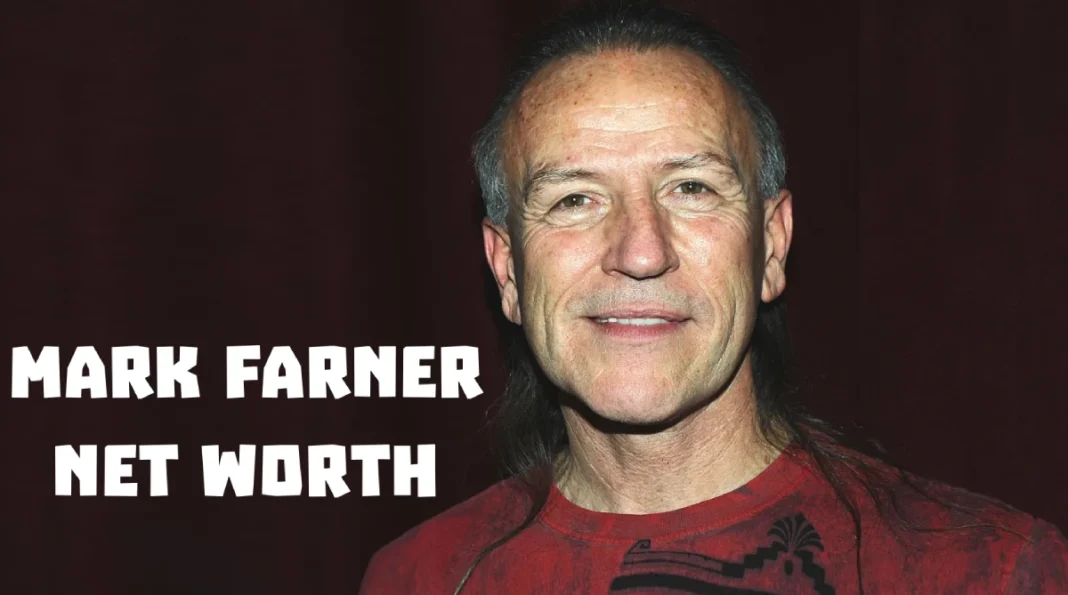
Mark Farner is one of rock music’s most financially unusual stories. As the lead guitarist, lead vocalist, and principal songwriter for Grand Funk Railroad — one of America’s most commercially successful hard rock bands of the 1970s — Farner built the foundation of his wealth on stage. Then, in his late 40s, he walked away from that world and earned a CPA license, building an accounting practice alongside a career most musicians never walk away from.
Mark Farner is one of rock music’s most financially unusual stories. As the lead guitarist, lead vocalist, and principal songwriter for Grand Funk Railroad — one of America’s most commercially successful hard rock bands of the 1970s — Farner built the foundation of his wealth on stage. Then, in his late 40s, he walked away from that world and earned a CPA license, building an accounting practice alongside a career most musicians never walk away from.
Born on September 29, 1948, in Flint, Michigan, Farner spent five decades navigating the music business, legal disputes, personal loss, and financial reinvention. His net worth in 2025, depending on the source, falls somewhere between $6 million and $20 million — a range that itself tells a story worth examining.
Mark Farner’s Net Worth
Public estimates for Farner’s net worth vary significantly across sources, which is common for artists whose income combines royalties, live performance, and private business interests — none of which are publicly disclosed.
| Source | Estimate | Basis |
|---|---|---|
| CelebrityNetWorth.com | $6 Million | Historical album sales, touring |
| Music industry trackers | $16 Million | Royalties + touring + business income |
| The Richest & similar outlets | $16–$20 Million | Dual career (music + accounting practice) |
| Unverified social media claims | $25 Million+ | No credible basis |
The wide gap between $6 million and $20 million is not a sign of unreliable reporting — it reflects the nature of the income streams involved. Royalty rates for songwriting, performance rights, and publishing are calculated differently, and Farner’s share as Grand Funk Railroad’s primary songwriter gives him a larger cut than his bandmates, though the exact figures are private. His accounting practice (discussed below) adds a layer of income that most net worth calculators for musicians simply don’t account for.
The most commonly cited credible range sits at $16–$20 million, accounting for music royalties, ongoing touring income, and his secondary career. The $6 million figure from CelebrityNetWorth.com likely reflects historical music earnings only.
Early Life and Musical Roots
Farner grew up in Flint, Michigan, in a household where both music and grit were inherited qualities. His mother, Betty, was of Cherokee descent and an accomplished singer. His father, Delton, was a WWII veteran who served in the Seventh Armored Division and also had a guitar talent — a combination that put both military discipline and musical instinct in the home.
He attended Flint Kearsley High School and started performing professionally at 17. Before Grand Funk Railroad existed, Farner cycled through three bands that gave him the stage experience that would later define a decade of arena rock:
- Terry Knight and The Pack (1965–1966)
- The Bossmen (1966–1967)
- The Pack, also known as The Fabulous Pack (1967–1968)
These years weren’t just a warm-up. Working with Terry Knight specifically would later become legally significant — Knight went from being Farner’s early bandleader to his manager, and eventually his adversary in one of the most damaging lawsuits in Grand Funk Railroad’s history.
Grand Funk Railroad
In 1969, Farner co-founded Grand Funk Railroad in Flint with drummer Don Brewer and bassist Mel Schacher. Keyboard player Craig Frost joined the lineup in 1972, completing the band’s most commercially successful configuration.
Critics largely dismissed Grand Funk Railroad during their peak. Audiences did not. The band built their following through relentless touring and high-energy performances, and the numbers speak for themselves:
- Sold over 25 million records worldwide during their peak years
- Accumulated 13 gold and 10 platinum records between 1969 and 1976
- Sold out New York’s Shea Stadium in 72 hours in 1971 — faster than The Beatles had managed the same feat
- Hit No. 1 on the Billboard Hot 100 with “We’re an American Band” in 1973
- Placed four singles in the top 5 of the Billboard Hot 100
Farner wrote the majority of the band’s material. Key compositions include “I’m Your Captain (Closer to Home)” (1970), “Some Kind of Wonderful” (1974), and “Bad Time” (1975). As the primary songwriter, his royalty share from these tracks has historically exceeded what the other members earned — a financial structure that continues to pay dividends through streaming, radio play, and commercial licensing.
The Terry Knight Lawsuit: A Costly Legal Lesson
In 1972, Grand Funk Railroad fired their manager, Terry Knight, three months before his contract expired. The band cited financial disagreements and differences in management style. Knight responded by suing for breach of contract and had the band’s equipment repossessed during the standoff.
The legal battle lasted two years. When it ended, Knight had won publisher’s royalties and copyrights to every recording the band had produced between March 1969 and March 1972. That included some of their most commercially important early work.
What the band retained was the Grand Funk Railroad name. It was a painful education in contract law and intellectual property — and one that Farner has cited as shaping his approach to legal structures throughout his career. The lawsuit permanently reduced the royalty income Farner would otherwise receive from that 1969–1972 catalog.
Solo Career and the Road After Grand Funk
Grand Funk Railroad’s original lineup disbanded in 1976 — with the final push coming partly from the disappointment of their Frank Zappa-produced album “Good Singin’, Good Playin'” (MCA Records, 1976), which failed to meet expectations despite the high-profile collaboration.
After the breakup, Farner signed with Atlantic Records as a solo artist. His self-titled debut arrived in 1977, followed by “No Frills” in 1978. Neither matched the commercial scale of his Grand Funk years, but they kept him active and demonstrated his songwriting ability outside of the band context.
In the 1980s, Farner and Don Brewer periodically reunited under the Grand Funk name. The 1981 album “Grand Funk Lives” and the 1983 follow-up “What’s Funk?” — both featuring Dennis Bellinger on bass — showed mixed results commercially. Farner also launched his own label, LisMark Records (co-founded with former Freedom Reader editor Steve Lisuk), and began reissuing his solo catalog independently.
In 1994–1995, Farner joined Ringo Starr’s All-Starr Band on guitar, harmonica, and vocals — a touring lineup that also included Randy Bachman, John Entwistle, Felix Cavaliere, Billy Preston, and Zak Starkey. The collaboration kept Farner’s name visible in mainstream rock circles and provided steady touring income during a period when his solo releases weren’t generating significant commercial attention.
Bosnia Reunion and the Final Split
In 1996, Farner reunited with Schacher and Brewer for three sold-out benefit concerts in Bosnia, releasing a double CD called “Bosnia.” It was a meaningful project artistically, but the reunion didn’t last. In 1998, Farner left the band again following ongoing disagreements with Brewer.
Two years later, Brewer and Schacher reached out about another reunion. Farner was willing — but not on the same financial terms. He wanted 50% of the band’s income, arguing he carried the most weight on stage. His former bandmates turned him down and rebuilt Grand Funk Railroad with vocalist Max Carl, guitarist Bruce Kulick, and keyboard player Tim Cushion.
Farner responded by touring as Mark Farner’s American Band. His former bandmates attempted to sue to block the name — and failed. That legal back-and-forth over naming rights continued in various forms for years, with a 2023 trademark dispute over the Grand Funk Railroad name and logo that affected his touring promotion, though settlement details remain sealed.
Christian Music
In the late 1980s, Farner became a born-again Christian, and the conversion reshaped a portion of his creative output. He released a reworked version of Grand Funk’s “Some Kind of Wonderful” under a Christian lens, retitled for his 1991 solo album of the same name on Frontline Records.
His most commercially successful Christian music moment was the single “Isn’t it Amazing?” — a John Beland composition that reached No. 2 on the Contemporary Christian Music charts and earned Farner a Dove Award nomination from the Gospel Music Association. The CCM phase added another income stream and audience base that most coverage of Farner ignores entirely.
This religious chapter also influenced his financial philosophy. Farner has spoken about prioritizing peace of mind over maximum income, a stance that shaped which tours he accepted, which licensing deals he pursued, and how he structured his later-career business decisions.
From Rock Stage to Accounting Firm
The most unusual aspect of Farner’s financial story is what he built away from the stage. In the early 1990s, as he approached his late 40s, Farner reportedly began studying accounting — a decision that surprised people who knew him primarily as a rock performer.
After reportedly obtaining a CPA license, he opened his own accounting practice, which is said to specialize in both individual tax preparation and business accounting — with a particular focus on entertainment industry clients. His understanding of royalty structures, publishing deals, and music business contracts gave him practical insight that attracted clients from his former world.
What is clear is the strategic logic: the accounting practice — if operating as reported — provides steady, predictable income that doesn’t follow the boom-and-bust pattern of music earnings. For a musician who watched colleagues struggle financially after their commercial peak passed, having a second licensed profession is a structurally sound response to an industry that rarely protects its artists long-term.
By building a team around him rather than running the practice as a solo operator, Farner reportedly created a business that doesn’t depend entirely on his personal time or name recognition — a meaningful distinction for a venture that could outlast his active involvement.
Personal Life: Health, Loss, and What Shaped His Financial Thinking
Farner has faced two significant health events that reshaped his financial priorities. In the early 2000s, he began struggling with a heart-related ailment. On October 22, 2012, he had a pacemaker implanted following a heart attack — a medical event that, as he has noted publicly, made the financial security of his dual career feel less like a business strategy and more like a necessity.
The deeper personal loss came on July 4, 2018, when Farner’s son Jesse died. Jesse had spent nearly a decade paralyzed and dealing with serious health complications following a fall that injured his spinal cord. His death has not been discussed extensively in Farner’s public statements, but it is part of the personal context that informed his evolving relationship with money, legacy, and how he chooses to spend his time.
Farner has been married to his wife, Lesia, for over 30 years. He has spoken about structuring both his careers around maintaining family stability — not simply maximizing income. That approach, consistent across decades, is arguably the most underrated factor in his financial durability compared to peers from the same era who faced financial collapse.
Awards and Recognition
Farner’s recognitions span music industry honors and his Native American heritage:
- Michigan Rock and Roll Legends Hall of Fame — inducted three separate times: as a member of Terry Knight & The Pack, as a member of Grand Funk Railroad, and as a solo artist (2015)
- Lakota Sioux Elders Honor — presented during a ceremony in Hankinson, North Dakota in 1999, where members of the Lakota Nation honored his Native American ancestry with a handmade ceremonial quilt
- Cherokee Medal of Honor — awarded by the Cherokee Honor Society, recognizing his Cherokee heritage on his mother’s side
- Dove Award nomination — from the Gospel Music Association for the Contemporary Christian single “Isn’t it Amazing?”
Mark Farner in Popular Culture
Farner and Grand Funk Railroad have been referenced in mainstream television in ways that signal their place in American cultural memory:
- The Simpsons, Season 7, Episode 24 (“Homerpalooza”) — Homer defends Grand Funk Railroad to his children, describing Farner as the source of the band’s “wild, shirtless lyrics.” The reference is both comedic and indicative of how the band is remembered in popular consciousness.
- Curb Your Enthusiasm, Season 8, Episode 9 (2011) — Farner is mentioned in the HBO comedy series, again placing him in the category of artists recognizable enough for cultural shorthand.
An authorized biography, “From Grand Funk to Grace,” written by Kristofer Engelhardt and published in 2001, covers Farner’s full life story — from his musical career through his personal evolution. It remains the most detailed first-person account of the journey behind the numbers.
Grand Funk Railroad Album Earnings (The Foundation)
The bulk of Farner’s recorded wealth was accumulated during Grand Funk Railroad’s peak years. The table below shows estimated earnings from key albums, based on RIAA certifications. These are industry estimates, not confirmed figures from Farner or his representatives.
| Album | Year | Certification | Estimated Earnings |
|---|---|---|---|
| On Time | 1969 | Gold (RIAA) | $500,000 |
| Grand Funk | 1969 | Platinum (RIAA) | $1,000,000 |
| Closer to Home | 1970 | 2x Platinum (RIAA) | $2,000,000 |
| Live Album | 1970 | 2x Platinum (RIAA) | $2,000,000 |
| Survival | 1971 | Platinum (RIAA) | $1,000,000 |
| E Pluribus Funk | 1971 | Platinum (RIAA) | $1,000,000 |
| Phoenix | 1972 | Gold (RIAA) | $500,000 |
| We’re an American Band | 1973 | Platinum (RIAA) | $1,000,000 |
| Shinin’ On | 1973 | Gold (RIAA) | $500,000 |
| All the Girls in the World Beware!!! | 1974 | Gold (RIAA) | $500,000 |
| Capitol Collectors Series | 1990 | Gold (RIAA) | $500,000 |
These album-level earnings are only part of the picture. Farner’s songwriter royalties — which he earns at a higher rate than other band members due to his role as primary composer — continue to generate income through streaming, radio licensing, and commercial placements decades after the original releases.
Mark Farner Discography
Solo Studio Albums
- Mark Farner (Atlantic Records, 1977)
- No Frills (Atlantic Records, 1978)
- Just Another Injustice (Frontline Records, 1988)
- Wake Up… (Frontline Records, 1989)
- Some Kind of Wonderful (Frontline Records, 1991)
- For the People (2006)
- Closer to My Home (2024)
Grand Funk Railroad Studio Albums
- On Time (1969) — Gold
- Grand Funk (1969) — Platinum
- Closer to Home (1970) — 2x Platinum
- Live Album (1970) — 2x Platinum
- Survival (1971) — Platinum
- E Pluribus Funk (1971) — Platinum
- Phoenix (1972) — Gold
- We’re an American Band (1973) — Platinum
- Shinin’ On (1974) — Gold
- All the Girls in the World Beware!!! (1974) — Gold
- Caught in the Act (1975)
- Born to Die (1976)
- Good Singin’, Good Playin’ (MCA Records, 1976, produced by Frank Zappa)
- Grand Funk Lives (Full Moon Records, 1981)
- What’s Funk? (1983)
- Bosnia (1997)
7 Myths About Mark Farner’s Net Worth — Examined
1. Myth: His net worth is $25 million.
Reality: No credible public source supports this figure. The most substantiated range, from music industry trackers and entertainment outlets, puts him at $16–$20 million. The $25 million figure appears in unverified social media posts and low-credibility aggregator sites.
2. Myth: He still earns royalties from all of Grand Funk’s early work.
Reality: The 1972 legal defeat against Terry Knight stripped the band of publisher’s royalties and copyrights to recordings made between March 1969 and March 1972. That includes some of the most commercially significant material from their early catalog — a real and lasting financial consequence that most net worth estimates don’t address.
3. Myth: His CPA business is publicly documented and worth millions.
Reality: The accounting practice is reported in biographical sources and interviews, but no public filings, client lists, or verified revenue figures exist. The $1–5 million annual revenue estimate is plausible for a multi-staff accounting firm with entertainment industry clients, but it is an inference, not a fact.
4. Myth: The 2023 trademark dispute had no financial impact.
Reality: The trademark fight over the Grand Funk Railroad name and logo directly affected how Farner could promote his touring activity. Settlement details are sealed, but name and logo disputes of this nature routinely result in licensing restrictions, legal fees, and shifted revenue from promotional channels.
5. Myth: All sources agree on his net worth.
Reality: CelebrityNetWorth.com cites $6 million. Music industry trackers and entertainment outlets cite $16–$20 million. The gap is not a reporting error — it reflects fundamentally different assumptions about which income streams to include. Neither estimate is verifiable without access to Farner’s private financial records.
6. Myth: Rock musicians from Farner’s era typically remained wealthy.
Reality: The opposite is closer to the truth. Many artists who peaked in the 1970s faced financial collapse as the music industry structure changed, royalty disputes drained earnings, and touring costs exceeded income. Farner’s reported dual career — music plus a licensed profession — is exceptional, not typical.
7. Myth: Streaming has had no impact on Farner’s income.
Reality: Streaming has revived interest in classic rock catalogs across the board, and Grand Funk Railroad’s back catalog is actively streamed. For Farner specifically, this matters most for the post-1972 recordings where he retained songwriting royalties. The per-stream rate is low, but cumulative plays across platforms like Spotify and Apple Music generate meaningful passive income for artists with established catalogs.
What Mark Farner’s Financial Story Actually Teaches
Farner’s financial story isn’t a rags-to-riches tale or a cautionary one. It’s a case study in deliberate diversification, built across decades of unglamorous decisions — learning accounting in your 40s, fighting for your share of touring income, keeping a licensing lawyer involved, protecting your songwriting credits.
The $16–$20 million net worth figure he carries into 2025 reflects not just the commercial power of Grand Funk Railroad in the 1970s, but the compounding effect of royalty income from songs that have remained in circulation for 50 years, a secondary professional career that generates stable income independent of the music industry, strategic decisions about catalog ownership, and a personal philosophy that treated financial security as a priority rather than an afterthought.
For readers interested in how artists build lasting financial stability — or don’t — Farner is one of the more instructive examples the classic rock era produced. His story is available in fuller detail in the authorized biography “From Grand Funk to Grace” (2001) by Kristofer Engelhardt.