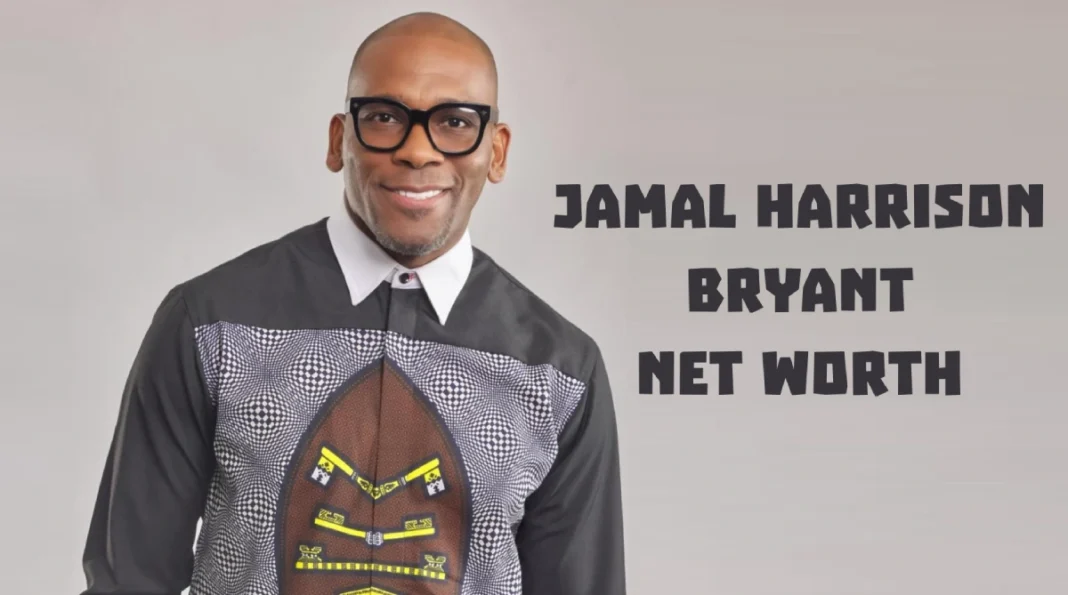
Jamal Harrison Bryant is one of the most prominent figures in American religious leadership — a megachurch pastor, author, social activist, and national boycott organizer whose financial profile attracts as much curiosity as his sermons. Yet pinning down a verified number for his net worth is genuinely difficult, and the wide range of estimates floating online — from $500,000 to $5 million — reflects a real information gap, not careless reporting.
This article pulls together every credible data point available: court-documented income figures, confirmed real estate transactions, documented speaking fee ranges, and his multiple active income streams. The goal is to give you the most accurate, evidence-based picture of Jamal Bryant’s finances currently possible.
Quick Facts
| Full Name | Jamal Harrison Bryant |
| Date of Birth | May 21, 1971 |
| Place of Birth | Boston, Massachusetts |
| Education | Morehouse College (B.A.); Duke University (M.Div.); Graduate Theological Foundation (D.Min.) |
| Profession | Senior Pastor, Author, Motivational Speaker, Social Activist |
| Current Church | New Birth Missionary Baptist Church, Lithonia, Georgia |
| Net Worth Estimate (2026) | Net Worth Estimate (2026): $500,000 – $3 million (Celebrity Net Worth cites $500K; other analyses suggest up to $3M based on real estate + income streams) |
| Documented Monthly Income | $46,000 (per 2024 child support filing; represents gross income before taxes, liabilities, and ministry expenses) |
| First Marriage | Gizelle Bryant (2002–2009) |
| Current Marriage | Dr. Karri Turner (married 2024) |
| Children | Grace, Angel, Adore |
| Father | Bishop John Richard Bryant (AME Church) |
| Mother | Pastor Cecilia Williams-Bryant |
What Is Jamal Bryant’s Net Worth in 2025?
The most reliable estimate puts Jamal Bryant’s net worth somewhere between $500,000 and $3 million. The low end ($500,000) comes from Celebrity Net Worth, a widely cited source for public figures. The upper range ($3 million) factors in real estate holdings, accumulated book royalties, speaking fees, and pastoral compensation over a career spanning more than two decades.
The most concrete financial data point publicly available comes from a 2024 child support court filing, where Bryant’s income was documented at $46,000 per month — approximately $552,000 per year before taxes. That figure alone makes the lower net worth estimates appear conservative, depending on how long that income level has been sustained and what his expenses and liabilities look like.
Neither estimate should be treated as precise. Religious leaders are not required to disclose compensation the way public company executives are, so any figure short of a verified tax return carries uncertainty.
Where Does Jamal Bryant’s Money Come From?
1. Pastoral Salary — New Birth Missionary Baptist Church
Bryant’s primary income source is his position as Senior Pastor of New Birth Missionary Baptist Church in Lithonia, Georgia — one of the largest megachurches in the country. He assumed the role in December 2018, following the death of Bishop Eddie Long, the church’s previous high-profile leader.
Pastoral compensation at churches of this size typically extends well beyond a base salary. Housing allowances, transportation stipends, ministry expense accounts, and congregation gifts are all standard components of a senior pastor’s total package at large institutions.
2. Speaking Engagements
Bryant is one of the most in-demand speakers on the Black church circuit. Public records indicate his speaking fees fall in the range of $7,500 to $14,999 per event, though high-profile keynotes at major conferences likely command rates above that ceiling. With dozens of engagements annually across faith conferences, civic events, and activist gatherings, this is a significant revenue stream.
3. Book Royalties
Bryant has authored titles including World War Me and 5 Steps to Better Relationships; royalty rates and sales figures are not publicly disclosed, but ongoing media presence drives residual interest. Book royalties provide recurring passive income, driven by ongoing media presence and his church platform.
4. Media and Broadcasting
His television program Got Power? expanded his reach to national audiences beyond his physical congregation. Sermon broadcasts — both television and streaming — generate advertising and licensing revenue, and his social media presence creates additional content monetization opportunities unavailable to earlier generations of pastors.
5. Real Estate
Property records in the Atlanta area confirm a real estate footprint consistent with high-income professionals:
- Purchased a home for $952,000 in late 2020.
- Sold a separate property for $882,000 in the Atlanta metropolitan area.
Net Worth Growth Over Time
| Phase | Financial Profile |
| Early Career (Pre-2000) | NAACP Youth Division Director; small pastoral stipends. Modest income, strong network building. |
| Breakthrough (2000–2018) | Empowerment Temple AME grows from 43 to 10,000+ members. Speaking fees, book deals, and media appearances scale significantly. |
| Peak / Current (2018–Present) | Senior Pastor at New Birth. Court-documented $46,000/month income. Target DEI boycott (2025–2026) generated national media coverage, though outcomes remain debated among activists |
Early Life and Education
Jamal Harrison Bryant was born on May 21, 1971, in Boston, Massachusetts. His father, Bishop John Richard Bryant, is a senior bishop in the African Methodist Episcopal (AME) Church, and his mother, Pastor Cecilia Williams-Bryant, is also an ordained minister. Religious leadership was not a career Bryant drifted toward — it was the environment he grew up in.
He completed his undergraduate degree at Morehouse College in Atlanta — the historically Black liberal arts institution that has shaped some of the most influential figures in American public life. He then earned his Master of Divinity from Duke University and later completed a Doctorate in Ministry from the Graduate Theological Foundation. That academic path — Morehouse’s legacy of social leadership combined with Duke’s theological rigor — shaped both the intellectual and activist dimensions of his ministry.
Rise in Ministry
Before starting his own church, Bryant served as the Director of the Youth and College Division at the NAACP, where he developed advocacy skills and national contacts that would define his later career. It was a formative role that established his identity as a pastor-activist rather than a purely religious figure.
In 2000, at age 28, he founded Empowerment Temple AME Church in Baltimore, Maryland. What started as a congregation of 43 people grew to over 10,000 members within a decade — one of the fastest-growing churches in the country at the time. His preaching style was theologically grounded but culturally current, addressing concerns of younger Black Americans who felt disconnected from traditional church formats.
In December 2018, Bryant was appointed Senior Pastor of New Birth Missionary Baptist Church in Lithonia, Georgia, following the death of Bishop Eddie Long. Taking over from a high-profile predecessor at an already-established national institution was a different leadership challenge than building from scratch — and Bryant’s ability to navigate it has defined this phase of his career.
Gizelle Bryant, Real Housewives of Potomac, and the Public Interest in His Finances
A significant portion of public curiosity about Jamal Bryant’s finances is driven by his former marriage to Gizelle Bryant, who has been a central cast member on The Real Housewives of Potomac (RHOP) since 2016. Jamal and Gizelle were married from 2002 to 2009 and have two daughters together — Grace and Angel. Their relationship, including an on-screen reconciliation and eventual second split, has been a recurring RHOP storyline.
Because Gizelle Bryant is a public figure whose finances are openly discussed in celebrity media (her net worth is estimated at approximately $2 million), questions about Jamal’s wealth have naturally followed. Many people searching for information about him first encountered his name through the show.
He also has a daughter, Adore, with Latonya Odom. A 2024 court filing by Odom requesting an increase in child support from $2,100 per month is the same proceeding that placed Bryant’s $46,000 monthly income on the public record — the most reliable financial figure attached to his name.
In 2024, Bryant married Dr. Karri Turner.
Activism: From Freddie Gray to the Target Boycott
Bryant has consistently used his platform for political and social activism. In 2015, he played a prominent role in protests following the death of Freddie Gray, a 25-year-old Black man who died after sustaining a fatal spinal injury while in Baltimore police custody. That period established him as a national voice on police accountability.
His most significant activist campaign to date came in 2025, when he organized a 40-day boycott of Target in response to the retailer’s rollback of its DEI (Diversity, Equity, and Inclusion) commitments. The results were concrete: Target reported declining foot traffic and a $12B+ market value drop during the boycott period; CEO Brian Cornell stepped down in late 2024, with the boycott cited among multiple factors.
Bryant called the boycott ‘productive’ after conversations with Target’s new leadership, though no DEI policy reversals were secured—and some activist co-leaders continue the boycott.
Later in 2025, Bryant directed his New Birth congregation to redirect tithes and offerings to support community members at risk of losing SNAP benefits during the federal government shutdown. He expanded the church’s free grocery distribution from 1,500 to 2,000 families every other Saturday.
These campaigns generate no direct income, but they have materially increased Bryant’s national media presence, speaking demand, and book visibility — all of which carry financial consequences.
How Jamal Bryant Compares to Other Prominent Pastors
Bryant sits in a mid-tier position among nationally recognized religious leaders — well below the top tier of televangelist wealth, but solidly established relative to most pastors in the country.
| Pastor | Est. Net Worth | Platform / Church |
| T.D. Jakes | ~$20 million | The Potter’s House, Dallas |
| Joel Osteen | ~$100 million | Lakewood Church, Houston |
| Creflo Dollar | ~$30 million | World Changers Church International |
| Jamal Bryant | $500K – $3M | New Birth Missionary Baptist Church, Atlanta |
| Al Sharpton | ~$500,000 | National Action Network |
Controversies and Financial Scrutiny
Bryant’s public profile has attracted financial scrutiny from multiple directions. Congregants and commentators have questioned whether his lifestyle aligns with the economic justice positions he advocates publicly. His personal life — including the child support case, the public split from Gizelle, and various controversies during his Baltimore years — has periodically kept his finances in the media.
This tension is not unique to Bryant. Leaders of large churches who simultaneously advocate for economic equity face a recurring challenge: the more visible their personal financial comfort, the easier it is for critics to use it against their message. Bryant has largely responded by leaning further into activism rather than moderating it — a choice that has sustained his base while doing little to quiet critics.
Conclusion
The verified data on Jamal Harrison Bryant’s finances points toward a net worth closer to the higher estimates in circulation — likely in the $1 million to $3 million range — rather than the $500,000 floor often cited. A documented monthly income of $46,000, real estate transactions in the high six figures, and over 20 years of accumulated earnings from pastoral salaries, speaking fees, book royalties, and media appearances make sub-$1 million figures difficult to defend.
That said, net worth is not income. Without visibility into his liabilities, taxes, debts, or financial obligations, any figure remains an informed estimate rather than a confirmed fact.
What is certain: Bryant has built a financially sustainable career across multiple income streams while maintaining a level of public influence that is rare in American religious leadership. The ongoing public interest in his finances is less about the number itself and more about what it signals — whether a pastor who leads national boycotts against economic inequality is living by the same principles he preaches.