Your kitchen remodel can either transform daily life—or become a costly regret. The difference? The planning decisions you lock in before demolition starts. Get these right, and you’ll cook faster, store smarter, and actually enjoy the space for years.
This guide walks you through every major planning phase: choosing a layout that fits how you cook, building storage that makes sense for your household, lighting your kitchen properly, and putting together a budget that reflects reality, not wishful thinking.
Want a kitchen renovation that actually works? Start here: define your goal, pick a layout that matches how you cook (not just what looks good), plan storage around your real habits, layer your lighting, and build a budget that includes labor, materials, and that inevitable 20% contingency. Most kitchen transformations cost between $15,000 and $60,000, depending on scope, materials, and location.
Start with a Clear Remodel Goal
Before you look at a single cabinet style or countertop sample, you need to decide what kind of renovation you’re actually doing. This shapes every other decision — including your budget ceiling.
A minor kitchen refresh typically involves replacing cabinet doors, updating hardware, installing new countertops, and swapping out lighting fixtures. You’re keeping the same layout and plumbing positions. This approach usually costs between $8,000 and $20,000 and causes minimal disruption.
A mid-range remodel might include semi-custom cabinets, new flooring, updated appliances, and a refreshed lighting plan — but still stays within the existing footprint. Expect $20,000 to $45,000.
A full kitchen renovation involves structural changes: moving walls, relocating the sink or range, reconfiguring the layout entirely, or adding an island. This is the most expensive and time-consuming option, often ranging from $45,000 to $100,000+, depending on your market and material selections.
Minor Refresh vs. Full Renovation
Choosing between these isn’t just about budget — it’s about what’s actually limiting your kitchen. If your workflow is solid but the finishes look dated, a refresh makes sense. If you’re constantly working around a poor layout, no amount of new cabinets will fix the underlying problem. Be honest about what’s bothering you before you commit to a scope.
Choosing the Right Kitchen Layout
Layout is the most consequential decision in a kitchen renovation. It determines how efficiently you move through cooking tasks, how much natural light reaches your workspace, and where plumbing and electrical rough-ins will need to go.
The Work Triangle and Workflow Zones
The kitchen work triangle — the relationship between the sink, range, and refrigerator — has been the standard planning principle for decades. The idea is that these three points should form a compact triangle so you’re not crossing the room to complete basic cooking tasks. Each leg of the triangle ideally measures between 4 and 9 feet, with a total perimeter of 13 to 26 feet.
That said, modern kitchen planning has shifted toward thinking in workflow zones rather than a strict triangle. Most functional kitchens include:
- Prep zone: Near the sink, with counter space for cutting and mixing
- Cooking zone: Around the range and oven, with nearby storage for pots, pans, and spices
- Cleanup zone: The sink and dishwasher, with storage for dish soap, sponges, and drying racks
- Storage zone: Pantry, refrigerator, and dry storage — ideally accessible without crossing the cooking zone
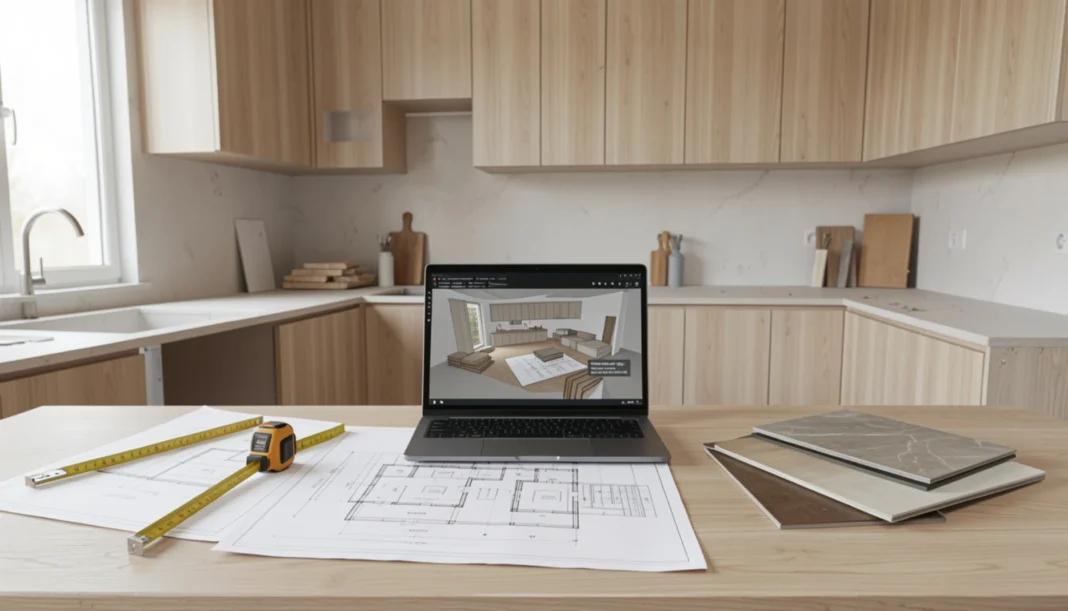
This zone-based thinking is especially useful in larger kitchens or open-plan layouts where the traditional triangle breaks down. Not sure how your zones will flow? Free tools like RoomSketcher or the IKEA Kitchen Planner let you drag-and-drop appliances and cabinets to test layouts before you commit—saving time and avoiding costly mid-project changes. For layout dimensions that meet professional standards, reference NKBA guidelines: they recommend at least 42 inches of clearance around islands and 15 inches of counter space on each side of the sink.
Layout Types and When to Use Each
1. Galley kitchen
Two parallel countertops facing each other. Highly efficient for one cook in a narrow space. Works well in apartments or smaller homes. The minimum recommended wall spacing is 8 feet to avoid feeling cramped.
2. L-shaped kitchen
Two adjacent walls of cabinetry and countertops. Versatile and works in most home sizes. Leaves room for a dining table or small island—one of the most common residential layouts.
3. U-shaped kitchen
Three walls of cabinetry. Maximizes storage and counter space. Best for larger kitchens with at least 8×8 feet of floor space. Can feel closed in if the room is too small.
4. Island layout
Added to L-shaped or U-shaped kitchens for more prep space, seating, or storage. Requires at least 42 inches of clearance on all sides (48 inches preferred for two cooks). An island is a feature, not a layout — plan the base layout first.
5. Open plan kitchen
The kitchen flows into the living or dining area without a wall separation. Excellent for social cooking but requires careful attention to ventilation, lighting, zoning, and noise management.
If you’re considering moving walls or changing the fundamental footprint, consult a kitchen designer or general contractor early. Load-bearing walls add high cost and require structural engineering.
Planning Cabinet and Storage Solutions
Here’s the hard truth: most kitchen remodels nail the looks but miss on storage—leaving you with a pretty space that still drives you crazy every morning. Homeowners often focus on cabinet count when what actually matters is cabinet accessibility — can you reach what you need, when you need it, without rearranging half the kitchen?
Matching Storage to How You Actually Cook
Before specifying cabinet sizes and types, spend a week noticing how you use your current kitchen. Where do you set things down most often? What do you pull out every day? What’s buried in the back of a cabinet you rarely open?
This exercise typically reveals that most households need:
- Deep lower cabinets with pull-out shelves or drawers rather than fixed shelves (fixed shelves waste the back half of every cabinet)
- A dedicated baking or prep zone with counter space adjacent to relevant storage
- Vertical storage for trays, cutting boards, and baking sheets — often an afterthought
- Accessible spice storage near the cooking zone, not buried in a pantry
- A cleaning supply cabinet near the sink, with door-mounted organizers
Cabinet Types and Interior Fittings
Stock cabinets are pre-manufactured in standard sizes (usually 3-inch increments) and are the most affordable option. They’re available at home improvement stores and have lead times of days, not weeks.
Semi-custom cabinets offer more size options, finishes, and interior configurations than stock. Lead times run 4–8 weeks. This is the middle ground most remodelers land on.
Custom cabinets are built to your exact specifications. They’re significantly more expensive (often 3–5× the cost of stock) and have lead times of 8–16 weeks. Worth considering for unusual room dimensions or very specific design needs.
Interior fittings matter as much as the cabinet boxes. Pull-out drawer inserts, lazy Susans in corner cabinets, drawer dividers, and pull-out trash and recycling units dramatically improve daily usability without requiring more square footage.
Upper cabinets typically run 30–42 inches tall. If you have 9-foot ceilings, consider extending cabinets to the ceiling for maximum storage — though you’ll need a step stool for top shelves. Many designers leave a decorative gap and use that space for display or baskets.
Designing a Functional Lighting Plan
Let’s be real: most people treat kitchen lighting like an afterthought—slapping up one overhead fixture and calling it a day. Then they wonder why chopping vegetables feels like working in a cave. A good kitchen lighting plan uses three distinct layers working together.
The Three Layers of Kitchen Lighting
Ambient lighting provides general illumination across the room. Recessed ceiling lights (typically 4- or 6-inch can lights) are the standard approach. Space them evenly — usually every 4 to 6 feet — to avoid dark corners. LED recessed lights with a color temperature of 2700K–3000K give a warm, comfortable tone for a kitchen environment.
Task lighting targets the specific areas where you’re working: countertops, the sink, the cooktop, and the island. This is the layer most homeowners skip — and the one that makes the biggest difference in daily use. Under-cabinet LED strip lights—like Philips Hue Lightstrip Plus or GE LED Basic Link—deliver shadow-free task lighting. Mount them toward the cabinet’s front edge (not the back) to illuminate your actual workspace without glare.
Accent lighting adds depth and visual interest. This includes pendant lights over an island (hung 30–36 inches above the countertop surface), toe-kick lighting for a nightlight effect, or interior cabinet lighting for glass-front displays. Accent lighting is optional, but it separates a well-designed kitchen from a functional-but-flat one.
Task Lighting Placement by Work Zone
- Prep counter: Under-cabinet LED strips covering the full length of the counter
- Sink area: Recessed light centered directly above the sink, or a dedicated pendant
- Cooktop: A range hood with integrated lighting (this is non-negotiable for both light and ventilation)
- Island: Pendant lights spaced 24–30 inches apart, centered over the island surface
- Pantry or deep cabinets: Interior LED strips triggered by door-open sensors
All kitchen lighting should be on dimmer switches where possible. This gives you flexibility for cooking, dining, cleaning, and ambient use without changing fixtures. Make sure any dimmer is rated for LED loads — standard dimmers can cause LED flicker.
Building a Realistic Kitchen Renovation Budget
Budget planning fails when homeowners start with a number and work backward. A more reliable approach is to build the budget from actual line items, then make material decisions based on what’s left.
Cost Breakdown by Remodel Scope
These ranges align with 2024–2025 data from Remodeling Magazine’s Cost vs. Value Report and NKBA (National Kitchen & Bath Association) benchmarks—though your local labor market and material choices will shift final costs.
Minor kitchen refresh ($8,000–$20,000):
- Cabinet refacing or door replacement: $2,000–$7,000
- Countertops (laminate to mid-range quartz): $1,500–$5,000
- Lighting fixtures and switches: $500–$2,000
- Hardware, faucet, sink: $300–$1,500
- Labor: $1,500–$4,000
Mid-range remodel ($20,000–$45,000):
- Semi-custom cabinets: $8,000–$18,000
- Countertops (quartz or granite): $3,000–$8,000
- Flooring: $2,000–$5,000
- Appliances: $3,000–$8,000
- Electrical and lighting: $1,500–$4,000
- Plumbing updates: $1,000–$3,000
- Labor and installation: $5,000–$12,000
Full renovation ($45,000–$100,000+):
- Custom or high-end semi-custom cabinets: $15,000–$40,000
- Premium countertops (quartzite, marble, thick quartz): $5,000–$15,000
- Structural changes and permit fees: $3,000–$15,000
- High-end appliances: $8,000–$20,000
- All trades (electrical, plumbing, HVAC): $8,000–$20,000
Always add a 15–20% contingency to your budget before construction starts. Hidden issues — outdated wiring, water damage inside walls, out-of-level floors — are common in kitchens, especially in homes built before 1990.
Where to Spend vs. Where to Save
Spend on: Cabinets (they’re used 100 times a day), countertops (high wear, high visibility), ventilation (a good range hood protects your home and your finishes), and labor from licensed trades.
Save on: Appliance brand names over performance specs, tile backsplash (DIY-friendly and easy to update later), cabinet hardware (easy to swap inexpensively), and light fixtures that aren’t over the island. When selecting appliances, prioritize Energy Star-certified models—they use 10–50% less energy than standard units, saving hundreds annually on utilities.
DIY vs. Hiring a Professional
A kitchen remodel involves multiple trades — carpentry, electrical, plumbing, tile setting — and the right DIY/professional split depends on your skills, tools, and the legal requirements in your area.
Tasks most homeowners can handle:
- Painting walls and ceilings
- Installing cabinet hardware and pulls
- Tile backsplash installation (with proper prep)
- Under-cabinet lighting with plug-in or low-voltage systems
- Assembling and installing flat-pack or RTA cabinets
Tasks that typically require licensed professionals:
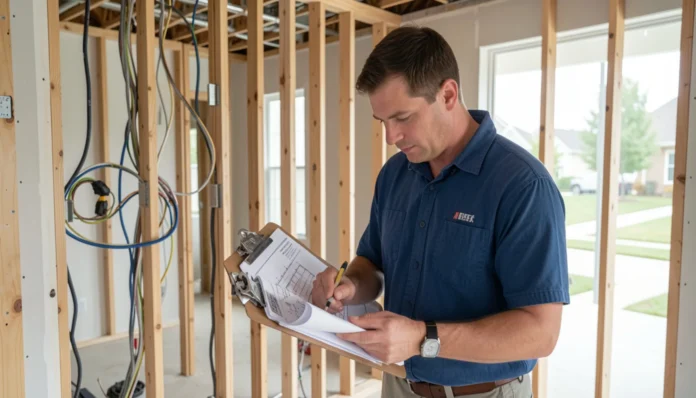
- Electrical panel upgrades, new circuits, or outlet relocation (required by code in most jurisdictions)
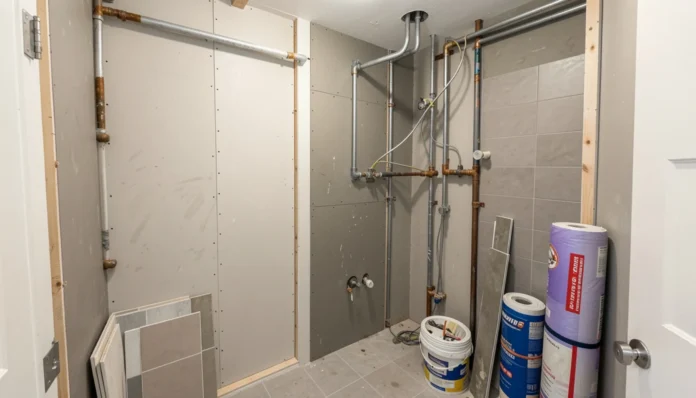
- Plumbing rough-in changes, moving the sink drain or supply lines
- Structural modifications, including removing walls
- Gas line work for range installation
Permits are required for most structural, electrical, and plumbing changes. Unpermitted work can complicate a home sale and create liability issues if something goes wrong. Check with your local building department before starting any work beyond cosmetic changes. When hiring, use platforms like Angi or Thumbtack to compare licensed, insured contractors with verified reviews—then always request proof of insurance and pull permits through your local building department.
Common Planning Mistakes to Avoid
- Mistake #1: Starting with aesthetics, not function. Cabinet colors are easy to change later; layout flaws aren’t. Always finalize workflow before picking finishes.
- Mistake #2: Underestimating lead times. Semi-custom cabinets take 4–8 weeks. Custom can take 12–16 weeks. Order materials before demolition begins — don’t demo a kitchen and then wait 10 weeks for cabinets.
- Mistake #3: Forgetting ventilation. A range hood is not optional. Cooking without adequate ventilation causes grease buildup on surfaces, affects air quality, and can void appliance warranties. Duct the hood to the exterior whenever possible.
- Mistake #4: Ignoring electrical capacity. Modern kitchens need dedicated circuits for the refrigerator, dishwasher, microwave, and garbage disposal — plus multiple small appliance circuits at countertop level. An electrician should review your panel before finalizing the plan.
- Mistake #5: Planning the island too large. An island needs 42 inches of clearance on working sides (48 preferred), 36 inches on non-working sides. Many homeowners design islands that are too big for their space once clearances are applied.
How Long Does a Kitchen Remodel Take?
Timeline varies considerably by scope. Here’s a realistic breakdown:
- Planning and design phase: 4–8 weeks (including contractor bids, permit applications, and material selection)
- Material lead times: 4–12 weeks, depending on cabinet type and appliance availability
- Construction — minor refresh: 1–2 weeks
- Construction — mid-range remodel: 3–6 weeks
- Construction — full renovation: 6–12 weeks
From the first planning meeting to the final walkthrough, a mid-range kitchen remodel typically takes 4–6 months when you account for the planning, ordering, and construction phases together. Full renovations with structural changes often run 6–9 months.
Build buffer into your timeline. Contractor schedules, material backorders, and inspection delays are common. Track your remodel timeline in Buildertrend or CoConstruct: these tools sync contractor schedules, material deliveries, and inspection dates to prevent costly delays.
FAQs
How much does a kitchen remodel cost on average?
Mid-range kitchen remodels average $25K–$40K nationally (Remodeling Magazine, 2024). Minor updates: $10K–$20K. Full renovations with structural changes: $60K+. Always add 15–20% contingency.
What kitchen layout is the most functional?
For most homes, an L-shaped or U-shaped layout with a clear work triangle provides the best combination of efficiency and storage. The best layout depends on your room dimensions and how many people cook at once.
Do I need a permit for a kitchen remodel?
You need permits for electrical, plumbing, and structural changes in nearly every U.S. jurisdiction. Cosmetic work — painting, hardware, countertop replacement without plumbing changes — generally doesn’t require a permit. Always verify locally.
Is a kitchen remodel worth it financially?
According to Remodeling Magazine’s 2024 Cost vs. Value Report, mid-range kitchen remodels recoup 60–80% of costs at resale—higher in strong housing markets. More importantly, a well-planned kitchen improves daily quality of life for as long as you live in the home.
What should I plan first in a kitchen remodel?
Start with the layout. Once you’ve confirmed the footprint, plan cabinets and storage, then lighting, then finishes (countertops, tile, flooring). Budget should be established before any of these steps — it determines what’s possible across every other decision.