Bathroom remodels punch above their weight: that small room packs plumbing, electrical, ventilation, waterproofing, and finish work into a tight space—all under strict IRC code scrutiny that protects your investment. Skip one step, and you’re not just looking at extra costs—you could be inviting mold, structural damage, or a failed inspection down the line.
If you’re an intermediate DIYer tackling a bathroom remodel, this phase-by-phase checklist has your back—from that critical pre-demo inspection to the final walkthrough before walls close.
Before You Start: Critical Pre-Demo Inspections That Save Thousands
The biggest remodel mistakes happen before a single tile is pulled. A thorough pre-demo inspection tells you what you’re actually working with — and prevents expensive surprises mid-project. Track your remodel phases, budget, and contractor communications in a project management app like Buildertrend to keep timelines, change orders, and warranty docs organized in one place.
Subfloor and Structural Condition
Water damage in bathrooms almost always hides under the surface. Before ordering materials, pull up a corner of the existing flooring or use a professional-grade moisture meter to uncover hidden water damage before demo begins.
Check for:
- Soft spots or flex when you walk near the toilet or tub
- Discoloration, delamination, or swelling in plywood or OSB panels
- Rotate around the toilet flange base
- Any signs of past leaks from supply lines or the wax ring
If the subfloor is compromised, replace it before anything else. Installing new tile over a damaged subfloor guarantees cracked grout and failed tile within months.
Existing Plumbing Assessment
Map your current plumbing layout before deciding where fixtures will go. Moving drains — especially the toilet — is one of the most expensive changes in any remodel because it often requires cutting into a concrete slab or rerouting joists.
Document:
- Toilet rough-in distance (typically 12 inches from finished wall to center of flange)
- Location of main drain stack
- Supply line shutoffs and their condition
- Pipe material (copper, CPVC, PEX, or galvanized)
Galvanized pipes that are 30+ years old should be replaced during the remodel, not patched.
Permits and Building Codes
Most jurisdictions require a permit for work involving plumbing relocation, electrical changes, or structural modifications. Check with your local building department before starting. Work done without a permit can complicate a home sale and void insurance claims.
Think of permits as your safety net: they trigger inspections that catch issues—like a venting error—while you can still fix them easily, not after the walls are closed and the tile is set.
Plumbing Checklist for a Bathroom Remodel
Plumbing is the phase where measurements matter most. Rough-in dimensions must be set before tile, backer board, or fixtures go in.
Rough-In Dimensions You Must Measure
Before finalizing your layout, confirm these standard measurements. These measurements determine fixture compatibility—getting them wrong means costly returns or rework. Double-check against your fixture specs before ordering. These align with UPC/ANSI standards for accessible bathroom design.
| Fixture | Standard Rough-In |
|---|---|
| Toilet flange center to side wall | 15 inches minimum (18 inches preferred) |
| Toilet flange center to finished wall | 12 inches (10″ and 14″ also exist — measure before buying) |
| Vanity drain height from the floor | 18–20 inches |
| Shower drain center location | Per your shower pan size |
| Tub spout from the floor | 4 inches above the tub deck |
| Shower valve center from the floor | 48 inches (standard) |
Here’s the golden rule: measure twice, order once. Getting the toilet rough-in wrong is one of those mistakes that’s equal parts common and costly—and totally avoidable.
Drain Slope and P-Trap Requirements
Every drain in the bathroom must slope correctly toward the main stack. The standard requirement is ¼ inch of drop per foot of horizontal run. Too little slope causes slow drains and buildup. Too much causes liquid to outrun solids, leaving debris behind.
P-trap rules to verify:
- Every fixture needs a P-trap (toilet has an integral trap)
- P-trap must be within the distance your local code specifies from the drain opening (usually 24 inches for a sink)
- Traps cannot be double-trapped or installed upside down
If you’re adding a new drain or relocating one, verify that the vent stack can serve the new location. Improperly vented drains cause gurgling, slow drainage, and sewer gas entry.
DIY vs. Licensed Plumber
Supply line swaps, shutoff valve replacements, and toilet installations are reasonable DIY tasks for most intermediate homeowners. Drain relocation, vent stack work, and any work requiring a permit typically requires a licensed plumber — both for code compliance and insurance purposes.
Ask yourself: (1) Does this work require a permit? (2) Will it affect home insurance or resale? If yes to either, hire a licensed plumber. For simple swaps like faucets or toilets, DIY is often feasible with proper prep. If you’re vetting a plumber for permitted work, check verified reviews on Angi and confirm they carry current liability insurance and state licensing before signing a contract. Follow NAHB’s contractor vetting checklist: verify license, insurance, and at least three recent bathroom-specific references.
Estimated plumbing costs:
- Basic fixture reconnection: $150–$400
- Drain relocation (above slab): $500–$1,500
- Full bathroom plumbing rough-in: $1,500–$4,000+
- Slab work for drain relocation: $2,000–$6,000+
Once your plumbing rough-in is locked in and pressure-tested, the next critical system to address is moisture control—because even perfect tile work fails without proper ventilation.
Ventilation Checklist
Poor ventilation is the leading cause of bathroom mold, paint failure, and ceiling damage. A bathroom without proper exhaust is not a code-compliant bathroom in most regions.
How to Calculate the Right CFM
CFM (cubic feet per minute) is the airflow rating of an exhaust fan. The general rule is 1 CFM per square foot of bathroom area for rooms under 100 square feet. Quick Formula: Bathroom sq ft + 50 CFM per additional wet zone (shower, tub, water closet) = Minimum fan rating. Example: 60 sq ft + 50 (shower) = 110 CFM minimum. For larger or enclosed spaces:
- Add 50 CFM for each toilet in a separate water closet
- Add 50 CFM for a jetted tub
- Add 50 CFM for a separate shower enclosure
Always verify the fan carries HVI certification to ensure the CFM rating is independently tested—not just manufacturer-claimed—so you’re not stuck with an undersized unit after installation. A 60 sq ft bathroom with a separate shower needs a minimum of 110 CFM. Most builder-grade fans installed at 50–70 CFM are undersized for modern bathrooms. Choose a fan rated for the actual CFM needed, not the minimum.
Also look at the sone rating — a measure of fan noise. A rating of 1.0 sones or less is quiet enough that people will actually use the fan. Loud fans get switched off, defeating their purpose.
Fan Placement and Duct Routing
The fan should be placed as close to the shower or tub as code allows — typically within the wet zone if the unit is rated for it (check the IP rating). A fan installed at the far end of the bathroom from the shower moves far less moisture than one positioned directly above the source.
Duct routing rules:
- Exhaust must vent to the exterior — never into an attic or wall cavity
- Use rigid metal duct where possible; flex duct adds resistance and reduces airflow
- Keep duct runs as short and straight as possible
- Install a backdraft damper to prevent cold air from entering in winter
Code Compliance and Moisture Control
The International Residential Code (IRC) requires mechanical ventilation in bathrooms without an openable window. Even where a window exists, many inspectors and builders recommend a fan regardless. Operable windows provide air exchange — exhaust fans remove humidity. They serve different functions.
Materials Checklist
Choosing the wrong materials for a wet environment leads to early failure — peeling grout, warped substrates, or mold behind walls. Material decisions must match the location within the bathroom.
Tile Selection for Wet and Dry Areas
Not all tile is appropriate for all bathroom zones. The American National Standards Institute (ANSI) and the Tile Council of North America (TCNA) classify tiles by slip resistance (DCOF rating) and absorption rate (porosity).
Start with location → Check moisture exposure → Match DCOF/absorption rating → Confirm installation method. When in doubt, choose porcelain mosaic for shower floors—it conforms to slope and adds traction.
General Guidelines:
- Floor tile: Choose a tile with a DCOF (Dynamic Coefficient of Friction) rating of 0.42 or higher for wet areas. Smaller format tiles with more grout lines provide more grip.
- Shower walls: Porcelain or ceramic tile with a water absorption rate under 3% (classified as vitreous or impervious) is recommended.
- Shower floor: Mosaic tile (2″x2″ or smaller) conforms better to the slope of the drain and provides additional traction.
- Dry areas (vanity backsplash, accent walls): More flexibility here — glass tile, natural stone with sealer, and larger format porcelain all work well.
Avoid natural stone in shower floors without proper sealing and maintenance. Stone like marble and travertine is porous and stains easily in high-moisture areas.
Backer Board and Waterproofing
The substrate behind your tile determines how long the installation lasts. Standard drywall — even moisture-resistant “green board” — is not appropriate for wet areas like showers.
Substrate Options By Zone:
| Area | Recommended Substrate |
|---|---|
| Shower walls | Cement board (e.g., Durock, HardieBacker) or foam tile backer (e.g., Schluter KERDI-BOARD) |
| Tub surround | Cement board with waterproofing membrane |
| Bathroom floor | Cement board or uncoupling membrane (e.g., Schluter DITRA) |
| Vanity backsplash | Cement board or standard moisture-resistant drywall |
A waterproofing membrane is not optional in a shower. Apply a liquid-applied membrane (like Mapei Aquadefense or Laticrete Hydro Ban) or a sheet membrane system over cement board before tiling. Pay special attention to corners, seams, and penetrations — these are where failures begin. For installation methods that preserve warranty coverage, cross-reference your plan with the TCNA Handbook details for your tile/substrate combo.
Fixtures, Vanity, and Hardware
When selecting fixtures, confirm they’re compatible with your existing rough-in before purchasing.
Checklist for fixtures:
- Toilet rough-in size matches your floor flange (most common is 12″)
- The showerhead and valve are from the same manufacturer (mixing brands can cause fitment issues)
- Vanity sink drain aligns with your rough-in height
- Faucet hole configuration matches sink (single hole, 4″ spread, or 8″ spread)
- All fixtures carry WaterSense certification if water efficiency is a priority—WaterSense-labeled faucets and showerheads use at least 20% less water while maintaining performance, which can lower utility bills and qualify for local rebates
Shower Remodel Checklist
A shower remodel within a larger bathroom remodel deserves its own checklist. It’s the highest-moisture zone in the room and the most prone to long-term failure if shortcuts are taken.
Shower Pan and Liner Inspection
If you’re keeping an existing shower pan, inspect it thoroughly before proceeding. Press on the floor surface with your foot — any flex indicates a compromised liner underneath. A failed shower liner can leak into the subfloor for months before visible damage appears.
For a new shower, you have three primary pan options:
- Prefabricated acrylic or fiberglass pan: Fastest to install, limited size options, requires no mud bed
- Mortar bed with PVC liner: Traditional method, allows custom sizing, requires skill to slope correctly
- Foam shower base with integrated waterproofing: Newer method (e.g., Schluter KERDI-SHOWER), lighter, bonds directly to tile substrate
Wall Substrate and Waterproofing Layer
Every surface inside the shower enclosure must be treated as a wet zone. This means:
- No standard drywall — even behind the tile
- Waterproofing membrane applied at all seams, corners, and penetrations
- Niche framing (if adding a recessed shelf) must also be waterproofed before tiling
- Transition strips (like Schluter strips) at all floor-to-wall and tile-to-door frame transitions to control movement and prevent cracking
Fixture Rough-In Heights
Standard heights vary slightly by manufacturer, but these are widely accepted starting points:
- Shower valve center: 48 inches from finished floor
- Showerhead outlet: 78–80 inches from finished floor
- Hand shower slide bar: 72 inches to top mounting point
- Built-in niche: 48–60 inches from floor (align with eye level when standing)
Electrical Checklist
Bathroom electrical work is strictly regulated because of the combination of water and electricity. Before any demo, locate and label your bathroom circuit in the breaker panel.
Key Requirements:
- All outlets within 6 feet of a water source must be GFCI-protected (Ground Fault Circuit Interrupter)
- Recessed lights in the shower area must carry a wet-location rating (IP65 or higher)
- Exhaust fans require a dedicated switch or a combination switch/timer
- Heated floors need a dedicated circuit and a GFCI breaker
- Any new circuit additions require a licensed electrician and a permit in most jurisdictions
Do not assume that existing wiring is up to current code. Bathrooms in homes built before 1990 frequently lack GFCI protection and may have undersized wiring.
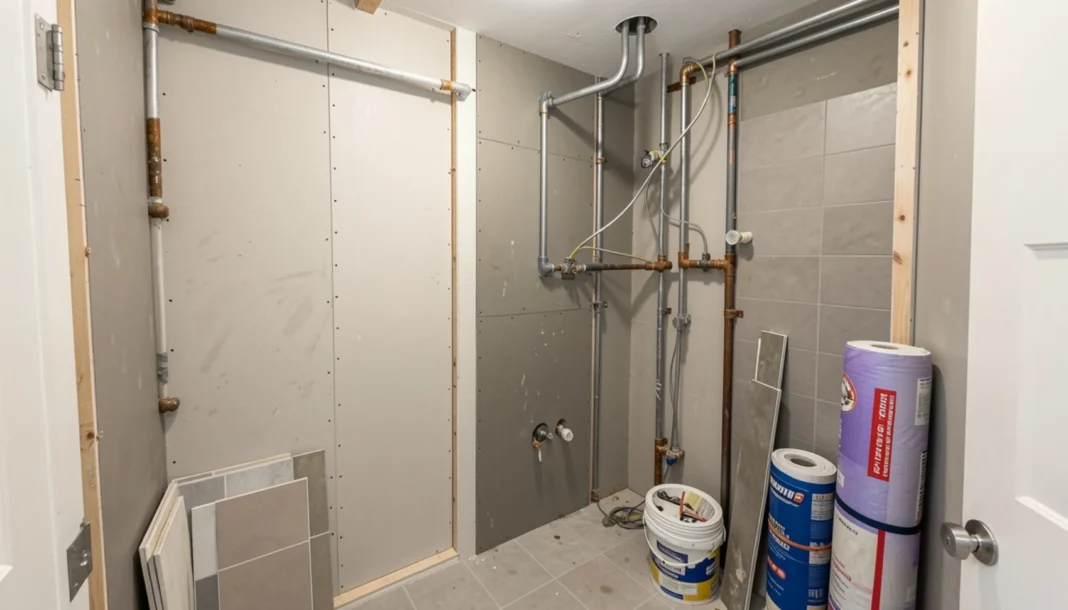
Final Walkthrough Before Closing the Walls
This 10-minute inspection prevents $10,000 in rework—don’t skip it. Test every connection now, because fixing a leak after tile means demo, disposal, and starting over.
Pre-close Checklist:
- All plumbing connections are pressure-tested (no leaks at supply and drain)
- Vent fan duct is connected, routed to the exterior, and secured
- All electrical rough-in is inspected and approved (if permitted)
- Subfloor is solid, level, and dry
- Blocking is installed where grab bars or heavy fixtures will mount
- Shower liner or pan is installed and tested (flood test for mortar bed liners: fill with water for 24 hours)
Do not tile over an untested liner. A failed liner discovered after tiling means demo and starting over.
Cost Overview by Phase
Costs vary significantly by region, material quality, and labor rates. These ranges reflect mid-grade materials and professional labor in most U.S. markets as of 2024–2025. Use these mid-range estimates to build your budget—but always add a 15-20% contingency for hidden repairs uncovered during demo (like subfloor replacement or pipe upgrades).
| Phase | Estimated Cost Range |
|---|---|
| Demo and disposal | $300–$1,000 |
| Plumbing rough-in (no relocation) | $500–$1,500 |
| Plumbing relocation | $1,500–$6,000+ |
| Electrical updates | $400–$1,200 |
| Backer board and waterproofing | $300–$700 |
| Tile (materials only, 60 sq ft) | $300–$1,800+ |
| Tile installation (labor) | $600–$2,000 |
| Shower pan and enclosure | $500–$3,000 |
| Vanity and toilet | $400–$2,500 |
| Fixtures and hardware | $200–$1,000 |
| Total (mid-range full remodel) | $7,000–$15,000 |
For ROI context, cross-check your plan against the annual Remodeling Magazine Cost vs. Value Report for your region. High-end remodels with custom tile, steam showers, and full plumbing relocations can exceed $25,000–$35,000.
Common Mistakes to Avoid
- Skipping the pre-demo inspection. Hidden subfloor damage, old galvanized pipes, or an undersized electrical panel can derail a project after demolition starts. Inspect first.
- Using the wrong tile on the shower floor. Large-format tiles don’t slope properly to the drain without skilled installation. Use mosaic or smaller tiles for shower floors.
- Undersizing the exhaust fan. A 50 CFM fan in a 90 sq ft bathroom with a separate shower will never adequately control moisture. Size for actual use, not minimum code.
- Not installing blocking for grab bars. Grab bars must anchor to studs or solid blocking — not just drywall. If there’s any chance that grab bars will be added later, install blocking now before the walls close.
- Skipping the waterproofing membrane. Cement board alone is not waterproof. Water will pass through it over time. The membrane is the waterproofing layer; the board is just the substrate.
FAQs
Do I need a permit for a bathroom remodel?
Most bathroom remodels involving plumbing relocation, new electrical circuits, or structural changes require a permit. Quick check: If your project changes the footprint, moves drains, or adds circuits, assume you need one—and verify with your local building department before demo starts. Search ‘[Your City] building department permit requirements’ or check Zillow’s renovation guides for local nuances. Cosmetic updates — like replacing tile without moving drains — often do not. Check with your local building department before starting.
Can I move the toilet during a remodel?
Yes, but it’s one of the more expensive changes. Moving the toilet requires relocating the floor flange and rerouting the drain, which may involve cutting a concrete slab or rerouting floor joists. Expect costs of $1,500–$6,000, depending on your slab situation.
How long does a full bathroom remodel take?
A mid-range full remodel typically takes 2–4 weeks for professional crews, assuming no major surprises. DIY projects often run 6–10 weeks or more due to scheduling, drying times, and skill curve.
What’s the best tile for a shower floor?
Porcelain mosaic tile (2″x2″ or 1″x1″) is the most practical choice. It conforms to the drain slope, provides traction, and is highly moisture resistant. Make sure to use unsanded grout for joints under 1/8 inch.
How do I know if my ventilation is adequate?
Run the fan and hold a tissue near it. If the tissue is drawn firmly toward the grille, airflow is sufficient. If it drops or barely moves, the fan is undersized, the duct is too long or restricted, or the unit is failing. Also, check that the duct actually exits the home — many older fans were incorrectly vented into the attic.