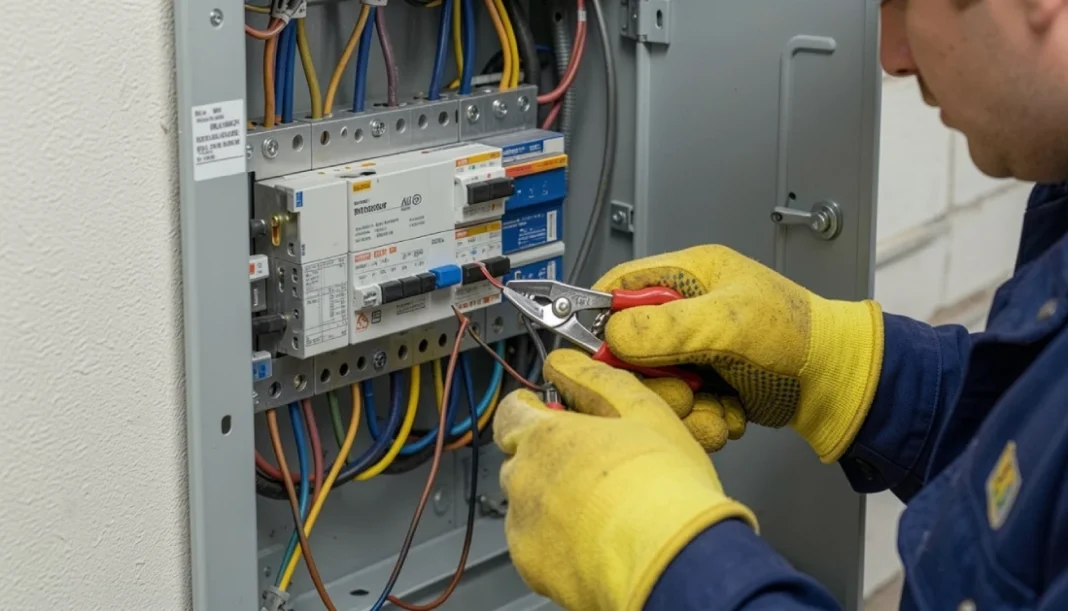
Your electrical panel is the nerve center of your home’s power system. It receives electricity from the utility company and distributes it through individual circuits to every outlet, light, and appliance in the house. Most homeowners never think about it — until something goes wrong.
If your breakers trip constantly, your lights flicker when the microwave runs, or you’re planning a kitchen renovation, you may be staring down a panel upgrade. This guide walks you through exactly when an upgrade is necessary, what the replacement process involves, and what you should budget before calling an electrician.
What Does an Electrical Panel Actually Do?
The electrical panel (also called a breaker box, load center, or service panel) controls the flow of electricity throughout your home. Each circuit breaker inside it protects a dedicated circuit — if a circuit draws more current than it’s rated for, the breaker trips to prevent overheating or fire.
Older homes often have fuse boxes instead of breaker panels. Fuses work on the same protective principle, but they burn out and must be replaced rather than simply reset. Fuse boxes also typically max out at 60 amps of service — far below what modern homes require.
The panel’s total capacity is measured in amps. Most homes built before the 1980s were wired for 100 amps. Today’s standard for new construction is 200 amps, and homes with electric vehicles, home offices, or all-electric appliances may benefit from 400-amp service.
Clear Signs Your Panel Needs an Upgrade
An underpowered or aging panel doesn’t always fail dramatically. Often, it gives you a series of smaller warnings first.
Frequent Tripped Breakers or Blown Fuses
An occasional tripped breaker is normal. But if you’re resetting the same breaker regularly — especially under normal household loads — that circuit is being consistently overdrawn. This could mean you need a dedicated circuit, or it may signal that the entire panel is operating near its capacity limit.
You Still Have a Fuse Box
A fuse box isn’t automatically dangerous, but it’s a strong indicator that your electrical system hasn’t been updated in decades. Beyond the inconvenience of buying replacement fuses, these systems typically can’t support modern electrical loads safely. Most insurance companies flag fuse boxes during underwriting, and some refuse to cover homes with them.
Your Panel Brand Has a Safety History
Certain panel brands manufactured from the 1950s through the 1980s have documented safety problems. Federal Pacific Electric (FPE) Stab-Lok panels and Zinsco panels are the most widely cited; both have breakers that may fail to trip under overload conditions, creating a fire risk. If your home has either of these, replacement is strongly recommended regardless of apparent performance.
You can identify your panel brand on the label inside the door. An electrician can confirm whether your specific model has known issues.
You’re Adding High-Draw Appliances or an EV Charger
Installing a Level 2 EV charger typically requires a dedicated 240-volt, 50-amp circuit. Adding central air conditioning, an electric range, a hot tub, or a home addition puts similar demands on your system. If your current panel doesn’t have capacity for additional circuits, an upgrade isn’t optional — it’s required before the new load can be safely connected.
100 Amp vs. 200 Amp Panel: Which One Do You Need?
100-amp panel is adequate for smaller homes (under 1,500 sq ft) with gas appliances, modest lighting loads, and no high-draw additions planned. If your current home runs reliably on 100 amps and you’re not making changes, replacement may not be urgent.
200-amp panel is the right choice for most homes today. It provides enough capacity for central HVAC, electric appliances, a home office, and room for future circuits. If you’re doing a full replacement, upgrading to 200 amps makes sense even if your current load doesn’t strictly demand it — the cost difference between 100 and 200 amps is relatively small compared to the labor involved.
400-amp service is worth considering for larger homes over 3,000 sq ft, homes with significant electric heating loads, or those installing solar with battery storage and an EV charger simultaneously.
How Much Does an Electrical Panel Upgrade Cost?
Panel upgrade costs vary based on your location, the amperage you’re upgrading to, whether the utility needs to upgrade your service entrance, and local permit fees.
Cost by Amperage
| Upgrade Type | Typical Cost Range (US) |
|---|---|
| 100 amp panel replacement | $800 – $1,500 |
| 200 amp panel upgrade | $1,500 – $3,000 |
| 200 amp with service entrance upgrade | $2,000 – $4,500 |
| 400 amp panel upgrade | $3,000 – $6,000+ |
These figures reflect the combined parts and licensed electrician labor. Labor alone typically runs $50–$130 per hour, depending on your region, and most panel replacements take 4–8 hours.
What Affects the Final Price
Several factors can push your quote higher:
- Service entrance upgrade: If the utility line running to your home is also undersized (common in pre-1980s homes), the utility company must upgrade the drop — this adds cost and scheduling delays.
- Old wiring compatibility: Homes with aluminum branch circuit wiring or knob-and-tube wiring may require additional remediation before a new panel can be safely installed.
- Panel location: A panel buried in a finished basement or interior wall costs more to access than one in a garage or utility room.
- Permit and inspection fees: Most municipalities charge $50–$300 for electrical permits. This is non-optional and shouldn’t be skipped.
- Local labor market: Electrician rates in urban markets are substantially higher than in rural areas.
What Actually Happens During a Panel Replacement
On the day of the upgrade, your electrician will begin by coordinating with the utility company to shut off power at the meter. This is called a utility disconnect — without it, the service entrance wires remain live and dangerous.
Once the power is off, the electrician removes the old panel, installs the new load center, and reconnects each circuit breaker one by one. They’ll also check your grounding and bonding — requirements that have become stricter under modern electrical codes (NEC). In many cases, AFCI breakers (arc fault circuit interrupters) are now required for bedroom circuits and other areas, and these add some cost.
After installation, power is restored, and the electrician performs a load test to confirm everything functions correctly. A municipal inspector then visits to verify the work meets code — this inspection is what closes out the permit.
Your home will be without power for most of the day, typically 4–8 hours, sometimes longer if complications arise.
Permits, Inspections, and Insurance
Pulling a permit isn’t bureaucratic red tape — it’s the process that ensures your installation is inspected by a licensed official who verifies code compliance. Unpermitted electrical work creates liability, can void your homeowner’s insurance claim if a fire occurs, and must be disclosed when selling your home.
On the insurance side, many carriers run an electrical inspection during underwriting or at renewal. Homes with Federal Pacific or Zinsco panels, ungrounded three-prong outlets, or panels operating well below current capacity may be flagged for surcharges or coverage denial. Upgrading your panel can sometimes reduce your premium — worth asking your agent about directly.
Can You Upgrade an Electrical Panel Yourself?
The honest answer: no, and in most jurisdictions, it’s illegal to do so without a licensed electrician’s permit.
The service entrance wires — the two large cables that run from the utility line into the top of your panel — remain energized even when your main breaker is off. Only the utility company can de-energize them. Working around live service conductors without proper training and equipment carries a serious electrocution risk.
Beyond safety, unpermitted panel work creates real problems with insurance and resale. This is one job where DIY is not the right call, regardless of your skill level.
FAQs
Before committing to a contractor, it helps to ask the right questions:
Are you licensed and insured in this state?
Verify independently — licensing databases are public.
Will you pull the permit and handle inspection scheduling?
This should be included, not an add-on.
Do I need a service entrance upgrade as well?
Ask them to assess the incoming service, not just the panel.
What panel brands do you install?
Reputable brands include Square D (Homeline/QO), Leviton, Siemens, and Eaton. Ask why they prefer what they recommend.
Is the quote itemized?
You want to see parts, labor, permit fees, and any contingencies broken out separately.
What code upgrades will be required?
This is where AFCI/GFCI breaker requirements get factored in — better to know upfront.
How Long Does the Job Take?
A straightforward panel replacement on a single-family home typically takes 4 to 8 hours for an experienced electrician. More complex jobs — those requiring a service entrance upgrade, significant rewiring, or a large number of circuits — may extend to a full day or require a return visit after the utility completes its portion.
Plan for a full day without power. If you work from home or have medical equipment that requires electricity, arrange alternatives in advance.
Is an Electrical Panel Upgrade Worth It?
From a safety standpoint, if your panel shows warning signs — especially a recalled brand, a fuse box, or chronic overloading — the upgrade pays for itself by eliminating a significant fire and liability risk.
From a financial standpoint, a 200-amp panel upgrade adds measurable resale value because buyers and their home inspectors flag electrical deficiencies. Real estate agents commonly report that outdated panels cause deals to stall or price reductions to be negotiated. Spending $2,000–$3,000 proactively is generally less costly than a price cut at closing.
If you’re planning an EV charger, solar installation, home addition, or kitchen renovation, the panel upgrade isn’t a separate cost to weigh — it’s a prerequisite. Factor it into the project budget from the start.