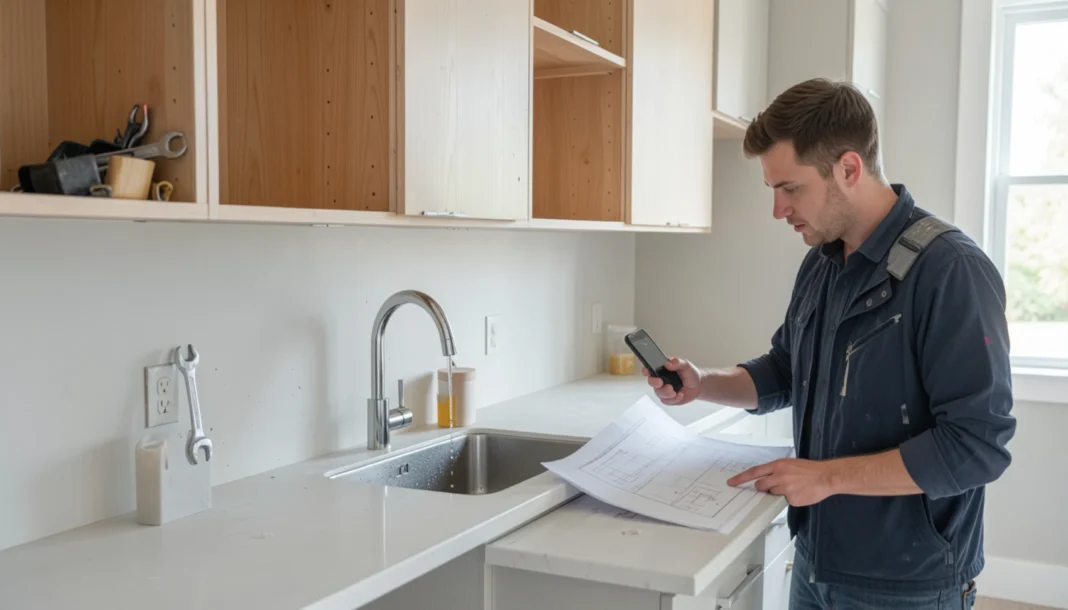
Leaking faucet or full kitchen remodel? Here’s the exact 60-second framework to decide: DIY it and save $500, or hire a pro and avoid a $2,000 mistake.
Honestly? There’s no one-size-fits-all answer—and that’s exactly why so many homeowners second-guess themselves. DIY can save real money, build useful skills, and give you a sense of ownership over your home. But the wrong DIY decision can lead to failed inspections, voided warranties, structural damage, or a repair bill far larger than what a contractor would have charged upfront.
Whether you’re fixing a leaky faucet or planning a kitchen overhaul, this framework cuts through the guesswork—no matter your experience level.
Why This Decision Matters More Than Most Homeowners Think
Most people frame this as a money question: can I save by doing it myself? That’s part of it, but not the whole picture.
A poorly done DIY project can reduce your home’s resale value, create safety hazards, or result in fines if unpermitted work is discovered during a future sale. On the flip side, hiring a contractor for a simple paint job or basic landscaping is a waste of money you didn’t need to spend.
The real goal is matching the right approach to the right project — and that requires looking at four specific factors before you pick up a tool or pick up the phone.
The Four Factors That Should Drive Your Decision
Factor 1: Project Complexity — What’s the Worst That Could Go Wrong?
Some projects are straightforward by nature: paint a room, replace a light switch, install a backsplash. The steps are well-documented, the tools are affordable, and mistakes are usually fixable without major damage.
Other projects involve multiple interconnected systems. Replacing a water heater, for example, touches plumbing, gas or electrical lines, venting, and local code requirements. One misstep can create a gas leak, water damage, or a failed inspection. Complexity isn’t just about difficulty — it’s about how many things can go wrong and how serious those consequences are.
Pause and picture this: What’s the absolute worst that could happen if you hit a snag halfway through? Flooded floors? A tripped breaker that won’t reset? If the answer keeps you up at night, it’s a sign to call a pro.
Factor 2: Your Honest Skill Level — Have You Done This Before?
This is where most homeowners get into trouble. It’s easy to watch a 10-minute tutorial and feel confident. Real skill, however, comes from understanding why each step matters — not just knowing the order of operations.
Be honest about what you’ve completed before. If you’ve never worked with drywall, a small patch repair is a reasonable first project. Replacing an entire wall is not. If you’ve never touched electrical wiring, swapping a standard outlet may be manageable; installing a new circuit is not.
A useful benchmark: have you completed at least one similar project from start to finish, including any cleanup, finishing work, and final inspection? If not, treat this as a learning project with a limited scope — or bring in a professional for the critical parts.
Factor 3: Permit and Code Requirements — Don’t Skip This Step
This factor is non-negotiable and frequently ignored. Many structural, electrical, plumbing, and HVAC projects require a permit from your local building authority before work begins. The permit triggers an inspection process that verifies the work meets current safety codes—most aligned with the International Residential Code (IRC), which sets minimum standards for structural, electrical, and plumbing work.
Projects that commonly require permits include:
- Adding or moving electrical circuits
- Replacing a water heater or HVAC system
- Structural changes (removing walls, adding windows or doors)
- Deck construction or additions
- Basement finishing
- Plumbing changes beyond fixture replacement
Skipping a required permit creates real problems. If unpermitted work is discovered during a home sale, you may be required to tear it out and redo it — at your expense. Homeowner’s insurance can also deny claims for damage resulting from unpermitted work.
Some jurisdictions allow homeowners to pull their own permits and do their own work. Others require a licensed contractor for specific project types. For example, California homeowners must verify licenses via the Contractors State License Board (CSLB); Texas residents should check with their city’s Development Services Department before replacing water heaters. Check with your local building department before starting any significant project.
Factor 4: True Cost — Labor, Materials, and Your Time
DIY feels cheaper because you’re not writing a check for labor. But the real cost calculation is more complete than that.
Factor in:
- Materials: You’ll often pay retail prices. Contractors buy in bulk or at trade discounts, sometimes offsetting part of the labor cost gap.
- Tools: A one-time project requiring a $300 tool you’ll rarely use again may not justify the purchase.
- Your time: If a project takes you 20 hours and a contractor could complete it in 6, your effective hourly cost of “saving money” may be higher than you think — especially if mistakes add hours.
- Redo costs: A contractor’s fix for a failed DIY project typically costs more than hiring the contractor originally would have.
Here’s the real talk: For medium-difficulty jobs, going DIY typically pockets you 30–50% in savings. But that number shrinks fast if you’re buying tools you’ll use once—or fixing mistakes later. Per Remodeling Magazine’s 2024 Cost vs. Value Report, minor kitchen remodels recoup ~85% of costs at resale—while DIY plumbing errors can add 2-3x the original contractor quote in repair expenses. For real-time local pricing, cross-check your material list against the Angi True Cost Guide—contractors use these same benchmarks when quoting.
Projects That Are Almost Always Safe to DIY
These projects have clear instructions, low risk of serious damage, and don’t typically require permits. They’re good starting points for beginner homeowners, building confidence and skills.
- Painting interior walls and trim (Beginner | 4-8 hrs | $50-150 materials) — requires prep, patience, and the right primer (like Sherwin-Williams), but is fully reversible
- Installing or replacing light fixtures (with power off and basic electrical knowledge; verify with a non-contact voltage tester)
- Replacing cabinet hardware and door handles (Beginner | 1-2 hrs | $20-60)
- Caulking around tubs, sinks, and windows (Beginner | 2-3 hrs | $15-30 for quality silicone)
- Installing laminate or vinyl plank flooring over an existing subfloor (Intermediate | 1-2 days | A basic DeWalt drill kit handles most cuts)
- Basic landscaping — planting, mulching, building simple garden beds (Beginner | Weekend project)
- Patching small drywall holes (under 6 inches) (Beginner | 30 mins | $10-25 patch kit)
- Replacing a toilet or basic bathroom fixtures (Intermediate | 2-4 hrs | Wax ring + wrench)
- Installing a backsplash with peel-and-stick or standard tile (Intermediate | 1 day | 3M painter’s tape ensures clean edges)
These tasks reward attention to detail over technical expertise. The most common issues are cosmetic — uneven lines, misaligned tiles — rather than safety concerns.
Projects That Almost Always Need a Professional
Some projects carry risk levels that genuinely outweigh any potential savings. These aren’t arbitrary restrictions — they reflect where mistakes create serious, sometimes irreversible consequences.
Hire a licensed professional for:
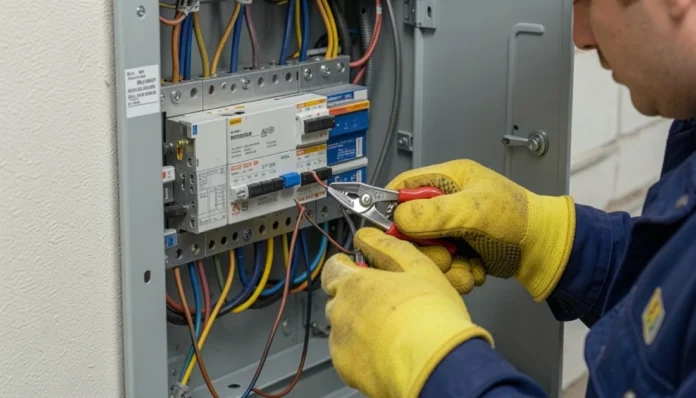
- Main electrical panel work — upgrading, rewiring, or adding circuits to your breaker panel requires a licensed electrician and inspection in virtually every jurisdiction
- Load-bearing wall removal — requires structural engineering assessment; improper removal can compromise the entire home’s integrity
- Gas line installation or repair — small errors create explosion or carbon monoxide risks
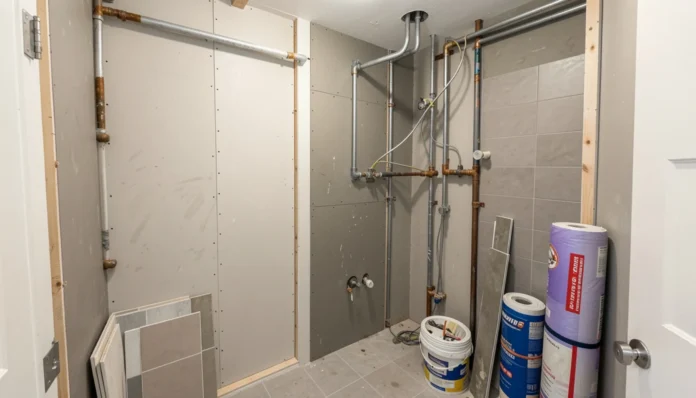
- Major plumbing rerouting — moving drain lines or supply pipes in walls involves precise slope calculations and code compliance
- Roof replacement — improper installation leads to leaks, mold, and voided manufacturer warranties
- Foundation repair — settlement, cracking, or waterproofing issues require professional diagnosis before any treatment
- Asbestos or lead paint removal — federally regulated; requires certified contractors with EPA Lead-Safe Certification in most cases
For these categories, the question isn’t whether you’re capable in theory — it’s whether the legal, safety, and financial risk is worth taking on personally.
The Gray Zone: Projects That Go Either Way
Several common projects fall in the middle. Whether DIY makes sense depends on your specific experience, local permit rules, and the scale of the work.
Examples of gray-zone projects:
- Installing a ceiling fan — straightforward for someone comfortable with basic wiring; worth hiring out if the existing wiring is unusual or you’re uncertain
- Tile work in a bathroom — floor tile is a reasonable beginner project; full shower tile with waterproofing is more demanding, and mistakes lead to water damage
- Deck building — smaller ground-level decks are manageable DIY projects; elevated decks attached to the house typically require permits and precise structural planning
- Water heater replacement — possible for experienced DIYers in areas without strict licensing requirements, but involves gas/electric connections and venting that must meet code
- Replacing windows — standard replacement windows are DIY-capable; structural changes to window openings are not
For gray-zone projects, a useful approach is the “partial DIY” model: hire a contractor for the technical or permitted portions, then handle finishing work yourself. This captures meaningful savings while managing the highest-risk elements professionally.
How to Get Contractor Quotes (and What to Watch For)
If you decide to hire out, getting the right contractor matters as much as the decision to hire at all.
Get at least three quotes for any project over $1,000. Quotes that are significantly lower than the others often signal a contractor who is cutting corners on materials, skipping permits, or is unlicensed.
Before hiring, verify:
- License and insurance — ask for their contractor license number and verify it through your state’s CSLB portal or the National Association of Home Builders (NAHB) directory; confirm they carry general liability and workers’ compensation insurance
- Permit responsibility — confirm in writing who is pulling the permit (it should be the contractor, not you)
- Payment schedule — avoid paying more than 10–20% upfront; tie subsequent payments to completed milestones
- Written scope of work — a verbal agreement is not enough; every detail about materials, timeline, and cleanup should be in writing
- Reputation check — cross-check reviews on GuildQuality for unfiltered homeowner feedback on communication and cleanup
Hourly contractor rates vary significantly by trade and region. General contractors typically charge $50–$150/hour, while licensed electricians and plumbers often range from $75–$200/hour, depending on location and complexity. Get itemized quotes so you can compare material costs separately from labor.
Common DIY Mistakes That End Up Costing More
Understanding where DIY projects typically fail helps you avoid the most expensive errors.
- Here’s where most DIYers stumble: They jump straight to the fun part (painting, tiling) and skip the boring prep work. Result? That ‘perfect’ finish starts peeling or cracking within months.
- Undersizing or oversizing materials, buying just enough material with no margin for cuts and mistakes, leads to mid-project hardware store runs and potential mismatches. Standard practice is to add 10–15% to your material calculation for waste.
- Ignoring water and moisture in bathrooms, kitchens, and basements, skipping proper waterproofing membranes or vapor barriers under the assumption that “it’s probably fine” is one of the most expensive mistakes a homeowner can make.
- When turning off the wrong breaker in electrical work, always verify power is off with a non-contact voltage tester before touching any wiring. Assuming a breaker controls a specific outlet without confirming it is a serious safety risk.
- Starting without a plan, beginning a project before fully understanding each step, having all materials on hand, and knowing how to handle likely complications is how weekend projects turn into months-long unfinished rooms.
Quick Decision Checklist
Use this before starting any project:
- [ ] Do I understand every step of this project, not just the first few?
- [ ] Have I completed something similar before?
- [ ] Does this project require a permit in my area?
- [ ] Do I have all the required tools, or can I rent what I need affordably?
- [ ] If something goes wrong midway, can I manage the consequences?
- [ ] Is the true cost savings (including my time) genuinely worth it?
- [ ] Are there any safety risks — electrical, structural, chemical — I’m not fully equipped to handle?
If you answered no to two or more of these, seriously consider hiring a professional or, at a minimum, consulting one before you start.
FAQs
Can a homeowner pull their own permit?
In many jurisdictions, yes — homeowners can pull permits for work on their primary residence. However, some trades (especially electrical and plumbing) require a licensed contractor to pull the permit in certain states or cities. Always check with your local building department first.
What happens if I do work without a required permit?
Unpermitted work can result in fines, mandatory demolition of the work, and serious complications when selling your home. Buyers’ inspectors and title companies frequently flag unpermitted additions or alterations.
Is DIY always cheaper?
Not always. When you factor in tool purchases, material waste, time, and the risk of costly mistakes, hiring out is sometimes the more economical choice — especially for projects requiring specialized skills or equipment.
How do I know if a wall is load-bearing?
Load-bearing walls typically run perpendicular to floor joists and are positioned above a beam, foundation wall, or another load-bearing wall below. The only reliable way to confirm is to consult a structural engineer or licensed contractor — never assume.
What’s the best first DIY project for a beginner?
Painting a room is the classic starting point — low risk, highly visible improvement, and a good introduction to proper prep work and technique. From there, simple fixture replacements and basic patching build a useful foundation of hands-on experience.
Note: Material costs, contractor rates, and permit requirements vary by region and change over time. Always verify current local codes and get updated quotes for your specific project before making final decisions.