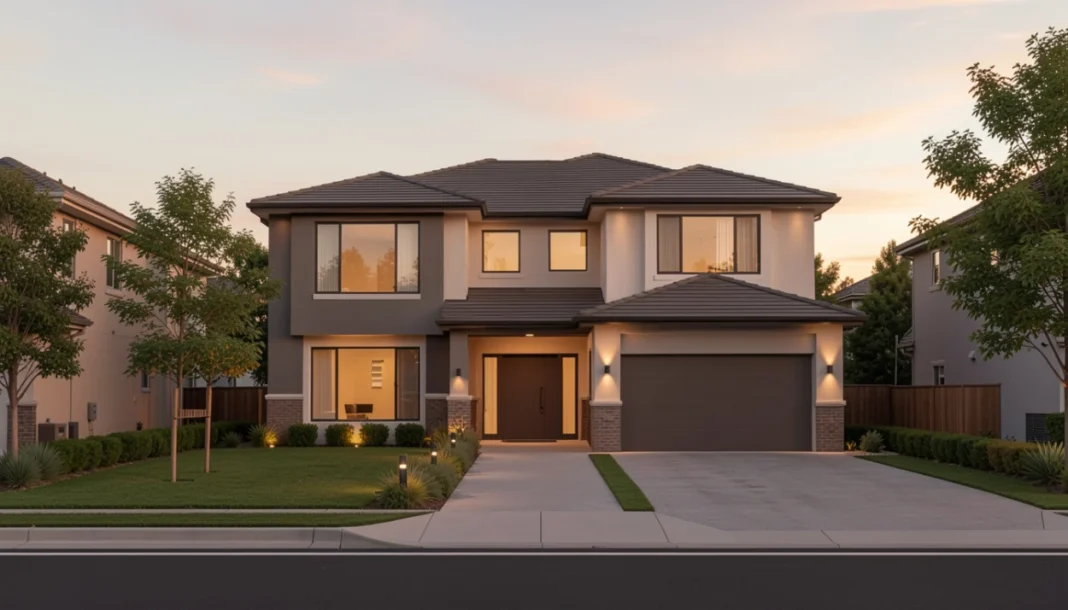
Your home’s exterior is the first thing buyers, neighbors, and guests see — and it can directly affect what your home is worth. But not every curb appeal project delivers equal results. A $1,500 garage door upgrade can return $1,400+ at resale, while a $5,000 decorative fountain might add zero to your appraisal—here’s how to tell the difference.
This guide ranks the most impactful curb appeal home improvements by cost-to-value ratio, with realistic cost ranges, project complexity ratings, and honest advice on what’s worth doing yourself versus hiring out.
Why Curb Appeal Directly Impacts Home Resale Value & Appraisal Scores
Think of curb appeal as your home’s first impression. A tidy exterior tells buyers and appraisers, ‘This place has been cared for’—before they even step inside. A neglected exterior raises red flags about what might be wrong inside, even if the interior is flawless.
According to the National Association of Realtors (NAR) Remodeling Impact Report, certain exterior projects consistently recoup 70–100%+ of their resale cost. Pair this with local Zillow Home Value Index (ZHVI) trends to gauge whether your neighborhood rewards exterior upgrades with higher sale prices. That’s a stronger return than many interior renovations like kitchen remodels, which often recoup closer to 50–70%.
Here’s the advantage: exterior upgrades work 24/7. They create a powerful first impression before a buyer ever opens the front door.
How to Rank Exterior Upgrades Before You Spend
Before diving into individual projects, it helps to understand how to evaluate them. Three factors determine whether an exterior upgrade is worth doing:
- Cost-to-value ratio: How much of your investment do you recoup at resale?
- Perceived impact: How dramatically does it change the home’s appearance from the street?
- Project complexity: Can a capable homeowner do this, or does it require licensed professionals?
The ranked list below scores each upgrade across all three. Projects are listed from highest to lowest overall value, though your specific priorities — budget, timeline, or resale vs. personal enjoyment — may shift the order.
Ranked List: Best Curb Appeal Upgrades by Cost-to-Value Ratio
1. Garage Door Replacement — Best ROI, Low Complexity
This is consistently the single highest-ROI exterior project available to homeowners. Remodeling Magazine’s annual Cost vs. Value report has ranked garage door replacement at or near the top for over a decade, with national average recoup rates frequently above 90%.
A standard steel garage door costs between $1,200 and $3,500 installed, depending on insulation rating, panel style, and hardware. Carriage-house style doors with decorative hardware add cost but also add significant visual character to the front elevation.
- Complexity: Beginner to Intermediate
- DIY Feasibility: Possible, but most homeowners hire a door installation company — installation involves spring tension systems that can be dangerous if mishandled
- Time Required: 4–6 hours (professional install)
- ROI: 90–100%+ at resale
If your garage faces the street, this is the single best place to start.
2. Front Door Replacement — High Impact, Moderate Cost
A new front door does two things simultaneously: it improves security and delivers a strong visual focal point. Steel and fiberglass doors outperform wood in durability and energy efficiency, while still offering wood-grain aesthetics if desired. Look for Energy Star-certified steel or fiberglass doors—they not only improve curb appeal but can qualify for utility rebates while lowering heating/cooling costs.
A mid-range steel entry door runs $1,500 to $3,000 installed. Fiberglass doors with glass inserts range from $2,000 to $5,000+, depending on design complexity. If full replacement isn’t in the budget, refinishing or repainting an existing solid-wood door plus replacing the hardware can achieve 80% of the visual impact for under $300.
- Complexity: Beginner (painting/hardware) to Intermediate (full replacement)
- DIY Feasibility: Painting and hardware — yes. Full door replacement requires accurate framing knowledge
- Time Required: 1–2 hours (refinish) / 4–8 hours (full replacement)
- ROI: 65–75% (full replacement); near 100% on paint/hardware refresh
Don’t overlook the door hardware. Replacing an old brass knob set with a brushed nickel or matte black lever handle costs $80–$200 and immediately modernizes the entry.
3. Siding Replacement — Biggest Visual Transformation, Highest Cost
New siding is the most comprehensive exterior upgrade available. It changes the entire character of a home and, when done properly, improves insulation, moisture resistance, and structural protection simultaneously.
The three most common residential siding materials are:
- Vinyl siding (like CertainTeed’s Monogram line): $5,000–$14,000 for an average home. Lowest upfront cost, minimal maintenance, wide color range with fade-resistant warranties. Does not hold paint, so the color choice at install is permanent without full replacement.
- Fiber cement siding (e.g., James Hardie’s HardiePlank): $8,000–$20,000 installed. More durable than vinyl, it can be painted, resists fire and insects. Heavier material requires more labor.
- Engineered wood siding: $7,000–$18,000. Wood aesthetic with improved moisture resistance. Requires periodic painting but offers a premium look at a mid-range price.
Industry data confirms: fiber cement siding consistently earns 75–80% ROI at resale, while vinyl siding returns around 68–75%, according to the annual Cost vs. Value Report.
- Complexity: Advanced
- DIY Feasibility: Not recommended for beginners. Moisture barriers, proper nailing patterns, and flashing at windows are critical; errors cause long-term water damage
- Time Required: 3–10 days (professional crew)
- ROI: 68–80% depending on material
- Maintenance: Fiber cement requires repainting every 10–15 years; vinyl is virtually maintenance-free
If your current siding is intact but faded or dated, exterior painting or re-staining (see item 4) is a fraction of the cost with meaningful visual return.
4. Exterior Paint or Refinishing — Budget-Friendly, High Visibility
Fresh exterior paint is the most cost-effective way to transform a home’s appearance. For homes with wood, stucco, or fiber cement siding, a full repaint can look nearly as impactful as a siding replacement — at 10–20% of the price.
Professional exterior painting for an average 2,000 sq ft home runs $3,000–$7,000, depending on the number of stories, surface condition, and local labor rates. DIY painting is possible for single-story homes but requires proper surface prep: cleaning, scraping, priming, and caulking before any paint is applied.
Choosing the right color matters more than most homeowners expect. Homes painted in classic neutrals (warm whites, soft grays, greige tones) with contrasting trim tend to photograph better and appeal to a broader buyer pool. Bold colors can work but narrow the audience.
- Complexity: Beginner (single-story, flat surface) to Intermediate (multi-story, prep work)
- DIY Feasibility: Yes, with proper prep. Skipping prep is the most common mistake that leads to premature peeling
- Time Required: 2–5 days (DIY) / 2–3 days (professional)
- ROI: Highly variable, but often 50–75% for professional paint; near 100% for DIY if done well
- Maintenance: Repaint every 7–10 years, depending on climate and material
5. Driveway Repair or Replacement — Underrated Value Driver
A cracked, stained, or sunken driveway signals neglect immediately. Even beautiful landscaping struggles to compensate for a visually damaged driveway. Buyers notice it, appraisers factor in condition, and it sets a negative tone for the entire property visit.
The right approach depends on your current driveway condition:
- Sealing and crack filling (existing asphalt): $100–$400 DIY / $300–$800 professional. Extends life 3–5 years. Worth doing if the base is sound.
- Asphalt resurfacing: $1,500–$4,000. A new top layer over an intact base. Good mid-range solution.
- Full asphalt replacement: $3,000–$8,000 for an average two-car driveway. Best if the base is failing.
- Concrete driveway: $4,500–$12,000. More durable and longer-lasting (30+ years), but more expensive upfront and prone to cracking in freeze-thaw climates.
- Concrete or brick pavers: $10,000–$25,000+. Highest visual impact, premium resale appeal in upscale neighborhoods. Individual pavers can be replaced if damaged.
- Complexity: Beginner (sealing) to Advanced (full replacement — requires grading, compaction equipment, and proper drainage planning)
- DIY Feasibility: Sealing — yes. Full replacement — hire a licensed paving contractor
- ROI: While hard to isolate as a standalone percentage, real estate agents report homes with pristine driveways receive 3-7% higher initial offers and sell 5-10 days faster on average.
6. Landscaping and Lawn Improvements — Cumulative Value Gains
Landscaping is the gift that keeps giving. While a fresh coat of paint shows immediate impact, mature trees and established gardens add value that literally grows over time, making your property stand out in a crowded market.
Studies suggest quality landscaping can add 5–12% to a home’s perceived value, though this varies significantly by neighborhood and region. The key is a low-maintenance, clean design rather than elaborate or exotic plantings. Before planting, use a free app like iScape to visualize mature plant sizes and layout—preventing the common mistake of overgrown foundation plantings that block windows.
The highest-impact landscaping improvements for curb appeal include:
- Lawn reseeding or sod installation: $200–$1,500 (DIY seeding) / $1,500–$6,000 (professional sod). A thick, green lawn is the single most important softscape element.
- Mulching beds: $50–$300 in materials (DIY). Fresh mulch makes beds look intentional and maintained. Replace or refresh annually.
- Edging and bed definition: $30–$80 in materials. Clean edges between lawn and beds signal care and precision.
- Shrubs and foundation plantings: $200–$1,500 depending on species and quantity. Low-growing, structured shrubs anchor the home visually. Avoid overgrown foundation plantings that block windows or look unkempt.
- Tree trimming: $200–$800 professional. Overgrown trees that block the home’s facade reduce curb appeal and can signal liability to buyers.
- Complexity: Beginner (mulching, edging) to Intermediate (sod, planting design)
- DIY Feasibility: Mostly yes, except for large tree work
- Maintenance: Annual mulching, seasonal pruning, regular mowing, and edging
7. Outdoor Lighting — Low Cost, High Perceived Value
Outdoor lighting is one of the most overlooked curb appeal upgrades, and one of the easiest to implement. It serves a dual purpose: security and aesthetics. A well-lit home looks inviting at dusk and photographs well in evening real estate shots.
Key lighting zones to address:
- Entry lighting: Replace outdated fixtures flanking the front door. Mid-range exterior fixtures run $60–$200 each. Matte black and brushed nickel are the most current finishes.
- Path lighting: Solar-powered path lights cost $30–$100 for a set and require no wiring. Low-voltage hardwired systems cost more ($500–$2,000 installed) but are more reliable.
- Landscape uplighting: Spotlights aimed at trees or architectural features add depth and drama. $100–$500 for a basic low-voltage kit.
- Complexity: Beginner (solar and fixture swaps) to Intermediate (hardwired low-voltage systems)
- DIY Feasibility: Yes for solar and fixture replacement. Hardwired low-voltage landscape lighting is also DIY-friendly with a transformer kit
- Time Required: 1–4 hours
- ROI: Difficult to isolate, but consistently cited by real estate agents as a high-impact, low-cost recommendation
8. Walkways, Edging, and Hardscaping — Polish That Pays
The path from the driveway to the front door is a buyer’s literal first experience of the property. A cracked, uneven, or overgrown walkway undermines everything else you’ve done.
Options range from basic repair to full installation:
- Concrete walkway repair (patching): $50–$200 in materials. Quick fix for minor cracks.
- New concrete walkway: $800–$2,500, depending on length and width
- Paver walkway: $2,000–$6,000. More visual interest, easier to repair individual sections, works well with traditional and craftsman-style homes
- Gravel path: $200–$1,000. Budget-friendly, permeable, and works best in cottage or rustic aesthetics
Adding decorative edging or low border plants along the walkway costs very little and frames the path intentionally.
- Complexity: Beginner (gravel, edging) to Advanced (concrete forming and pouring)
- DIY Feasibility: Gravel and paver paths with a stable base — yes. Poured concrete — hire a professional for best results
- ROI: Contributes to the overall condition score; hard to isolate, but removes a visible negative
What to Tackle First: A Simple Decision Framework
If you’re working with a limited budget, the order of operations matters. Here’s a straightforward way to prioritize:
Fix problems before adding polish. A cracked driveway, peeling paint, or broken gutters signals neglect and will undercut every other improvement. Address visible damage first.
Then focus on the highest-ROI projects. Garage door replacement, front door updates, and exterior paint deliver the most visible return per dollar spent. These are your first-tier investments if selling within 1–3 years.
Add landscape and lighting improvements last. These have strong cumulative value but won’t compensate for structural or cosmetic problems with the home itself. For a personalized project sequence, use a home improvement calculator like HomeAdvisor’s True Cost Guide or Angi’s Project Planner to model your specific budget vs. value scenario.
DIY vs. Hiring a Pro for Exterior Projects
Not every exterior project is appropriate for DIY. Here’s a quick breakdown:
| Project | DIY Appropriate? | Notes |
|---|---|---|
| Exterior painting (1-story) | Yes | Requires proper prep and safety with ladders |
| Garage door replacement | Proceed with caution | Spring systems can cause serious injury |
| Front door replacement | Intermediate skill needed | Framing and weatherstripping are critical |
| Siding replacement | Hire a pro | Water management is complex; errors are costly |
| Driveway sealing | Yes | Follow product instructions carefully |
| Full driveway replacement | Hire a paving contractor | Requires grading equipment and compaction knowledge |
| Landscaping/Mulching | Yes | Physical labor, but no specialized skill required |
| Hardwired outdoor lighting | Intermediate | Low-voltage is DIY-friendly; line-voltage requires an electrician |
| Walkway (pavers) | Yes, with research | Proper base compaction is key to preventing settling |
The General Rule: Any project involving structural integrity, electrical line voltage, or water management should involve a licensed professional.
Common Mistakes Homeowners Make With Curb Appeal Projects
Understanding what goes wrong helps you avoid expensive do-overs. Before starting any project, view your home on Google Street View to see it as a potential buyer would—this often reveals overlooked issues like faded trim or uneven walkways.
- Skipping surface prep before painting. Paint applied over dirty, peeling, or uncaulked surfaces will fail within 1–3 years. Prep is 60% of the job.
- Choosing siding or door colors based on current trends alone. Trendy colors can date quickly. Neutral palettes have broader appeal and photograph better for listings.
- Over-landscaping with high-maintenance plants. Dense, intricate plantings look great when maintained, but become a liability if neglected. Choose species suited to your climate and maintenance capacity.
- Ignoring gutters and downspouts. Sagging or clogged gutters are visible from the street and signal water management problems. Clean, replace, or re-secure gutters as part of any exterior refresh.
- Fixing cosmetics without addressing underlying damage. New paint over rotting wood, or new mulch over grading problems, masks issues temporarily, but doesn’t solve them. Buyers and inspectors will find these things.
FAQs
Which curb appeal improvement adds the most value?
Garage door replacement consistently ranks first by ROI percentage, often recouping 90% or more of its cost. For absolute dollar impact on perceived value, siding replacement delivers the most dramatic transformation.
How much should I budget for curb appeal improvements?
A meaningful exterior refresh — including painting, landscaping cleanup, lighting updates, and minor repairs — can be accomplished for $3,000–$8,000, depending on home size and condition. Full-scale projects like siding or driveway replacement push totals to $10,000–$30,000+.
Does a new driveway increase home value?
Indirectly, yes. A damaged driveway can reduce buyer offers or raise maintenance concerns. A clean, intact driveway removes that objection. Paver driveways in higher-end markets can contribute to premium pricing, but a basic concrete or asphalt replacement primarily restores expected condition rather than adding above-market value.
What are the best low-cost curb appeal improvements?
Power washing the exterior, repainting the front door, replacing entry hardware, refreshing mulch, edging the lawn, and installing solar path lighting are all high-visibility improvements achievable for under $500 total with DIY effort.
Should I improve curb appeal before selling my home?
Yes — particularly the low-cost, high-visibility improvements. Real estate professionals consistently note that homes with strong curb appeal sell faster and receive closer-to-asking offers than comparable homes with neglected exteriors.