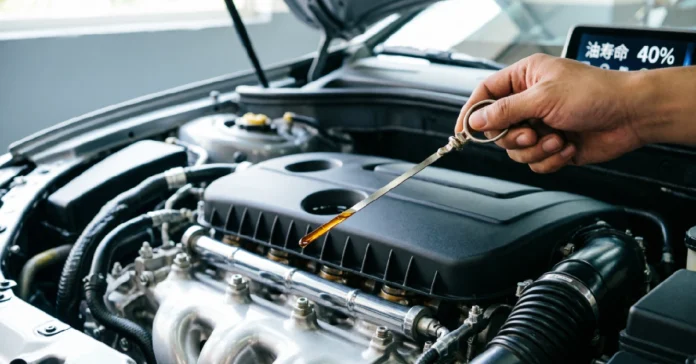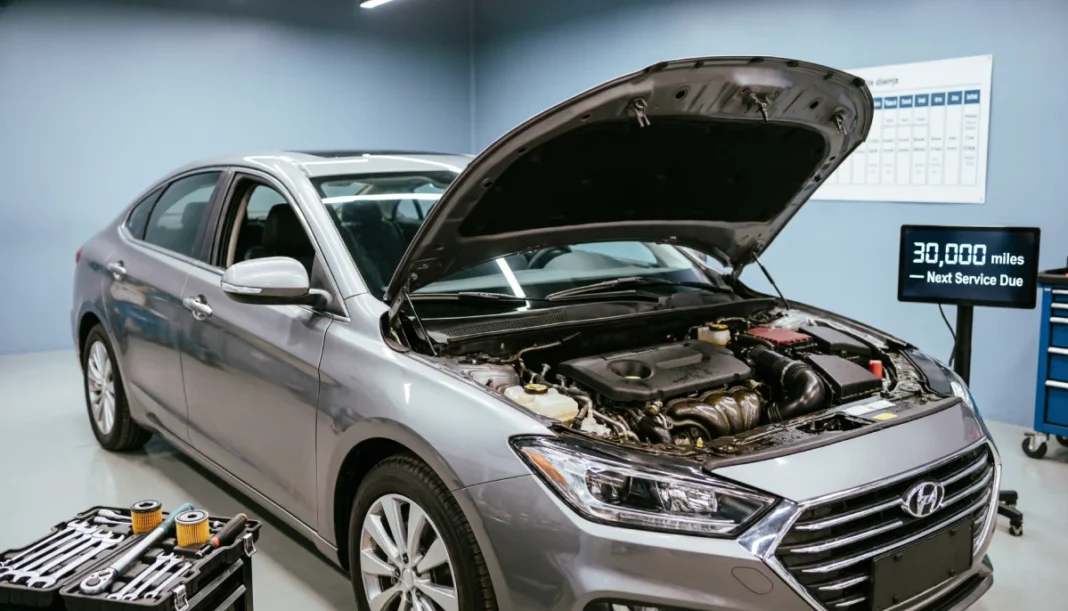
A friend bought a used Honda Accord with 58,000 miles on it. The previous owner had kept up with oil changes but skipped the 60k service entirely — no transmission fluid change, no spark plugs, no air filter. Six months later, the car started hesitating at highway speeds. The repair bill came to $1,400. The actual 60k service would have cost around $300 to $400.
That’s the quiet cost of ignored maintenance. It doesn’t announce itself. It just builds up, quietly, until something fails at the worst possible time.
This car maintenance schedule by mileage breaks down exactly what your vehicle needs at 30k, 60k, and 100k miles—so you avoid surprise repairs and dealer upsells. Cross-reference this guide with your OEM maintenance intervals, or consult an ASE-certified technician for vehicle-specific advice.
Why Mileage-Based Maintenance Actually Matters
Car manufacturers design components with a lifespan measured in miles. Spark plugs don’t care what year it is — they wear out after a certain number of combustion cycles. Transmission fluid breaks down after sustained heat and friction. Timing belts develop micro-cracks over distance.
Stick to the mileage schedule, and you’ll keep critical parts running as the engineer intended—no guesswork, just reliability. Skip a $200 service today, and you might pay $2,000 later. That’s not saving—that’s borrowing from your future self at high interest.
Time vs. Mileage — Which Should You Follow?
If you drive very little — say, under 7,500 miles per year — time becomes the more relevant factor. Fluids degrade even when the car sits. Rubber components dry out. Seals shrink. A general rule: even if you haven’t hit the mileage threshold, don’t go beyond 12 months without at least an oil change and a basic inspection.
For most drivers covering 12,000 to 15,000 miles per year, mileage is the primary guide.
The 30,000-Mile Service Checklist
Think your car feels fine at 30k? That’s the trap. A clogged air filter or worn spark plug won’t trigger a warning light—but they’ll quietly steal fuel economy and acceleration. Catch them now, pay later.
What’s Usually Due at 30k
- Engine air filter — Gets clogged with dust, pollen, and road debris. A dirty air filter reduces engine efficiency and can affect acceleration noticeably. A dirty air filter can skew MAF sensor readings, throwing off fuel trim. A quick OBD2 scan can catch these hidden issues before they impact performance.
- Cabin air filter — Affects air quality inside the car. Often cheaper than the engine filter, almost always overdue.
- Tire rotation — Prevents uneven wear. Front tires on front-wheel-drive cars wear faster; rotation evens out tread life.
- Brake inspection — Not necessarily a replacement yet, but worth measuring pad thickness. If you bought the car used, do this immediately.
- Oil and filter change — Should already have been done multiple times by now if you’re following a 5,000–7,500-mile oil change interval. Use full-synthetic oil meeting API SP or ILSAC GF-6 standards—these newer specifications protect against low-speed pre-ignition in turbocharged engines.
- Battery test — Most batteries last 3 to 5 years. At 30k miles, if the battery is original and the car is 3+ years old, get it tested.
- Diagnostic scan — Plug in a basic OBD2 scanner to check for pending codes that haven’t triggered a warning light yet—many auto parts stores lend them free.
- Inspect belts and hoses — Look for cracking, fraying, or softness. A snapped belt on the highway is an avoidable situation.
- Check all fluids — Coolant, brake fluid, power steering fluid (if applicable), and windshield washer fluid.
Approximate Costs at 30k
| Service | Estimated Cost |
|---|---|
| Engine air filter | $20–$50 |
| Cabin air filter | $15–$40 |
| Tire rotation | $20–$50 |
| Oil change (synthetic) | $60–$100 |
| Brake inspection | $0–$30 (often free with other work) |
| Battery test | Free at most auto parts stores |
Total 30k service estimate: $150–$300, depending on your car and who does the work.
Costs vary by region and shop type. DIY may save 30–50% on parts, but factor in tools and time. Use RepairPal’s Fair Price Estimator to validate local quotes. Compare dealer quotes against independent shops like NAPA AutoCare or mobile services like YourMechanic for transparent pricing.
The 60,000-Mile Service Checklist
The 60k service is the one most people underestimate. By this point, your car has been through enough heat cycles, stop-and-go traffic, and highway miles that several critical systems need attention — not just inspection.
Dealerships love the 60k mark—it’s prime upsell season. Here’s how to spot the must-dos from the nice-to-haves.
What’s Usually Due at 60k
- Spark plugs — Standard copper plugs typically last 30,000 miles. Iridium or platinum plugs can go 60,000 to 100,000 miles. Check your owner’s manual. Worn spark plugs cause rough idling, reduced fuel economy, and sluggish acceleration. Always use a torque wrench to tighten spark plugs to your engine’s spec—over-tightening can crack the ceramic insulator, while under-tightening risks misfires.
- Transmission fluid — This is the one most people skip and most regret. Automatic transmission fluid (ATF) breaks down after 30k–60k miles. Skipping this $100–$250 service risks internal wear—by the time you feel hesitation, damage may already be done. Use the exact ATF specification your manufacturer lists—whether ATF+4, Dexron VI, or CVT-specific fluid—to avoid compatibility issues.
- Coolant flush — Coolant becomes acidic over time and starts corroding the cooling system from the inside. A flush replaces the fluid and removes built-up deposits.
- Brake fluid — Absorbs moisture over time, which lowers its boiling point and can lead to brake fade. Change it every 2 years or at 60k miles.
- Fuel filter — On cars where it’s externally accessible, a clogged fuel filter restricts flow to the injectors, causing hesitation and hard starts.
- Drive belts (serpentine belt) — If it hasn’t been replaced, do it now. A broken serpentine belt kills power steering, the alternator, and the water pump — simultaneously.
- Tire replacement — Depending on driving style and conditions, tires may need replacing around this mileage. Check tread depth (minimum 2/32 inches, replace at 4/32 for safety).
- Wheel alignment — If the car pulls to one side or you notice uneven tire wear, alignment is overdue.
Approximate Costs at 60k
| Service | Estimated Cost |
|---|---|
| Spark plugs (4–6 cylinder) | $80–$200 |
| Transmission fluid change | $100–$250 |
| Coolant flush | $80–$150 |
| Brake fluid change | $70–$130 |
| Serpentine belt | $75–$200 |
| Fuel filter | $50–$150 |
| Wheel alignment | $70–$150 |
Total 60k service estimate: $400–$1,000+, depending on which services are due and your vehicle type.
Costs vary by region and shop type. DIY may save 30–50% on parts, but factor in tools and time. Use RepairPal’s Fair Price Estimator to validate local quotes. Compare dealer quotes against independent shops like NAPA AutoCare or mobile services like YourMechanic for transparent pricing.
What Dealers Upsell at 60k (And What You Can Skip)
At the 60k mark, dealers often recommend services that sound necessary but may not be:
- Throttle body cleaning — Only needed if you have actual idle or hesitation issues. Not a routine service.
- Fuel injector cleaning — Useful if you’re experiencing problems. Not mandatory on a well-maintained car using quality fuel.
- Power steering flush — Rarely listed in owner’s manuals as a scheduled service. Do it if the fluid is black or the steering feels stiff.
- “Engine flush” or “oil flush” additives — Skip these. A proper oil change is sufficient.
Your owner’s manual isn’t just paperwork—it’s your car’s personalized playbook. When in doubt, flip to the maintenance section first. If a service isn’t in the manual and you’re not experiencing a problem, ask for a specific reason before agreeing.
The 100,000-Mile Service Checklist
Hitting 100k miles used to feel like a countdown to the junkyard. Modern engineering flipped that script—your car’s just hitting its stride. Modern vehicles — especially Japanese makes like Toyota and Honda — routinely reach 200,000+ miles with proper maintenance. But the 100k service is genuinely significant. Several components that were designed for long service lives are finally reaching their replacement window.
What’s Usually Due at 100k
- Timing belt (if applicable) — This is the most important service at 100k. On interference engines, a broken timing belt causes catastrophic engine damage — valves meet pistons, and the repair can cost more than the car is worth. Most timing belts are rated for 60,000 to 100,000 miles. If yours is overdue, prioritize this above everything else. Note: Cars with timing chains rather than belts typically don’t need this service.
- Water pump — Usually replaced at the same time as the timing belt, since accessing it requires removing the same components. Replacing both together saves significant labor costs.
- Spark plugs (if iridium/platinum) — If you have long-life spark plugs that weren’t replaced at 60k, 100k is the hard deadline.
- Coolant flush — If not done at 60k, it’s overdue by now.
- Transmission service — Full fluid change, and on older or high-mileage automatics, consider a pan drop and filter replacement.
- Differential fluid — On rear-wheel-drive, four-wheel-drive, and all-wheel-drive vehicles, the differential fluid needs changing. This is commonly forgotten and can lead to expensive drivetrain damage.
- Brake pads and rotors — Pads typically last 25,000 to 65,000 miles, depending on driving style. By 100k, you may be on your second or third set. Rotors should be inspected and measured.
- Oxygen sensors — These regulate fuel mixture. Worn sensors cause poor fuel economy and failed emissions tests. Replacement is typically recommended between 60,000 and 100,000 miles.
- Hoses and gaskets — Rubber deteriorates. At 100k, a comprehensive hose inspection is worth doing, particularly radiator hoses, heater hoses, and any visible gaskets.
Approximate Costs at 100k
| Service | Estimated Cost |
|---|---|
| Timing belt + water pump | $500–$1,200 |
| Spark plugs (iridium) | $150–$300 |
| Oxygen sensor(s) | $200–$500 |
| Differential fluid | $80–$150 |
| Brake pads + rotors | $300–$700 per axle |
| Coolant flush | $80–$150 |
Total 100k service estimate: $800–$2,500+ — spread across multiple visits if needed.
Costs vary by region and shop type. DIY may save 30–50% on parts, but factor in tools and time. Use RepairPal’s Fair Price Estimator to validate local quotes. Compare dealer quotes against independent shops like NAPA AutoCare or mobile services like YourMechanic for transparent pricing.
Is It Worth Keeping a Car Past 100k?
Yes — in most cases, if the car has been maintained. The 100k service is a reset of sorts. After completing it, a well-maintained vehicle can reliably go another 50,000 to 100,000 miles with routine upkeep.
The math is straightforward. Even a $1,500 service is cheaper than a car payment on a new vehicle. Unless the car has serious rust, frame damage, or a failing engine or transmission, investing in a 100k service is almost always the better financial decision.
How Driving Conditions Change Your Service Schedule
Your owner’s manual includes two maintenance schedules: normal and severe. Most drivers assume they fall under “normal.” Many do not.
Severe driving conditions include:
- Frequent short trips under 5 miles
- Stop-and-go city driving (think delivery drivers or daily commuters in traffic)
- Extreme heat or cold climates
- Towing, hauling, or carrying heavy loads regularly
- Driving on dusty or unpaved roads
If any of these apply to you, shorten your service intervals by 25 to 30 percent. Oil changes come sooner. Filters clog faster. Brakes wear more quickly. Ignoring this leads to premature failure even if you’re technically “following the schedule.”
Dealer vs. Independent Mechanic — Where Should You Go?
Use a dealer when:
- Your car is under warranty (dealer work won’t void it; using third-party parts could, depending on the warranty terms)
- You need manufacturer-specific software updates or diagnostics
- You’re dealing with recall work (always free at the dealer)
- You drive a brand where specialized knowledge matters — German cars, for example, often benefit from brand-trained technicians
Use an independent mechanic when:
- Your car is out of warranty, and the dealer’s premium isn’t justified
- You’ve found a trusted shop with specific experience in your make
- You want a second opinion on dealer-recommended services
- You’re doing straightforward services like oil changes, filters, or brakes
One practical approach: use the dealer for complex diagnostics and warranty work, independent shops for routine maintenance. A reputable independent mechanic with good reviews will do equivalent work for 20 to 40 percent less than dealership labor rates.
Common Maintenance Mistakes That Cost You More Later
- Assuming ‘no symptoms = no problem’ with transmission fluid. Unlike oil, ATF rarely gives warnings before failure. By the time you notice hesitation or harsh shifting, internal damage may already be done.
- Only changing oil when the dashboard light comes on. That light is a last-resort alert. Treat it as the maximum interval, not the target.
- Replace only one brake pad axle at a time. Mismatched pad thickness causes uneven braking and accelerates rotor wear. Always replace in pairs per axle.
- Ignoring wheel alignment after hitting a curb or pothole. A single bad impact can throw alignment off enough to chew through tires in 10,000 miles.
- Buying the cheapest tires available. Tires are the only contact point between your car and the road. Budget tires perform noticeably worse in wet conditions and wear faster. The savings rarely justify the tradeoff.
- Assuming a clean engine bay means a healthy car. Appearance tells you nothing about fluid condition, sensor health, or internal wear.
How to Track Your Car’s Maintenance Schedule
Keeping track manually is easier than most people assume. Here are three approaches that work:
1. Your owner’s manual
The maintenance schedule section lists exactly what’s due at each mileage interval for your specific car. Use it. It’s more accurate than any generic guide, including this one.
2. A simple spreadsheet or notes app
Log every service with the date, mileage, what was done, and cost. Fifteen minutes of record-keeping saves hours of guessing later — and increases resale value.
3. Apps like Carfax Car Care, AUTOsist, or Drivvo
These let you log services, set mileage reminders, and track costs over time. Basic features are free on most.
If you bought a used car without service records, start fresh. Get a full inspection, change all fluids, and treat it as a baseline from which you track forward.
FAQs
What does a 60k service include?
Spark plugs, transmission fluid, coolant flush, brake fluid, serpentine belt, and possibly a fuel filter and wheel alignment. This is the most consequential routine service most cars need.
How much does a 60k car service cost?
Expect $400 to $1,000, depending on your vehicle and what’s actually due. Get an itemized quote and compare it against your owner’s manual before approving anything.
What happens if you skip scheduled maintenance?
Short term, often nothing obvious. Long term, you’re shortening component lifespans and increasing the likelihood of a major repair. Skipping a $200 transmission service can lead to a $2,000 transmission rebuild.
Is 100,000 miles a big deal for a car?
It used to be. It isn’t anymore. The 100k milestone matters mainly because timing belts, oxygen sensors, and other long-life components reach their replacement window. After a proper 100k service, a well-maintained car can go significantly further.
How do I know if my car needs a timing belt or a timing chain?
Check your owner’s manual or look up your specific engine online. As a general rule, most Japanese cars from the 1990s through the 2000s used timing belts. Many modern engines — particularly from Toyota, Honda, and most European makes — now use chains, which don’t require scheduled replacement.