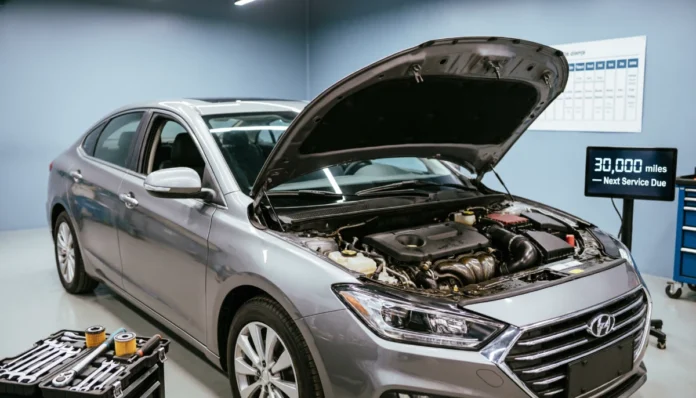
Picture this: your tyre pressure warning light comes on during a motorway run in January, or your car cranks slowly on a cold morning three weeks before your next scheduled service. Neither situation is dramatic on its own — but both are usually preventable with a quick monthly check. The problems that lead to breakdowns or expensive repair bills rarely appear without warning. They develop gradually, through fluid levels that quietly drop, components that slowly deteriorate, and warning signs that go unnoticed.
This guide walks through 10 practical checks you can run once a month, most requiring no tools beyond a tyre pressure gauge and decent lighting. Each section explains what to look for, what it means, and when to act — so you can stay ahead of problems rather than react to them.
Monthly Check Summary
| Check | Tool Needed | DIY Friendly | When to See a Mechanic |
|---|---|---|---|
| Engine oil | Dipstick (built-in) | ✅ | If consistently low between changes |
| Coolant | Visual (reservoir) | ✅ | If repeatedly low — suspect a leak |
| Tyre pressure | Pressure gauge | ✅ | If TPMS light stays on after inflating |
| Brake fluid | Visual (reservoir) | ✅ | If level is low with no worn pads |
| Power steering fluid | Visual (reservoir) | ✅ | If repeatedly low — suspect a leak |
| Washer fluid + wipers | Visual | ✅ | If wipers streak on a new blade |
| Battery terminals | Visual | ✅ | Heavy corrosion, swollen case, slow cranking |
| Exterior lights | Visual + assistant | ✅ | LED/matrix headlights — professional replacement |
| Air filters (engine + cabin) | Visual | ✅ | If unsure of last replacement date |
| Belts and hoses | Visual | ✅ | Any cracking, fraying, or soft hose sections |
Why Monthly Checks Catch What Annual Services Miss
Most vehicle service schedules run at 12-month or mileage-based intervals. A lot can change in that window — particularly for drivers making frequent short trips. Short, stop-and-go journeys under 10 miles are harder on engine oil, batteries, and brakes than steady highway driving, because the engine rarely reaches full operating temperature. This means contaminants don’t burn off the oil, the battery doesn’t fully recharge from each start, and moisture accumulates in systems more quickly.
A monthly check takes around 15–20 minutes once you know your vehicle. It won’t replace a professional service, but it gives you consistent awareness of your vehicle’s condition — and makes it easier to spot when something has changed since last month.
The 10 Monthly Checks
1. How to Check Engine Oil Level and Condition
Engine oil lubricates internal moving parts and helps manage engine temperature. Running low on clean oil is one of the more common causes of premature engine wear.
How to check:
- Park on level ground and wait at least 10 minutes after switching off the engine
- Pull the dipstick (usually a yellow or orange handle), wipe it clean with a rag, reinsert it fully, then pull it out again
- The oil level should sit between the MIN and MAX markings
What to look for beyond the level:
- Amber-brown and translucent — healthy oil
- Very dark or black and thick — may be due for a change
- Milky or grey — can indicate coolant contamination (needs professional inspection)
- Gritty texture — metal particles present; needs investigation
When to act: If you’re topping up more than half a litre between services, your engine may be burning or leaking oil. That’s worth a mechanic’s assessment rather than simply monitoring.
2. How to Check Coolant Level
Coolant (antifreeze) regulates engine temperature and prevents freezing in cold conditions. A low coolant level can lead to overheating — one of the more damaging mechanical failures a vehicle can experience.
How to check:
- Only check when the engine is completely cold
- Locate the coolant reservoir — a translucent plastic tank, usually near the radiator
- The level should sit between the MIN and MAX markings on the reservoir
⚠️ Never open the radiator cap on a warm or hot engine. Pressurised coolant can cause serious burns.
What to look for:
- If low, top up with the correct coolant type for your vehicle. Check your owner’s manual — mixing incompatible coolant types can cause damage to seals and the cooling system
- If you’re regularly topping up, a leak somewhere in the system is the likely cause. A healthy cooling system doesn’t consume coolant
3. How to Check Tyre Pressure and Tread Depth
Tyre pressure affects fuel efficiency, handling precision, braking distance, and tyre lifespan. Tyres lose roughly 1 PSI per month under normal conditions and can drop more quickly in cold weather — approximately 1 PSI for every 10°F (5.5°C) temperature drop.
How to check pressure:
- Use a tyre pressure gauge on cold tyres (before driving, or after the vehicle has sat for at least three hours)
- Check the recommended pressure on the door jamb sticker or owner’s manual — not the maximum figure printed on the tyre sidewall
- Check all four tyres and the spare
About TPMS: Most vehicles built after 2008 (US) and 2014 (EU) have a Tyre Pressure Monitoring System (TPMS). A TPMS warning light means at least one tyre has dropped significantly — but the system only activates at around 25% below recommended pressure, meaning tyre pressure can be meaningfully low without triggering the light. Monthly manual checks remain worthwhile even with TPMS fitted.
Checking tread depth: Look across the tyre surface for wear indicator bars — small raised sections built into the tread grooves. When the tread is level with these bars, the tyre needs replacing. UK legal minimum is 1.6mm across the central three-quarters. A 20p coin is a commonly used check — if the outer band is hidden when inserted into the tread groove, you’re above the minimum.
Also check for uneven wear patterns. Wear on only one edge of the tyre often points to an alignment or suspension issue worth investigating.
4. How to Check Brake Fluid
Brake fluid transfers pedal pressure into the mechanical force that stops your vehicle. It’s hygroscopic — meaning it naturally absorbs moisture from the air over time. As moisture content increases, the fluid’s boiling point drops. In heavy braking situations, this can reduce braking effectiveness.
How to check:
- Locate the brake fluid reservoir on the driver’s side near the firewall — it’s a small container, usually with a white cap and MIN/MAX markings
- Check the level and the fluid colour with the cap on
What to look for:
- Fresh brake fluid is pale yellow and clear
- Dark brown or murky fluid has absorbed significant moisture and is due for replacement, regardless of the level
⚠️ If the level has dropped noticeably: Don’t simply top it up and move on. A gradual drop is expected as brake pads wear (the callipers extend further, drawing more fluid). A sudden or significant drop points to a potential leak in the brake lines or callipers — which requires immediate professional inspection before the vehicle is driven further.
5. How to Check Power Steering Fluid
This check applies only to vehicles with hydraulic power steering. Many vehicles produced from around 2012 onwards use electric power steering (EPS), which has no fluid reservoir. If you’re unsure which system your vehicle uses, check your owner’s manual — if there’s no reservoir, you have EPS, and this check doesn’t apply.
For hydraulic systems:
- Locate the power steering reservoir (position varies by vehicle)
- Check the level against the MIN and MAX markings, or use the dipstick on the reservoir cap
- The fluid should be clear to light pink or red (varies by vehicle)
A low level combined with a whining or groaning noise when turning usually suggests a leak in the system. Repeatedly topping up without identifying the source isn’t a long-term fix.
6. How to Check Washer Fluid and Wiper Blade Condition
These two checks are quick but often overlooked together.
Washer fluid:
- Fill the reservoir (marked with a windscreen/water symbol) with appropriate washer fluid — not tap water
- In cold climates, use fluid rated for your temperatures. Water in the lines can freeze and damage the pump
Wiper blade condition: Run your wiper blades through a full cycle and watch for:
- Streaking or smearing — a sign the rubber edge has degraded
- Chattering or skipping across the screen
- Visible cracking or splitting on the rubber strip
Wiper blades typically last 6–12 months, though UV exposure and temperature extremes can shorten this. Replacement blades are inexpensive and straightforward to fit on most vehicles. Don’t wait until visibility is compromised in rain.
7. How to Check the Car Battery and Terminals
A car battery typically lasts 3–5 years, though frequent short trips, extreme heat, and heavy electrical loads (heated seats, charging devices) can reduce this. Monthly visual checks flag obvious problems early.
What to look for:
- White or blue-green powdery buildup on the terminal clamps — this is corrosion and can impede the electrical connection
- Loose terminal clamps — should be firm, not moveable by hand
- Swollen or misshapen battery case — indicates internal damage; replace promptly
Cleaning light corrosion: Mix baking soda with water, disconnect the negative terminal first, apply with a small brush, rinse carefully, dry, and reconnect. Heavy corrosion, a distorted case, or consistent slow cranking are reasons to have the battery tested. Many garages and auto parts retailers offer free battery testing.
Note on AGM and EFB batteries: Vehicles with a start-stop system (the engine cuts out at traffic lights and restarts automatically) typically use AGM (Absorbent Glass Mat) or EFB (Enhanced Flooded Battery) batteries. These are more sensitive to incorrect charging and must be replaced like-for-like. If your start-stop vehicle is showing slow-start symptoms, ensure any replacement is the correct battery type — fitting a standard battery in an AGM vehicle can cause electrical issues.
⚠️ Always disconnect the negative terminal before working near a battery. Avoid sparks in the area — batteries produce hydrogen gas during charging.
8. How to Check Exterior Lights
A failed headlight, brake light, or indicator is a safety issue and, in most countries, a legal one. Bulbs fail gradually or suddenly, and they’re easy to miss from the driver’s seat.
Monthly walk-around check:
- Headlights — low beam and high beam
- Tail lights and brake lights — you’ll need someone to press the pedal while you observe from behind, or use a reflective surface such as a garage door or metal panel
- Indicators — all four corners, including hazard lights
- Reverse lights — activated when gear is in reverse
- Fog lights — front and rear where fitted
Replacement notes: Standard halogen bulbs are typically a DIY task on most vehicles. However, many modern vehicles fitted with LED, matrix, or adaptive headlights require professional replacement — the systems can be complex to access and require calibration. Check your owner’s manual before attempting any headlight replacement.
9. How to Check Engine and Cabin Air Filters
These are two separate filters that drivers frequently confuse. Both affect your comfort and your vehicle’s performance, but in different ways.
Engine air filter: The engine air filter protects the engine from dust and debris. A clogged filter restricts airflow, which can reduce power and fuel efficiency.
- Located inside a plastic housing connected to the engine intake duct — usually accessible without tools
- Pull the filter out and hold it to light: a new filter is white or off-white; a grey or visibly dirty filter is due for replacement
- Typical replacement interval: every 15,000–30,000 miles, though this shortens with dusty or rural driving conditions
Cabin air filter: The cabin air filter cleans the air entering your vehicle through the heating and ventilation system. It has no effect on engine performance, but a clogged cabin filter can reduce heater and air conditioning output, produce stale or musty air inside the vehicle, and cause the blower motor to work harder.
- Located behind the glovebox in most vehicles (position varies)
- A blocked cabin filter is often overlooked because its effects build up gradually
- Typical replacement interval: 12,000–15,000 miles or annually — whichever comes first
- Replacement is DIY-friendly on most vehicles and typically costs £10–£25 for the filter
If you’ve noticed reduced airflow from your vents or a musty smell that doesn’t clear, the cabin filter is a logical first check.
10. How to Check Belts and Hoses
With the engine off and cool, look at accessible belts and coolant hoses for visible signs of wear.
Serpentine (auxiliary) belt:
- Look for glazing (shiny surface), cracking along the rib face, fraying at the edges, or missing chunks
- A failing serpentine belt drives the alternator, power steering pump, and other accessories — a snap leaves you stranded
Timing belt vs timing chain:
- Many vehicles use a timing belt — a rubber belt that synchronises the engine’s camshaft and crankshaft. These have a scheduled replacement interval, typically 60,000–100,000 miles depending on the vehicle. Check your owner’s manual for the specific interval
- Many modern vehicles use a timing chain instead, which is metal and generally lasts the life of the engine without a scheduled replacement. It does not require the same routine monitoring
- If you don’t know which your vehicle uses or when the timing belt was last replaced, this is worth checking with a mechanic — a snapped timing belt can cause severe engine damage
Coolant hoses: Squeeze accessible hoses gently. They should feel firm but slightly pliable. Rock-hard, soft, or spongy sections indicate deterioration. Look for swelling near clamps, surface cracking, or weeping at connection points.
Bonus Check: Use an OBD-II Reader
Vehicles built after 1996 have an OBD-II (On-Board Diagnostics) port, usually located under the dashboard on the driver’s side. A basic OBD-II reader — available for as little as £15–£25 — plugs into this port and reads any stored fault codes from your vehicle’s computer.
Running a scan once a month as part of your routine can surface issues before they trigger a dashboard warning light. It won’t diagnose every problem, but it can tell you if a sensor has registered a fault that isn’t yet visible to the driver. Several free or low-cost apps pair with Bluetooth OBD-II adapters and present the information clearly.
This doesn’t replace professional diagnostics, but it’s a useful awareness tool — particularly if your vehicle has been running slightly differently and you can’t identify why.
Adjusting Checks for the Season
Winter: Cold temperatures drop tyre pressure, reduce battery output, and thicken fluids temporarily. Check tyre pressure more frequently in temperature swings, ensure coolant is rated for your lowest expected temperature, and be more alert to slow-cranking symptoms.
Summer: Heat accelerates fluid degradation and increases the load on the cooling system. Check coolant level more attentively and watch for any overheating symptoms (temperature gauge rising higher than usual, coolant warning light).
Monthly Maintenance Log: A Simple Habit Worth Starting
Keep a brief note each month — a phone note or a small notebook in the glovebox works fine. Record:
- Date of check
- Oil level and any top-up amounts
- Any fluids topped up
- Anything noticed (tyre condition, light changes, unusual sounds)
This record is directly useful when speaking to a mechanic. A trend — such as consistently adding 300ml of oil every month — tells a more useful story than a single reading.
When to Call a Mechanic
Monthly checks give you awareness. They tell you when something looks different from last month. But some findings require professional attention rather than monitoring:
- Brake fluid level has dropped without worn pads as the explanation
- Coolant or oil is consistently low between checks with no visible external leak
- A warning light remains on after addressing the obvious cause
- Brake pedal feels different — spongy, lower, or pulling to one side
- Battery is over four years old with slow start symptoms in cold weather
- Any cracking or soft sections in belts or hoses
These aren’t emergencies in every case, but they warrant a professional opinion rather than continued monitoring.
Closing Thought
A consistent monthly habit built around these 10 checks keeps you informed rather than reactive. Most of what leads to unexpected breakdowns or costly repairs has a preceding warning — a fluid that’s been dropping, a component that’s been slowly deteriorating. The checks above take less time than filling up with fuel. Run them monthly, keep brief notes, and you’ll have a much clearer picture of where your vehicle actually stands.