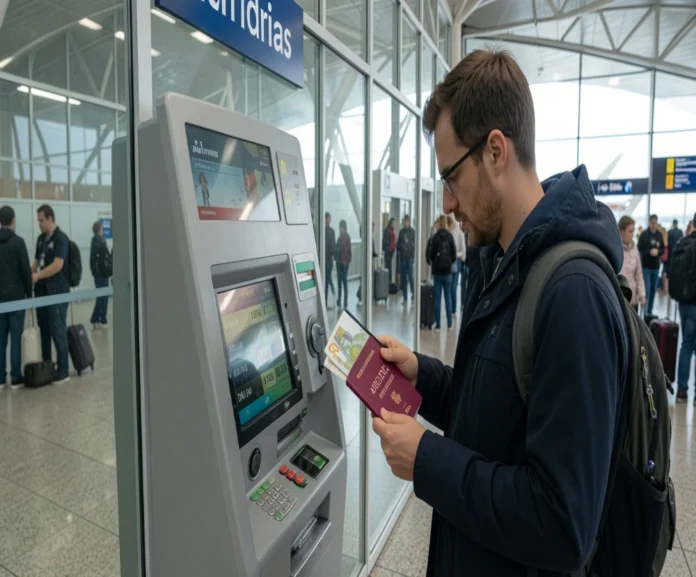
You want to visit Tokyo, Bangkok, and Istanbul in a single trip. You open a flight search site, type in the first leg, and within minutes you’re staring at a tangle of connections, price variations, and booking windows that make no sense together. You either end up paying way more than you expected, or you abandon the whole idea and book a simple return ticket somewhere safe.
This is exactly where amazing multi-destination trips get abandoned—not because travelers aren’t excited, but because the planning feels overwhelming at first glance.
Here’s the good news: booking a multi-stop trip isn’t magic—it’s a skill you can learn in an afternoon. Once you understand how the booking options work and in what order to make decisions, the complexity shrinks fast. This guide walks you through exactly that — from mapping your route to picking the right tool to building a budget that doesn’t fall apart mid-trip.
Why Multi-Destination Trips Feel Complicated (And Why They Don’t Have To)
The core problem is that most travelers approach multi-stop trips the same way they approach a regular return ticket — by going straight to a booking site and searching flights. That works fine for a simple A-to-B-and-back trip. For a multi-destination trip, it produces a mess.
The reason is sequencing. If you haven’t mapped a logical geographic flow before you start searching, you end up comparing flights that don’t connect well, missing cheaper alternatives, and often paying for backtracking — flying back through a hub you already visited because you didn’t plan the direction of travel first.
You’ll also need to get comfortable with a handful of booking concepts—like open-jaw tickets and multi-city fares—that most travelers haven’t encountered on simple round-trip bookings. These aren’t complicated once explained, but skipping this understanding is what makes the process feel overwhelming.
Step 1 — Map Your Multi-Destination Route First (Save 15-30% on Flights)
This is the step most people skip, and it’s the reason they overpay.
Think in Directions, Not Destinations
Before searching for a single flight, open a map and plot your destinations. Your goal is to travel in a consistent direction — west to east, or east to west — rather than zigzagging across the globe. A trip from London → Dubai → Bangkok → Tokyo is logical. London → Tokyo → Bangkok → Dubai → London is the same destinations in a worse order, and will cost significantly more because you’re buying unnecessary distance.
The rule of thumb: treat your trip as an arc, not a loop. Even if you’re returning home at the end, you want the middle stops to flow in one general geographic direction.
How to Avoid Backtracking
Backtracking means flying back toward a place you already passed. It adds flight time, cost, and complexity. To avoid it:
- List your destinations in rough geographic order on a map before anything else
- Identify which city makes the most sense as your “furthest point” from home
- Work outward from home to that furthest point, then decide whether to loop back or fly home directly from there
- Use open-jaw flights (fly into City A, fly home from City C) when the return from your furthest point is cheaper or more direct than backtracking
Consider hub airport strategy: routing through a major hub like Dubai (DXB) or Istanbul (IST) can sometimes unlock cheaper multi-leg fares, but only if the hub aligns with your geographic arc—don’t add a hub just because it’s cheap if it forces backtracking and adds 8+ hours of travel time.
One practical tool: Rome2Rio (rome2rio.com) visualizes multi-modal connections between your planned stops. Use it to identify which city pairs have direct flights vs. requiring overland travel—this helps you decide where to use open-jaw tickets vs. separate bookings.
Step 2 — Understand Your Booking Options
There are four main ways to book a multi-destination trip, and each has a different cost profile and risk level.
Multi-City Tickets
A multi-city ticket books several flight legs under a single reservation on one or multiple airlines. You search for it explicitly using the “multi-city” tab on booking sites like Google Flights or Skyscanner.
Best for: 3–5 stop trips where you want the simplicity of one booking and the protection of connected tickets (if one leg is delayed and causes you to miss the next, the airline is responsible for rebooking you).
Downside: It’s not always the cheapest option. Airlines bundle pricing in multi-city fares, and sometimes separate bookings undercut them significantly.
Open-Jaw Tickets
An open-jaw flight means you fly into one city and out of a different one — for example, fly into Bangkok, travel overland through Vietnam, and fly home from Hanoi. The “jaw” is the gap between your arrival city and your departure city, which you cover yourself.
Best for: Trips with a clear overland component, or when flying home from your furthest point is cheaper than backtracking to your starting airport.
Important: Open-jaw tickets are often priced similarly to return tickets. They’re one of the most underused money-saving tools in travel.
Round-the-World (RTW) Tickets
RTW tickets are sold by airline alliances — Star Alliance, Oneworld, and SkyTeam — and let you travel in one continuous direction around the globe with a set number of stops. Prices typically start around $3,000–$5,000 for economy, depending on the number of continents and stops included.
Best for: Trips covering 5+ destinations across multiple continents over several weeks or months. They’re not cost-effective for short or regional multi-stop trips.
Downside: They require booking all stops in advance, with limited flexibility to change dates once issued. They also require you to travel consistently eastward or westward — no backtracking.
Separate One-Way Bookings
This means booking each flight leg independently as a one-way ticket. It’s the most flexible approach and, depending on your route, can be cheaper than a bundled multi-city fare — especially when budget carriers are involved.
Best for: Routes that include budget airlines (AirAsia within Southeast Asia, Ryanair within Europe, IndiGo within South Asia), where the budget carrier leg is dramatically cheaper as a standalone ticket.
Risk: If one flight is delayed and causes you to miss a separately booked connection, the second airline owes you nothing. You need travel insurance that covers missed connections if you use this approach.
Step 3 — Choose the Right Tool for Your Trip
Different tools serve different purposes. Using the wrong one wastes time and misses cheaper options.
- Google Flights (flights.google.com) The strongest tool for multi-city searches. When using the “multi-city” tab, enter IATA airport codes (like NRT for Tokyo Narita or BKK for Bangkok) instead of city names to avoid confusion with multiple airports in the same metro area—this precision prevents accidental bookings at secondary airports with costly transfers. Input up to 5 legs. It shows price calendars for each leg and lets you adjust dates to find cheaper windows. Best for getting a fast picture of what your full route costs.
- Kiwi.com is built specifically for multi-stop and open-jaw trips. Its key feature — “nomad search” — lets you input a list of destinations, and it finds the cheapest sequencing for you. It also combines flights from airlines that don’t normally interline, and offers its own missed-connection guarantee for those combined itineraries. Useful when your route isn’t obvious, and you want the algorithm to suggest the cheapest order.
- ITA Matrix (matrix.itasoftware.com) is a fair research tool used by travel professionals. It shows raw fare data with more detail than consumer sites, including fare class breakdowns. You can’t book directly from it — you take the results and book elsewhere — but it’s the most accurate tool for understanding what a fare actually costs before fees.
- Skyscanner Good for scanning budget carrier options that Google Flights sometimes misses. Use the “everywhere” destination option if your dates are fixed but destinations are flexible.
- Scott’s Cheap Flights / Going.com: Not a booking tool, but an alert service. Useful if you have flexible destination preferences and want to be notified when a significant price drop opens up for a leg you’re planning.
As of 2026, most travelers planning a 3–5 stop trip will find that Google Flights + Kiwi.com still covers about 90% of their research needs—though always double-check budget carrier sites directly for the latest promos and exclusive app-only fares.
Step 4 — Know When to Book Together vs. Separately
This is the decision most guides skip, and it’s where most travelers leave money on the table.
Book together (multi-city or RTW) when:
- Your route involves major carriers on connected alliances
- You’re crossing long-haul segments where connection protection matters (missing a transatlantic flight is a $1,000+ problem)
- The bundled price is within 10–15% of the separate booking total — the protection is worth that premium
- You’re traveling during busy periods where rebooking availability is tight
Book separately when:
- One or more legs involve budget carriers that aren’t part of any alliance
- The price difference is more than 15–20% in favor of separate bookings
- You have long layovers between legs (6+ hours) that reduce missed-connection risk
- You’re traveling in the same city for a few days between flights anyway — so a delay on one leg doesn’t affect the next
The practical test: price your full route as a multi-city ticket on Google Flights, then price each leg separately. Your stop sequence directly impacts prices—change the order, and you could save hundreds. If the gap is more than $150–200 for the full trip, separate bookings are likely worth the risk — provided you have travel insurance covering missed connections. Remember that airlines manage inventory through fare class buckets—if your multi-city search shows a sudden price jump, it may mean the lowest fare bucket sold out for one leg, not that the route itself is more expensive. Try adjusting dates by 1-2 days to access the next available bucket before assuming separate bookings are cheaper.
Step 5 — Build a Realistic Budget
Multi-destination trips are easy to underbudget because travelers focus only on the flight cost and forget the accumulation of smaller expenses across multiple countries.
Here’s a realistic 2026 framework for a 3-stop, 3-week trip at mid-range spending—adjusted for current fare volatility and regional cost differences:
| Category | Estimated Cost |
|---|---|
| Flights (multi-city, economy) | $800 – $2,000 |
| Accommodation (mid-range, $40–80/night) | $840 – $1,680 |
| Food & drink | $600 – $1,200 |
| Local transport | $150 – $400 |
| Activities & entrance fees | $200 – $500 |
| Visas & travel insurance | $100 – $300 |
| Buffer (10% of total) | $269 – $608 |
| Total (approx.) | $2,959 – $6,688 |
Pro tip: Southeast Asia legs typically cost 30-50% less in shoulder seasons (Apr-May, Sep-Oct), while European summer routes peak June-August. Adjust your buffer accordingly and use Google Flights’ price graph to spot seasonal dips.
A few things that quietly inflate multi-destination budgets:
- Airport transfers in each city (these add up across 3–5 stops)
- Checked luggage fees on budget airline legs (carry-on-only saves $30–80 per leg)
- Currency exchange losses when moving between multiple currencies without a fee-free card
- Overlapping accommodation when late arrivals require you to hold a room you can’t check into yet
The single best budget control move is to carry a fee-free travel debit card (Wise, Revolut, or Charles Schwab in the US) that eliminates foreign transaction fees across every country you visit.
Common Mistakes That Cost Travelers More
- Mistake #1: Locking in flights before mapping your full route. Action: Use Google Flights’ multi-city tab to price all legs simultaneously before booking any single segment—this prevents costly sequencing errors that add $200-500 to your total.
- Ignoring visa lead times. Some destinations require visas that take 2–4 weeks to process. If you’re planning a trip 6 weeks out and one stop needs a consular visa, you might miss the window. Check visa requirements for every stop before booking anything.
- Not building buffer days near high-risk connections. Budget airline delays are real. If you fly a budget carrier into a city the same morning you have an international long-haul flight out, one delay wipes out your connection. Build a one-night buffer between the budget leg and any critical departure.
- Assuming multi-city fares are always cheaper. Airlines don’t price multi-city tickets as a discount — they price them as a convenience. Run the comparison.
- Over-scheduling. A common trap: fitting 6 cities into 2 weeks sounds efficient, but leaves you spending more time in airports and transit than actually experiencing the places. Three well-chosen stops in 2–3 weeks is almost always a better trip than six rushed ones.
Final Tips for Smoother Multi-Stop Travel
- Travel light. One carry-on across a multi-destination trip saves money on budget legs and removes the anxiety of checked luggage connecting across different airlines.
- Book accommodation for the first night only in each city, especially if you’re arriving late or your connection timing is uncertain. Lock in the rest once you arrive.
- Screenshot everything. Confirmation numbers, hotel addresses, and local transport options for each city — kept offline in case you lose data connectivity.
- Get travel insurance that covers multi-destination trips. Policies differ. Some only cover your home country of residence and one destination. Check the fine print.
- Check Schengen zone rules if visiting Europe. Multiple European countries often count as a single destination for visa purposes — 90 days in 180 days across the entire zone, not per country.
Multi-destination trips are one of the most satisfying ways to travel — you cover more ground, understand more context, and get more value from a single trip than a back-and-forth vacation. The planning process feels complex because most people approach it backward: they start with booking before they’ve finished thinking.
Flip the order. Map first, sequence second, price third, book last. That sequence alone eliminates most of the cost and confusion that makes multi-stop travel feel harder than it actually is.
FAQs
Q1: Is it cheaper to book multi-city flights together or separately?
It depends on your route. Multi-city tickets offer connection protection but aren’t automatically cheaper. Run both comparisons on Google Flights — if separate bookings are more than $150–200 cheaper for the full trip, separate bookings usually win. Just make sure you have travel insurance covering missed connections if you go that route.
Q2: What’s the difference between a multi-city ticket and an open-jaw ticket?
A multi-city ticket books several unconnected legs as one reservation — for example, London → Bangkok → Tokyo → Dubai. An open-jaw ticket is simpler: you fly into one city and out of a different one, covering the gap yourself. Open-jaw is ideal when you’re traveling overland between two stops or when flying home from your furthest point is cheaper than backtracking.
Q3: How many destinations should I include in one trip?
For a 2-week trip, 3 stops is the practical ceiling for most travelers. Beyond that, you spend more time in transit than actually experiencing places. For 3–4 weeks, 4–5 stops is manageable if they flow geographically without backtracking.
Q4: Should I use a travel agent for a multi-destination trip?
For straightforward 3–4 stop trips, no — Google Flights and Kiwi.com handle it well. A travel agent adds value when you’re booking a round-the-world ticket across 6+ destinations, dealing with complex visa situations, or combining flights with tour packages. For those cases, the agent fee is often worth what they save you in mistakes.
Q5: What is a round-the-world ticket, and when does it make sense?
A round-the-world (RTW) ticket is sold by airline alliances (Star Alliance, Oneworld, SkyTeam) and lets you circle the globe in one direction with a set number of stops. Prices start around $3,000–$5,000 in economy. It only makes financial sense for trips covering 5+ destinations across multiple continents over several weeks. For shorter or regional multi-stop trips, it’s usually overkill.
Q6: What’s the best website to book multi-city flights?
Google Flights is the best starting point — use the multi-city tab to price your full route and adjust dates. Kiwi.com is better when your route includes budget carriers or when you want the tool to suggest the cheapest stop sequence. For fare research, ITA Matrix gives the most detailed pricing data, though you can’t book directly from it.
Q7: How do I avoid backtracking on a multi-destination trip?
Plot your destinations on a map before searching for flights. Aim to travel in one general direction — west to east or east to west — rather than zigzagging. Identify your furthest destination from home and treat it as the turning point. Use open-jaw tickets to fly home from the furthest point instead of retracing your route.
Q8: Do I need separate travel insurance for each country on a multi-destination trip?
No, but you need to verify that your policy covers all the countries on your itinerary. Some policies exclude certain regions or only cover a limited number of destinations. If you’re booking separate flights across different airlines, also confirm the policy covers missed connections — not all standard travel insurance does.
Q9: How do Schengen zone rules affect multi-destination trips in Europe?
If you’re a non-EU traveler, the Schengen zone — which includes most of Western and Central Europe — counts as a single destination for visa purposes. You get 90 days within any 180-day period across the entire zone, not 90 days per country. So visiting France, Germany, and Spain in one trip all draws from the same 90-day allowance.
Q10: How far in advance should I book a multi-destination trip?
For long-haul routes, 2–4 months ahead typically hits the best price window. Budget carrier legs within regions (Southeast Asia, Europe) can often be booked 4–6 weeks out without significant price jumps. The more critical factor is visa lead time — if any stop requires a consular visa, that processing window (sometimes 3–4 weeks) should drive your overall booking timeline, not just the flight prices.