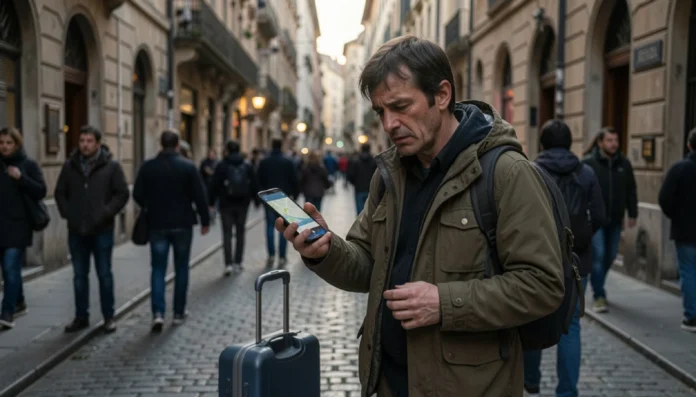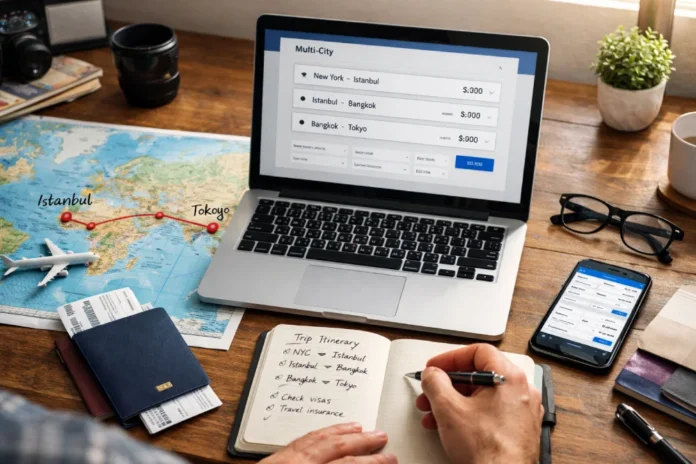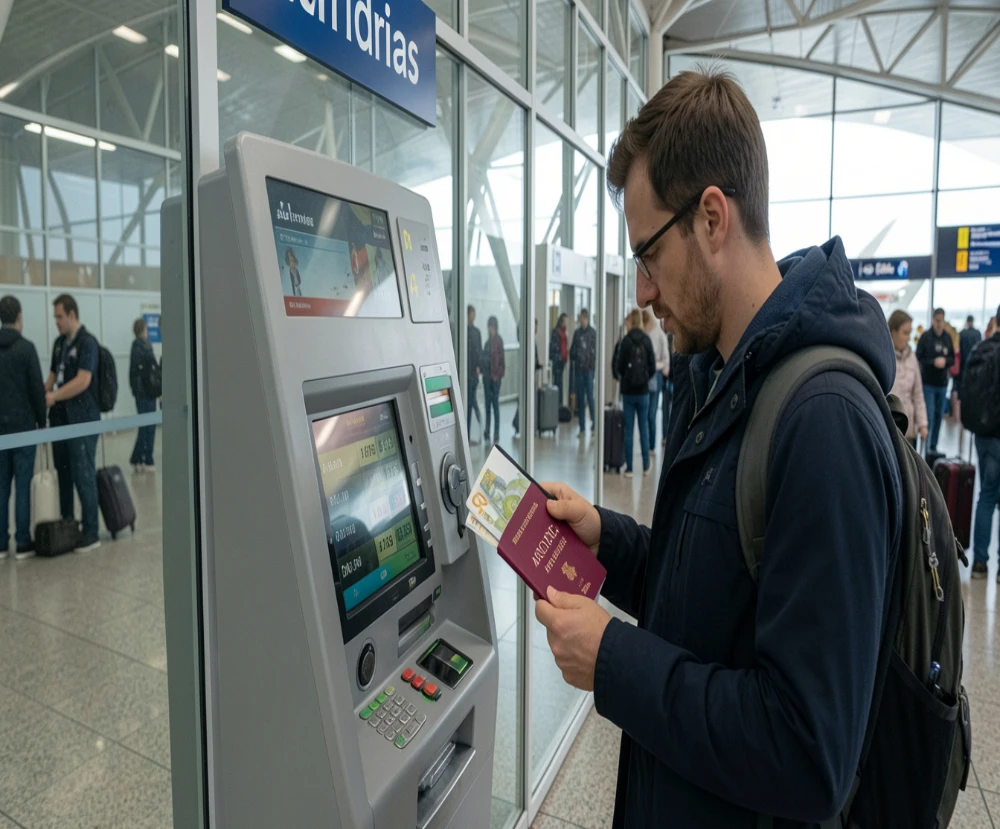
You land in Rome after a long flight. You need euros — fast. There’s a currency exchange booth right outside baggage claim, open and convenient. You hand over $200 and walk away with €158. Feels fine until you check the mid-market rate later on XE.com and realize you should have gotten €182. That booth just took €24 from you in about 45 seconds — a 13.2% markup you won’t see on the receipt.
This happens to millions of travelers every year — not because they’re careless, but because no one explained the rules before they left. Managing money abroad doesn’t have to be stressful — just make these 3 quick decisions made before you board your flight. This guide walks you through exactly what those decisions are.
The Real Cost of Getting This Wrong
Most travelers underestimate how much money leaks through bad financial habits abroad. Between foreign transaction fees (1–3% per purchase), ATM withdrawal fees ($3–$5 from your bank + 1–3% from the foreign bank), and currency exchange markups (5–12% above the mid-market rate — verify with Visa/Mastercard’s exchange rate calculator), a two-week international trip can cost you an extra $150–$300 without you ever noticing.
The good news: most of this is avoidable with the right setup.
Cash or Card — What Should You Actually Use Abroad?
There’s no single correct answer. The right approach is to use both strategically, not picking one.
When Cash Makes Sense
Cash is still essential in many parts of the world. In Vietnam’s Ha Giang loop, Morocco’s Medina markets, or Eastern Europe’s rural towns, street vendors and local transport run heavily on cash. Some guesthouses and local tour operators won’t accept cards at all.
A general rule: keep enough local currency for 1–2 days of spending at all times. You don’t need to carry your entire trip budget in cash.
When a Card Is Better
For hotels, larger restaurants, shopping, and any vendor with a card terminal, use a card — specifically one with no foreign transaction fees. Tap via Google Pay or Apple Pay when possible (accepted at 85%+ of card terminals globally in 2026) — every transaction saves you 1–3% compared to paying in cash converted at a subpar rate.
Don’t pick sides — use both. Swipe your card for hotels and big dinners; pull out cash for street food, markets, and that tiny family-run guesthouse.
Should You Exchange Currency Before You Travel?
This is one of the most searched questions about travel money, and the answer is: usually no, but with one exception.
Why exchanging at home is often a bad deal:
- Banks and exchange offices in your home country apply large markups because they’re holding physical foreign currency as inventory
- Airport exchange kiosks, both at home and abroad, consistently offer some of the worst rates available — often 8–12% above the real exchange rate
- Hotel front desks are equally bad
The one valid exception: If you’re traveling to a country where ATMs are unreliable, cards are rarely accepted, or the local currency is hard to obtain once you arrive (some smaller nations or heavily cash-based economies), bringing some pre-exchanged cash is reasonable. In that case, use your bank’s exchange service rather than an airport kiosk — the rates are usually better.
The better approach for most destinations: Withdraw local currency from an ATM at your destination using a fee-reimbursing debit card (more on that below). Local ATMs connected to global networks (Visa/Mastercard/Plus/Cirrus) give you the real interbank exchange rate, which is as close to the “true” rate as you can get.
The Best Cards to Use Internationally
This is where the biggest savings are. Using the wrong card abroad is like paying a permanent tax on every transaction.
What to look for in a travel card:
- No foreign transaction fees (this alone saves 1–3% on every purchase)
- ATM fee reimbursement (critical for debit cards)
- Wide acceptance network (Visa or Mastercard, not Amex, in less developed countries)
Cards worth knowing about:
- Charles Schwab High Yield Investor Checking (Debit Card): Widely considered the best travel debit card for Americans. It reimburses all ATM fees worldwide at the end of each month — meaning you pay nothing extra to withdraw cash anywhere in the world. No foreign transaction fees either.
- Wise Card (formerly TransferWise): A multi-currency account that lets you hold money in 40+ currencies and convert at the real mid-market rate. It has low conversion fees (usually 0.4–1.7%) and works as both a debit card and a way to send money internationally. Excellent for longer trips or frequent travelers.
- Revolut: Similar to Wise, popular in Europe and increasingly worldwide. Offers free currency exchange up to a monthly limit on the standard plan, with fees above that.
- For UK travelers: N26 and Monzo offer similar multi-currency features with fee-free spending abroad.
- For Australian travelers: Up Bank or Macquarie Travel Money Card provides competitive FX rates and low international fees.
- Travel credit cards (Chase Sapphire Preferred, Capital One Venture, etc.): Good for larger purchases and earning points, but they don’t reimburse ATM fees and still require a separate cash strategy.
- The practical setup most travelers use: One no-fee credit card for purchases + one Schwab or Wise debit card for ATM withdrawals. Two cards also give you a backup if one is blocked or lost.
How to Use ATMs Abroad Without Paying Too Much
ATMs are your best friend internationally — when used correctly.
- Use bank ATMs, not standalone ones (find them via Visa’s Global ATM Locator or Mastercard’s ATM Finder). ATMs inside or attached to actual banks (Barclays, BNP Paribas, HSBC branches, etc.) give better rates and are more secure. Standalone ATMs in tourist areas, convenience stores, or airports often charge higher fees and apply their own exchange markup.
- Withdraw larger amounts, less frequently. If your card reimburses ATM fees, this doesn’t matter much. But if you’re paying a flat fee per withdrawal ($3–$5), withdrawing $200 twice costs less proportionally than $50 eight times.
- Here’s the one move that saves you every time: when the ATM asks, ‘Charge in USD?’ hit ‘No.’ Always choose local currency — it’s that simple.
- Don’t get locked out: tap ‘Travel Notice’ in your banking app 48 hours before departure — it takes 30 seconds and saves a major headache. Without this, your card may be flagged and blocked for suspicious foreign transactions at the worst possible moment.
⚠️ Critical Alert: Dynamic Currency Conversion (DCC) costs travelers an estimated $2.1B annually. Always select local currency at terminals.
What Is Dynamic Currency Conversion (and Why You Should Always Refuse It)
Dynamic Currency Conversion (DCC) is one of the most effective traps in international travel finance, and most travelers fall for it without knowing what’s happening.
Here’s how it works: When you pay with your card abroad — at a restaurant, hotel, or ATM — the terminal sometimes offers to charge you in your home currency instead of the local one. It sounds helpful. “Would you like to pay in US Dollars?” The screen even shows you the conversion. Seems transparent, right?
It’s not. The merchant or ATM is applying its own exchange rate, which is typically 3–7% worse than what your bank would use. They profit from the difference.
Always choose to pay in the local currency. Every time. At ATMs, at restaurants, at hotels. When a terminal offers you the choice, select the local currency option. Your card’s network (Visa or Mastercard) will then apply its rate, which is almost always better.
If a terminal automatically charges you in your home currency without asking, you can dispute it with your bank as a DCC transaction.
How Much Cash Should You Carry?
There’s no universal number, but there’s a useful framework.
Estimate your daily cash needs based on your destination and travel style. A backpacker in Southeast Asia might spend $20–$40/day in cash. A traveler in Western Europe might only need €30–€50 for small purchases since cards are widely accepted.
Carry 2–3 days’ worth of cash at any time. This gives you a buffer without making you a high-stakes target if your bag is lost or stolen.
Keep a small emergency stash separate from your main wallet — $50–$100 in USD is widely accepted in emergencies in most countries and can get you out of situations where local currency isn’t immediately available.
Split your cash between locations. Some in your wallet, some in your bag, some in your accommodation safe. Losing everything at once is a real risk and completely avoidable — and travel insurance like SafetyWing or World Nomads can cover lost/stolen cards for an extra layer of protection.
Common Mistakes Travelers Make With Money
- Exchanging currency at the airport because it’s convenient — you’ll pay 8–12% above the real rate
- Using a card with foreign transaction fees without realizing it (check your card agreement before you go)
- Accepting DCC at ATMs and card terminals — always pick local currency
- Bringing only one card — if it gets blocked or lost, you’re in trouble
- Not notifying your bank before departure can lead to blocked transactions
- Carrying too much cash — pick-pocketing is real in tourist areas, and you don’t need to walk around with $500
- Ignoring small ATM fees — $4 per withdrawal at 10 withdrawals is $40 gone for nothing
Quick Pre-Trip Money Checklist
Before you fly, run through this:
- Get a no-foreign-transaction-fee credit card (Chase Sapphire, Capital One Venture, or similar)
- Set up a Charles Schwab or Wise debit card for ATM withdrawals
- Notify both your bank and credit card issuer of your travel dates and destinations
- Download your bank’s app so you can monitor transactions and unlock cards remotely
- Carry a small amount of local currency for your first day — get it from a local bank branch or ATM at your destination, not the airport kiosk
- Save a backup card in a separate location from your main wallet
- Set your ATMs and card terminals to always charge in local currency
FAQs
1. Why do I get less money when I exchange currency at airports or kiosks?
Airport kiosks add 8–12% markups to cover inventory costs and convenience pricing — far above the mid-market rate available via ATM withdrawals.
2. Is it better to carry cash or use a card when traveling abroad?
Use both: cards for hotels and larger vendors, cash for street markets, local transport, and places without card terminals.
3. Should I exchange money before leaving my home country?
Usually no pre-travel exchanges apply poor rates. Withdraw local currency from an ATM at your destination using a fee-reimbursing card like Charles Schwab or Wise.
4. What makes ATM withdrawals expensive while traveling?
Two fees stack: your bank’s $3–$5 withdrawal fee plus a 1–3% foreign ATM operator fee. Small, frequent withdrawals multiply these costs.
5. What is Dynamic Currency Conversion, and why is it risky?
It’s when a terminal offers to charge you in your home currency instead of local currency — using an inflated rate 3–7% worse than your bank’s, costing you money on every transaction.
6. What should I always select when an ATM or card machine gives me a currency choice?
Always choose the local currency, not your home currency. This ensures your bank or Visa/Mastercard applies the real exchange rate instead of a marked-up version.
7. How much cash should I actually carry while traveling?
Keep only 2–3 days of expected spending in cash. Enough for flexibility, but not so much that losing your wallet becomes a major financial setback.
8. What is the safest way to handle money if one of my cards stops working abroad?
Carry at least two separate cards stored in different places. If one is blocked, lost, or swallowed by an ATM, the backup ensures you can still access funds.
9. Why do some travelers lose $150–$300 without realizing it?
Small fees stack silently: 1–3% foreign transaction fees, $3–5 ATM charges, and 5–12% exchange markups compound into $150–$300 in hidden losses.
10. What is the most important money rule when traveling internationally?
Avoid unnecessary conversion layers—always use local currency, minimize exchange points, and rely on low-fee banking tools instead of airport or hotel services.
Pro Tip for US Travelers: Carrying over $10,000 in cash abroad requires a customs declaration; foreign account balances exceeding $200,000 may require filing IRS Form 8938 or FBAR.