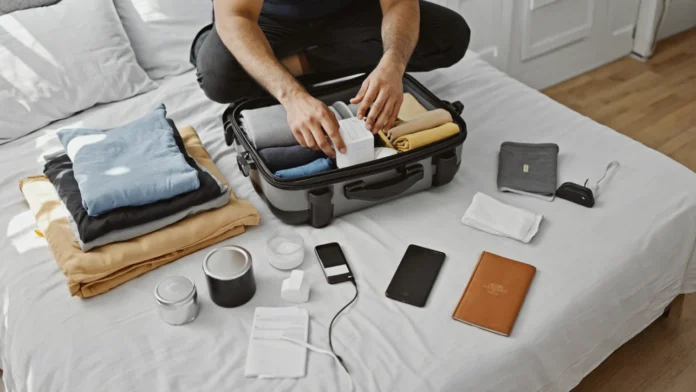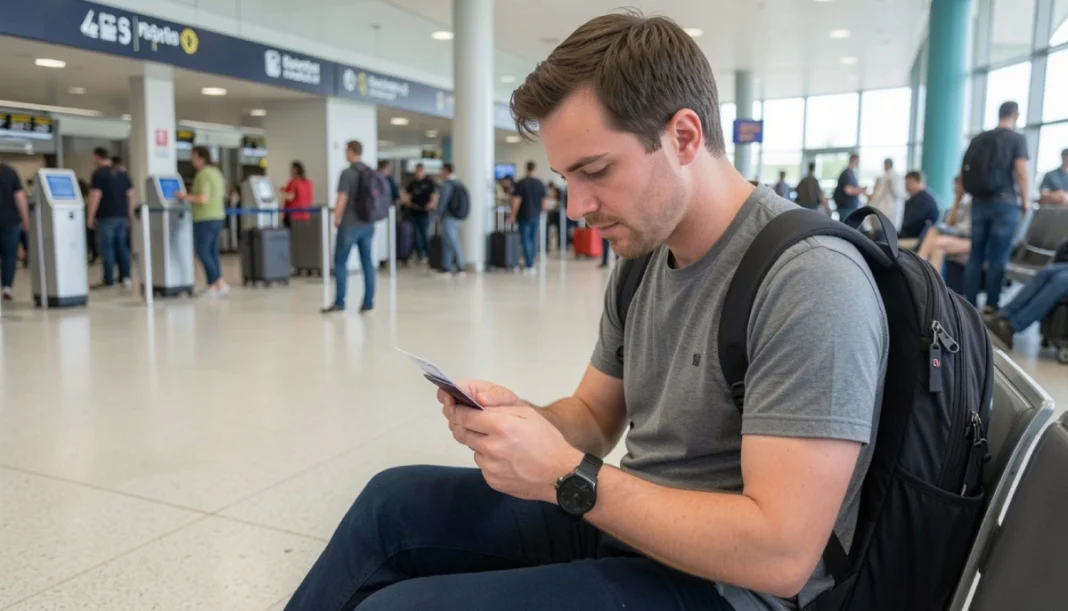
You land after a long flight, it’s already dark, your phone is at 12%, and the arrivals hall feels like a noisy blur—drivers calling out, people jostling, currency booths flashing rates. This is the moment when most travel problems start: not because you “didn’t research enough,” but because you’re tired, distracted, and trying to make fast decisions in an unfamiliar place.
This guide exists for exactly those overwhelming first moments—when you’re tired, disoriented, and need clear, actionable steps. It’s a set of travel safety tips you can actually use—before you leave, at the airport, in your hotel, and while you’re moving around—whether you’re traveling solo or with friends.
Quick safety system (use this like a framework):
- Research smart: Use government travel advisories (State Department/FCDO), destination crime maps, and recent traveler reviews to identify high-risk zones and peak scam hours
- Book smart (arrival timing, transfers, accommodation)
- Protect the essentials (money, passport, phone)
- Move with intention (airport, transit, streets, nightlife)
- Avoid scams by pattern (not paranoia)
- Prepare for emergencies (simple plan, fast recovery)
The “low-drama” safety mindset (why most incidents happen)
Most travelers don’t face extreme danger. The more common problems are petty theft, scams, lost documents, and avoidable transport mistakes—the kinds of issues that cost money and time and can wreck a day.
The biggest risk multipliers are:
- Fatigue: jet lag makes you less alert and more trusting.
- Distraction: phones out, bags open, multitasking in crowds.
- Routine breaks: you don’t yet have “autopilot” habits in a new place.
You don’t need to be fearless—or paranoid. The goal is simpler: build small, reliable habits that work even when jet lag hits.
Step 1: Research that actually prevents problems
Smart research cuts through the noise: it answers the two questions that actually matter—where and when are you most likely to run into trouble?
Focus on:
- Arrival and transit zones: airport-to-city route, major train/bus stations, ferry terminals.
- Neighborhood-level choices: instead of “Is this city safe?” ask “Which areas are practical at night for walking back from dinner?”
- Common local scams: every destination has a “greatest hits” list (taxi tactics, ticket scams, fake tours, ATM tricks).
- Cultural norms that reduce attention: clothing expectations, photography etiquette, how to say “no thanks” politely, and typical prices (so you recognize overcharging).
- Official travel advisories: Check the U.S. State Department Travel Advisories (or your country’s equivalent) for destination-specific alerts on scams, civil unrest, or health risks before finalizing plans.
Planning moves that reduce risk:
- Arrive in daylight if you can. If not, pre-plan your transfer (details below).
- Save your accommodation address, contact number, and check-in instructions offline in Google Maps Offline or Apple Notes before you land. Don’t rely on data working immediately.
- Know the local emergency number and how police/medical services work (some places require you to go to a station to file a report).
Step 2: Book smarter (accommodation + transport choices)
Safety often starts at the booking stage, because your biggest vulnerabilities happen when you’re arriving, finding your place, and figuring out transport.
Accommodation: what to look for (hotel/hostel/rental)
Good safety signals when choosing where to stay:
- 24/7 staffed reception (or clear late check-in instructions)
- Well-lit entrance and reviews mentioning the street feeling safe at night
- Rooms with solid locks and controlled access (key card, codes, or monitored entry)
- Transparent communication (clear address, how to enter, who to contact)
Extra considerations:
- Hostels: look for lockers that fit your bag (or bring a small lock), and mixed vs single-gender dorm options based on your comfort.
- Vacation rentals: prioritize listings with many consistent reviews and clear host verification. Make sure you’ll get entry instructions before you arrive.
Airport transfers: decide before you land
Safer choices are usually the ones that reduce negotiation when you’re tired.
Options (best choice depends on destination and arrival time):
- Pre-booked transfer (hotel car or reputable company): usually higher cost, lowest friction.
- Official/regulated taxi queue: look for signage, meters, and fixed-price boards.
- Rideshare: can be very safe when it’s legal and standardized locally; verify the plate and driver in-app.
- Public transit: great value in many cities—best when you arrive during normal hours and understand the route.
Practical Rule: if your arrival is late, you’re solo, or you’re carrying obvious luggage, paying extra for a prebooked transfer can be worth it.
Step 3: Money, documents, and digital security (the theft trifecta)
Keep your passport, phone, and payment cards secure, and you’ve already solved 90% of travel emergencies.
Carry strategy: split, don’t stack
Avoid having “one point of failure.”
Use a simple split:
- On you (daily): one card + some cash
- Back-up (separate place): second card + extra cash
- Locked/secured: passport (when not needed) and emergency cash
Helpful habit: keep a small “decoy” cash pocket (a little cash you can access quickly) so you’re not flashing your whole wallet in public. Use a hidden money belt from Pacsafe to secure your backup cash and cards separately from your daily wallet—small investment, major peace of mind.
Passport and documents
- Carry your passport only when you need it (some countries require ID; in others, a copy is fine—check local rules).
- Keep digital copies of passport, visas, insurance, and key bookings stored in an offline-accessible place (secure cloud + phone storage).
- Write down (offline) your:
- Passport number and issue/expiry dates
- Emergency contacts
- Bank international phone numbers
- Embassy/consulate contact info
Phone security: your real travel lifeline
If your phone is stolen and you lose access to email/2FA, travel becomes much harder.
Before you go:
- Turn on strong screen lock (PIN better than simple pattern).
- Enable Find My iPhone / Find My Device and test it.
- Back up your phone.
- Use 2FA, but avoid being dependent on a single device: keep recovery codes or an alternate method where possible.
- Download Airalo before your trip to purchase a local eSIM plan, ensuring reliable data for maps and rideshares from the moment you land.
While traveling:
- Avoid logging into sensitive accounts on public computers.
- Use caution with public Wi‑Fi. If you must use it, activate a travel-optimized VPN like ExpressVPN or NordVPN and use an authenticator app (Authy) for 2FA—not SMS.
- At ATMs, cover the keypad and watch for odd attachments (see scams section).
Step 4: Airport safety (arrival and departure days are high-risk)
Airports feel controlled, which makes people let their guard down. But the high-risk moments are predictable: security lines, charging zones, food courts, and baggage claim.
Use these habits:
- Security line: keep your bag zipped; don’t let trays drift out of sight. Put small valuables (phone, wallet, passport) inside a zipped pocket before the conveyor.
- Gate areas: don’t hang your bag on the back of a chair. Keep a strap looped around your leg or your bag between your feet.
- Charging: Never leave devices unattended at public USB ports. Use a USB data blocker (‘USB condom’) or carry a certified power bank like Anker to avoid juice jacking risks.
- Baggage claim: stand close enough to grab your bag quickly, but don’t get pulled into distractions. Confirm the tag/name if you have a common suitcase.
Airport-to-city safety:
- Screenshot your transfer plan (pickup point, name, booking reference).
- If using rideshare, confirm:
- license plate
- driver photo/name
- the car model
- that you’re getting in the correct vehicle (don’t accept “I’m your driver” without verification)
Step 5: Hotel safety (room, fire safety, and “who can enter?”)
Good hotel safety is mostly about small checks in the first 3 minutes—before you unpack.
When you enter your room:
- Check that the door closes and latches properly.
- Identify the secondary lock (deadbolt/chain) and use it.
- Locate fire exits and count doors to the stairwell (useful in smoke).
- Keep your room key/card secure; don’t place it on the table in public areas.
Room selection tips (when you have a choice):
- Many travelers prefer not ground floor rooms for security, and not too isolated at the end of a long hallway.
- Choose what fits your comfort—some prefer being near elevators for convenience; others avoid it due to noise/traffic. The safest choice is the one that helps you feel in control and alert.
Using the hotel safe:
- Use it for items you can’t easily replace (passport when you’re not carrying it, backup cash), but don’t rely on it for everything.
- Keep a quick photo/list of what you store so you don’t forget items at checkout.
Small, high-value item:
- Pack a rubber door wedge ($5-10): it adds a physical barrier when you’re locked inside, especially valuable in budget hotels or destinations with older lock systems.
Step 6: Street-smart movement (walking, transit, taxis, nightlife)
Your safety improves when your movement looks intentional, even if you’re still learning the city.
Walking and public transit
- If you need to check maps, step aside (inside a shop/café) rather than stopping mid-sidewalk with your phone out.
- On crowded trains/buses, keep your bag closed and positioned in front of you.
- Avoid placing your phone on café tables at street edges (snatch-and-run theft is common in some cities).
Taxi and rideshare basics
To reduce taxi risk:
- Use official taxi stands where possible.
- Confirm the meter or agreed fare before moving (depending on how taxis work locally).
- If you feel pressured, it’s okay to exit and reset—your safety is worth mild awkwardness.
For rideshare:
- Match plate + driver in the app.
- Sit in the back seat if alone.
- Share your trip status with a friend when available.
Nightlife safety (solo or group)
Nightlife is where “small” risks stack: low light, alcohol, crowds, and impaired decision-making.
Practical rules:
- Don’t accept open drinks from strangers; watch your drink being made.
- Plan your ride home before you go out (and keep enough battery to call it).
- If you’re solo, choose venues where staff presence is visible and you can leave easily.
Step 7: Avoid travel scams (patterns + scripts that work)
To avoid travel scams, check TripAdvisor Forums, Reddit’s r/travel, or your government’s travel advisory page for recent scam reports before you go. It helps to learn the patterns rather than memorize every variation.
Common scam categories (and the red flags)
- Distraction + grab someone bumps you, spills something, asks for help—another person targets your bag/pockets.
- Too-helpful “fixers” offering to help with tickets, ATMs, money exchange, or directions—then steering you to a higher-cost or fraudulent option.
- Taxi games: “meter broken,” long route, fake fees, or swapping bills.
- ATM/currency exchange scams, bad exchange rates, hidden fees, skimmers, or “helpful” strangers offering to press buttons for you.
- Fake tours/tickets unofficial sellers near attractions with urgent language (“last chance,” “closed today,” “special access”).
Simple refusal scripts (they work)
You don’t need an argument—just a clean exit.
- “No thanks, I’m all set.”
- “I already have a booking.”
- “I’m meeting someone—have a good day.”
Then move. Scammers count on one thing: keeping you standing still and talking long enough to create confusion.
Step 8: Solo travel safety vs group travel safety (what changes)
Solo travel safety: reduce exposure, increase predictability
Solo doesn’t have to mean vulnerable. It just means you’re managing everything yourself.
Solo habits that help:
- Share a rough itinerary with someone you trust (cities + hotel names, not minute-by-minute).
- Use check-in routines: a quick message after you arrive at a new city or after a day trip.
- Be selective about oversharing: avoid announcing your exact hotel or room number to new acquaintances.
- If you’re uneasy, trust the signal. You don’t need “proof” to leave a situation.
Group travel safety: prevent separation and confusion
Groups often get into trouble through logistics: people split up, phones die, and everyone assumes someone else has the plan.
Group rules that keep things smooth:
- Set a meeting point and a backup meeting point (especially at markets, festivals, transit hubs).
- Decide who holds what:
- One person: backup card/cash
- One person: key bookings offline
- One person: emergency contacts
- Use a buddy system at night—no one walks back alone by default.
- If you rent a car, agree in advance on driving rules (seatbelts, night driving comfort, alcohol limits, and who navigates).
Step 9: Your emergency plan (simple, printable, effective)
A good emergency plan is short enough that you’ll actually use it.
Save offline:
- Accommodation address + phone number
- Local emergency number
- Nearest embassy/consulate info
- Insurance policy number + emergency hotline
- Bank card replacement phone numbers
- A photo of passport + visa (if applicable)
If your phone is stolen
- Use Find My to locate/lock/erase (depending on the situation).
- Contact your carrier to block the SIM (or eSIM).
- Change passwords for key accounts (email, banking) from a trusted device.
- File a police report if required for insurance.
If your card is compromised
- Freeze the card in your banking app or call the bank.
- Use your backup card/cash.
- Keep receipts and report fraudulent charges quickly (timelines vary by bank).
If your passport is lost
- File a report if required locally.
- Contact your embassy/consulate for replacement travel documents.
- Have your passport copy and extra ID ready (this speeds things up).
If you need medical help
- Call your insurer’s hotline when possible (they can direct you to appropriate clinics).
- Keep a list of allergies/medications on your phone and written down.
What safety spending is worth it? (budget tiers)
You don’t need luxury travel to be safe, but a few paid choices can reduce risk dramatically.
Typical “safety budget” items (ranges vary by country and trip style):
- Travel insurance: Use Squaremouth or InsureMyTrip to compare policies side-by-side, filtering for medical evacuation, trip interruption, and theft coverage that match your solo travel style.
- eSIM/local SIM: cost varies widely; worth it for navigation and communication.
- Power bank: usually a one-time purchase; prevents “stranded with 2% battery” decisions.
- Door wedge/small lock: low cost, high peace-of-mind value.
- Airport transfer (when arriving late): higher cost than transit, but can be a strategic splurge.
Budget vs mid-range vs “peace-of-mind.”
- Budget approach: public transit, shared dorms, minimal paid transfers—requires sharper routines (bag control, arrival planning).
- Mid-range: centrally located hotel/guesthouse, occasional rideshare/taxis at night, insurance + reliable data plan.
- Peace-of-mind upgrades: prebooked transfers, private rooms, guided day trips in remote areas, and higher-rated accommodations with 24/7 staff.
Common mistakes (and how to avoid them)
The mistakes that cause the most headaches are surprisingly consistent:
- Arriving with no plan (transfer, address, data access).
- Keeping everything together (passport + all cash + all cards in one wallet).
- Overtrusting “helpers” at stations/ATMs.
- Ignoring fatigue (making complex decisions late at night).
- Not having backups (spare card, offline docs, power).
Fixing these doesn’t make travel stressful—it usually makes it smoother.
Quick checklist for travel day (departure + arrival)
Before you leave (10 minutes):
- Phone fully charged + power bank packed
- Offline access to: hotel address, transfer plan, key tickets
- Split cash/cards (primary + backup)
- Passport secured (and copy saved)
- One “I’m landing now” check-in message ready
On arrival:
- Use the restroom, get oriented, then execute your transfer plan
- Confirm rideshare/taxi details before entering
- Keep bags zipped and closed until you’re behind your accommodation door
FAQs
Q. What are the top travel safety tips that make the biggest difference?
The highest-impact travel safety tips:
- Pre-book airport transfers via KiwiTaxi or your hotel
- Use a Pacsafe money belt to split valuables
- Enable eSIM data via Airalo for reliable navigation, and
- Use the ‘no thanks + move’ script to disengage from distraction scams.
Q. How do I choose a safer hotel area?
Look for areas with consistent traveler reviews mentioning walkability at night, transit access, lighting, and staffed properties. Also consider your itinerary: staying central can reduce late-night transit risk.
Q. Is travel insurance worth it?
Often, yes, for international trips, especially for medical coverage and emergency assistance. Compare policies carefully—coverage details (and exclusions) matter more than the headline price.
Q. What should I do if I think I’m being targeted for a scam?
End the interaction quickly (“No thanks”), move toward a staffed place (shop, hotel, café), and reset. Scams thrive on keeping you talking and standing still