Planning an outdoor living space? Here’s the real cost breakdown: patios start at just $8/sq ft, decks run $25–$75/sq ft but boost resale value, and pergolas range from $3,000–$16,000+ depending on materials and roof options. Your best choice depends on yard slope, local climate, and how you’ll actually use the space.
What Qualifies as an Outdoor Living Space? (And What Doesn’t)
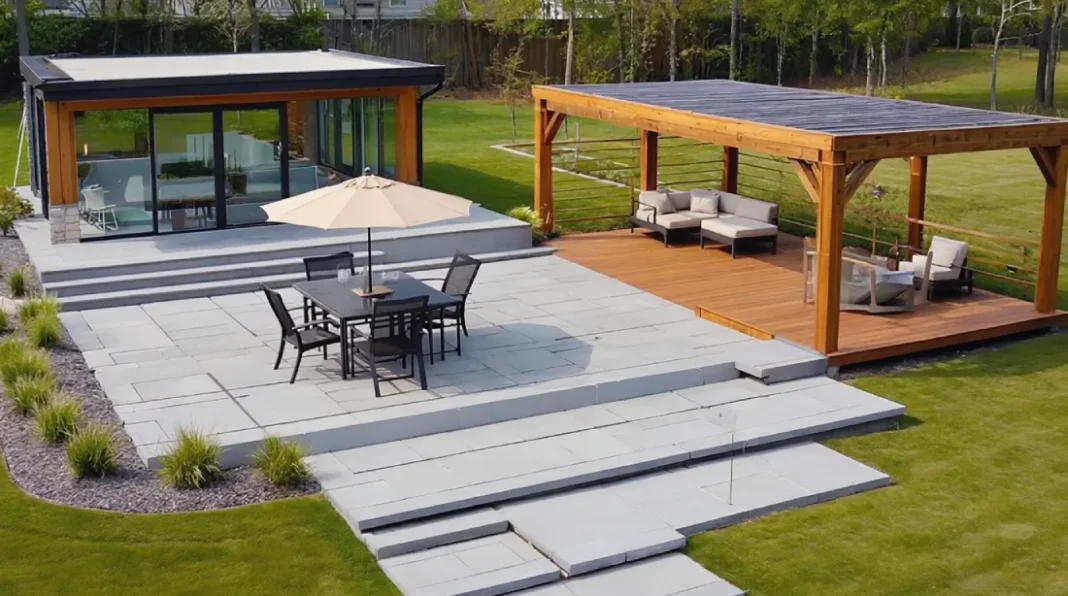
Think of an outdoor living space as your home’s “bonus room” outside—whether that’s a simple concrete patio with a bistro set or a multi-level composite deck with built-in seating and string lights. From simple concrete slabs to multi-level composite decks with integrated lighting, outdoor living spaces extend your home’s square footage into the yard—without the cost of a full addition. The National Association of Home Builders defines these as ‘designed exterior areas intended for relaxation, entertainment, or dining.’
For most homeowners, the decision comes down to three main structures: decks, patios, and pergolas. Each has a different function, a different price range, and a different set of trade-offs. Confusing them — or mixing up their costs — leads to budgets that blow up mid-project.
Attached vs. Freestanding Structures
An attached structure connects directly to your home (usually via a ledger board bolted to the house framing). A freestanding structure stands independently in the yard. This distinction matters because:
- Attached structures typically require a building permit
- Freestanding structures may still require permits, depending on size and local code
- Attached structures carry more structural responsibility — improper installation can damage your home’s foundation or siding
Decks — Costs, Materials, and What to Expect
A deck is an elevated platform, usually made of wood or composite material, built on a frame of posts and joists. Because it’s raised off the ground, it works well for yards with uneven terrain or slopes where a patio would require significant grading.
Average cost: $25–$75 per square foot installed
Note: These are national averages based on RSMeans 2024 data. Labor in major metros (NYC, SF, LA) runs 20–40% higher; rural areas may be 10–15% lower—always get 3 local quotes before budgeting.
For a 300 sq ft deck (a common starter size), that means roughly $7,500 to $22,500. The wide range reflects material choice, deck height, complexity, and labor rates in your area.
Wood vs. Composite Decking: Which Is Worth It?
Choosing between wood and composite isn’t just about upfront cost—it’s the decision that will affect your weekend to-do list (and wallet) for the next 20+ years.
- Pressure-treated wood is the most affordable option at $15–$25/sq ft installed. It’s widely available, easy to cut and fasten, and a reasonable DIY option. The downside: it needs sealing or staining every 1–3 years, is prone to cracking and warping in freeze-thaw climates, and has a lifespan of 15–25 years with regular maintenance.
- Composite decking (brands like Trex (Transcend line), Fiberon (Horizon), and TimberTech (AZEK)) costs $30–$60/sq ft installed but requires almost no maintenance — occasional cleaning with soap and water is typically all it needs. Top-rated lines like Trex Transcend, Fiberon Horizon, and TimberTech AZEK offer 25–30 year warranties against fading, staining, and mold—critical for humid climates or low-maintenance priorities. It won’t rot, splinter, or fade significantly. Lifespan is 25–30+ years. If you’re in a wet climate or simply don’t want to maintain a deck every couple of years, composite pays for itself over time.
- Cedar and redwood fall in the middle — naturally rot-resistant, better-looking than pressure-treated lumber, but still require periodic sealing. Expect $20–$35/sq ft installed.
What Drives Deck Costs Up
These are the factors that push a project from the low end to the high end:
- Height: A ground-level deck is simpler and cheaper. A deck elevated 8+ feet requires deeper footings, more structural support, and often a permit with engineering review
- Stairs and railings: Code-compliant railings (required for decks over a certain height, typically 30 inches) add $100–$200 per linear foot
- Built-ins: Benches, planters, pergola posts, or lighting run an additional $1,000–$5,000+
- Footings: In cold climates, footings must extend below the frost line (sometimes 4+ feet deep), which significantly increases labor time. Check your local frost line depth via NOAA climate data—footings in Minneapolis may need to go 4+ feet deep, while Atlanta footings may only need 12 inches.
Patios — The Lower-Cost, Lower-Effort Alternative
A patio is a ground-level hardscape surface — concrete, pavers, brick, or stone — installed directly on a prepared base. Because it sits at grade, it works best on flat or gently sloping yards. Significant slopes require grading work that adds cost.
Average cost: $8–$30 per square foot installed
If budget is your top concern, patios win: they’re the cheapest option to build and, with materials like pavers or basic concrete, one of the few outdoor projects a confident DIYer can tackle in a weekend.
Concrete vs. Pavers: Trade-offs Worth Knowing
- Poured concrete is the cheapest patio surface at $6–$12/sq ft. It’s durable, low maintenance, and fast to install. The downside is it cracks over time — especially in climates with significant temperature swings — and repairs are visible and difficult to blend.
- Stamped concrete (which mimics the look of pavers or stone) costs $12–$20/sq ft and looks better but has the same crack vulnerability.
- Concrete pavers cost $10–$25/sq ft installed and handle ground movement better than a solid slab — individual pavers can shift slightly without cracking the entire surface. If a paver does crack or stain, you replace just that unit. The base preparation (compacted gravel and sand) is critical; a poorly prepared base leads to uneven settling within a few years.
- Natural stone (bluestone, travertine, flagstone) sits at the premium end at $15–$30/sq ft. It looks excellent and ages well, but the material cost alone is high and installation requires skill to set properly.
What a Patio Can and Can’t Do
A patio gives you a stable, weather-resistant surface. What it doesn’t give you is elevation. If your yard is significantly lower than your back door, a patio means stepping down to it. If you want to feel like you’re stepping out rather than down, a deck usually makes more functional sense. Patios also offer less privacy from neighbors unless you add fencing or plantings.
Pergolas — Shade, Style, and Serious Price Range
A pergola is an open-frame overhead structure — typically four posts supporting a roof framework of beams and rafters. It defines a space and provides partial shade, but doesn’t fully block rain unless fitted with a solid or louvered roof panel system.
Average cost: $3,000–$16,000 for a standard pergola
Why such a huge price swing? A basic 10×12 pergola kit from a big-box store might cost $1,500 and take a weekend to assemble, while a custom cedar pergola with motorized louvers and integrated lighting can easily top $16,000.
Open vs. Covered Pergolas
A traditional open pergola has spaced rafters overhead that provide partial shade. It’s the most affordable option and gives you that architectural “room” feel in the yard without blocking light entirely. These work especially well with climbing plants (wisteria, roses, grapevines) that fill the overhead structure over time.
A covered pergola — fitted with polycarbonate panels, solid wood, or a metal roof — costs significantly more but makes the space usable during rain. Expect to add $3,000–$8,000 to the base pergola cost for a quality roofing system. While open pergolas enhance curb appeal, covered pergolas with polycarbonate panels or motorized louvers (like StruXure or Equinox systems) increase usable square footage—making them more attractive to appraisers in rain-prone regions and justifying the $3,000–$8,000 premium. Motorized louvered pergolas (brands like StruXure or Equinox) are the premium tier, running $15,000–$40,000+ installed — they adjust to weather automatically but are a serious investment.
Kits vs. Custom: The Real Cost Difference
- Pergola kits are factory-cut wood or aluminum components you assemble on-site. A basic wood kit for a 10×12 ft space runs $1,500–$4,000 in materials. They’re DIY-friendly and can be completed in a weekend with two people and basic tools. The limitation is that they come in fixed sizes and designs.
- Custom-built pergolas are built from scratch by a carpenter or contractor. You control the size, material, and design. Cost runs $5,000–$16,000+ for a standard residential pergola, depending on material (cedar and aluminum last longest), size, and whether it’s attached to the house.
Side-by-Side Cost Comparison
Quick reference: Compare deck, patio, and pergola costs side-by-side for a standard 300 sq ft project (U.S. averages, 2024–2025):
| Structure | Avg. Installed Cost/Sq Ft | 300 Sq Ft Total | DIY Possible? | Permit Usually Required? |
|---|---|---|---|---|
| Pressure-treated deck | $25–$40 | $7,500–$12,000 | Yes (intermediate) | Usually yes |
| Composite deck | $40–$75 | $12,000–$22,500 | Possible (harder) | Usually yes |
| Concrete patio | $6–$12 | $1,800–$3,600 | Yes (beginner) | Rarely |
| Paver patio | $10–$25 | $3,000–$7,500 | Yes (intermediate) | Rarely |
| Open pergola (kit) | N/A | $1,500–$5,000 total | Yes | Sometimes |
| Custom pergola | N/A | $6,000–$16,000 total | No | Often yes |
Costs are U.S. averages as of 2024–2025. Labor costs vary significantly by region — expect 20–40% higher in major metro areas.
Maintenance Over Time — The Cost Nobody Talks About
Upfront cost is just the beginning. Over 20 years, a pressure-treated wood deck can cost $3,000–$8,000+ in maintenance, while composite decking or aluminum pergolas may cost under $500 total. Here’s the real long-term breakdown:
Pressure-treated wood deck:
- Cleaning and resealing/staining every 1–3 years: $200–$600 DIY, $500–$1,500 professional
- Board replacement every 10–15 years: $1,000–$4,000+
- Total 20-year maintenance cost estimate: $3,000–$8,000+
Composite deck:
- Annual cleaning: $0–$100 (soap, water, occasional deck cleaner)
- No staining or sealing required
- Total 20-year maintenance cost estimate: $200–$500
Concrete patio:
- Crack sealing every 3–5 years: $50–$200 DIY
- Resealing every 2–3 years: $100–$300 DIY
- Major crack repair or resurfacing: $500–$2,000+
Paver patio:
- Occasional releveling of shifted pavers: DIY task
- Re-sanding joints every few years: $50–$200
- Individual paver replacement: minimal cost if you keep extras
Wood pergola:
- Annual inspection and sealing: similar to a wood deck
- Cedar: 20–30 year lifespan with care; pine: 10–15 years
Aluminum pergola:
- Essentially maintenance-free
- 30–50 year lifespan
Permits, HOA Rules, and the Paperwork You Can’t Skip
This is where projects get delayed or shut down, and most homeowners don’t think about it until they’re mid-build.
Building permits are typically required for:
- Any deck over 200 sq ft (varies by municipality)
- Decks over 30 inches above grade
- Attached structures of any kind
- Pergolas over a certain height or square footage
Most municipalities base deck railing requirements on the International Residential Code (IRC), which mandates guardrails for decks 30+ inches above grade.
Permit costs run $100–$500 for most residential projects. If you skip the permit and sell your home later, unpermitted structures can complicate or kill the sale.
HOA approval is a separate process from city permits. Your HOA may restrict:
- Materials (no pressure-treated wood visible from the street, for example)
- Colors and finishes
- Structure height
- Setback distances from property lines
Submit your plans to both before purchasing materials. Processing times can run 2–8 weeks.
DIY vs. Hiring a Contractor
Here’s an honest breakdown:
Realistic DIY projects:
- Concrete patio on flat ground (beginner–intermediate)
- Paver patio on flat ground (intermediate)
- Pergola kit assembly (intermediate, 2-person job)
- Ground-level deck with no stairs (intermediate)
Projects that usually need a contractor:
- Any deck elevated more than 3–4 feet
- Attached structures requiring ledger board installation (structural)
- Custom pergola with a full roof system
- Any project in a municipality with required inspections
The cost of hiring a contractor is real — typically, 40–60% of a project’s total cost is labor. But mistakes on structural projects are expensive to fix and potentially dangerous. A deck ledger improperly flashed against the house will cause rot inside your wall that you won’t see for years.
If you’re going DIY, pull the permit anyway. Inspections catch errors before they become expensive problems. Not sure whether your project needs a pro? Platforms like Angi or Thumbtack let you compare licensed contractor quotes for free—helping you budget accurately before committing.
Which Structure Actually Adds Home Value?
This is where homeowners sometimes get misled by optimistic ROI claims. Here’s what the data shows:
- Decks consistently return the highest ROI of any outdoor structure. According to Remodeling Magazine’s 2024 Cost vs. Value Report, a mid-range wood deck addition recoups 62.7% of costs at resale nationally—outperforming many interior renovations and making it one of the top exterior upgrades for ROI. Composite decks return slightly less upfront but tend to appeal more to buyers because of the low-maintenance story.
- Patios return somewhat less — roughly 50–60% — but their lower total cost means the absolute dollar loss is smaller. A $4,000 paver patio that adds $2,200 in value is a reasonable trade.
- Pergolas alone don’t typically add measurable resale value on their own. They make the yard more attractive and can help a listing photograph well, but appraisers rarely assign a direct dollar value to them. Their real ROI is quality-of-life value while you’re living there.
- Let’s be real: You won’t get every dollar back when you sell. But if you’ll actually use the space for family dinners, weekend coffee, or summer parties? That quality-of-life return is worth far more than a spreadsheet.
How to Choose the Right Option for Your Yard
Run through these questions before deciding:
Yard grade:
- Flat yard → patio is the simplest and cheapest route
- Sloped yard → deck is usually the better fit without major grading
Budget:
- Under $5,000 → concrete or paver patio, possibly a pergola kit
- $5,000–$15,000 → wood deck, paver patio, or mid-range custom pergola
- $15,000+ → composite deck, elevated deck, or covered pergola system
Maintenance tolerance:
- Willing to maintain annually → wood deck or concrete patio are fine
- Want minimal upkeep → composite deck or paver patio
Primary use:
- Dining and furniture → deck or patio; either works
- Outdoor kitchen → patio is easier to build around heavy appliances
- Shade and atmosphere → pergola, either standalone or over a patio/deck
- Year-round use in wet climates → covered pergola or screened porch
Timeline:
- Need it done in a weekend → paver patio (small) or pergola kit
- Can wait for a contractor → any option
FAQs
Q: What’s the cheapest outdoor living space to build?
A patio is almost always cheaper to build than a deck or pergola. Concrete starts around $6–$12/sq ft installed vs. $25+/sq ft for a basic deck. The exception is if your yard requires significant grading before a patio can be installed.
Q. Do I need a permit for a pergola?
It depends on your municipality and the structure’s size. Freestanding pergolas under a certain square footage (often 200 sq ft) don’t require a permit in many areas, but attached pergolas almost always do. Check with your local building department before starting.
Q. Can I build a deck myself?
A ground-level deck is achievable for an intermediate DIYer. An elevated or attached deck involves structural connections, footings, and code requirements that are harder to get right without experience. Budget 2–4 weekends for a ground-level deck; several weeks of weekends for anything more complex.
Q. What outdoor structure lasts the longest?
Concrete patios and aluminum pergolas have the longest lifespans — 40–50+ years with minimal intervention. Composite decking lasts 25–30 years. Pressure-treated wood structures last 15–25 years with consistent maintenance.
Q. Is outdoor living space worth the investment?
If you use it regularly, yes — on a quality-of-life basis. On a pure resale ROI basis, expect to recover 50–70% of your cost, not 100%. Don’t build an expensive outdoor structure expecting to make money on it when you sell.