Painting a room seems simple until you’re staring at streaky walls, peeling edges, or roller marks that scream ‘amateur hour.’ But most paint jobs that look rough, peel early, or show roller marks within a year share one thing in common: skipped prep work. Follow this exact sequence — from prep to cleanup — and your paint job won’t just look good on day one; it’ll still look sharp two years later.
- Difficulty: Beginner
- Time Required: 1–2 days for an average room (12×12 ft)
- Estimated Cost: $80–$200 in materials
DIY or Hire? DIY-friendly for most rooms.
Consider a professional for high ceilings, extensive wall damage, or whole-house projects.
Before You Start: Plan the Project
Most painting problems start before a brush touches a wall. Taking 20 minutes to plan saves hours of rework.
Assess the Scope
Are you painting one room or several? A single room is manageable in a weekend. Multiple rooms need staggered scheduling to allow proper dry time between coats. Also consider what surfaces need painting beyond walls — ceiling, trim, and baseboards each require separate attention and, sometimes, different products.
Choose and Test Your Color
Colors look different on the shelf than on your walls. Lighting conditions — natural morning light vs. evening lamp — change how a hue reads in real life. Buy small sample pots and apply 4-inch swatches directly to your wall. Check them at different times of day before committing to a full gallon. This step eliminates the most expensive mistake in DIY painting.
Before buying samples, preview colors in your space using Benjamin Moore’s Color Portfolio app or Sherwin-Williams ColorSnap Visualizer — then confirm with physical swatches in your actual morning and evening light.
Also consider the color-change math: going from a dark color to a light one will require more coats (often three) and a quality stain-blocking primer. Factor this into your timeline and material budget.
Set a Realistic Budget and Timeline
Budget for materials, not just paint. Primer, tape, drop cloths, sandpaper, and patching compound add up. For an average 12×12 room, plan for $80–$200 in materials. See the full cost breakdown at the end of this guide. On timeline: include drying time between coats. Rushing this is the single most common reason paint peels.
Before buying, use the Sherwin-Williams Paint Calculator or Home Depot’s Project Calculator to estimate gallons needed based on your room dimensions — this prevents overbuying or mid-project store runs.
What You’ll Need Before You Start
Walking into a paint project without the right tools leads to frustration and extra trips to the hardware store. Gather everything before you touch a wall.
Tools
- Angled sash brush (2–2.5 inch, like Purdy or Wooster) — for cutting in along edges and trim
- 9-inch paint roller frame with an extension pole (needed if ceilings are above 8 ft)
- Roller covers (nap thickness varies by surface — more on this below)
- Paint tray and liners
- Putty knife (3- and 6-inch)
- Caulk gun — for sealing gaps at baseboards and trim joints
- Sanding sponge or 120-grit sandpaper
- Drop cloths (canvas holds better than plastic on floors)
- Painter’s tape (ScotchBlue or FrogTape for clean lines)
- Bucket and sponge for wall washing
- Stir sticks or a paint paddle (for a drill) — do not skip this
- Utility knife — useful for scoring tape lines and opening cans cleanly
- Ladder or step stool — for ceilings and upper wall edges
💡 Budget Starter Kit (If You Only Buy 3 Things):
1. 2.5″ angled sash brush (Purdy or Wooster for clean edges)
2. 3/8″ nap roller cover (fits standard walls)
3. FrogTape or ScotchBlue painter’s tape
Everything else can be borrowed, rented, or added later.
Safety Equipment
Paint contains chemicals that can irritate eyes, skin, and lungs — especially in enclosed rooms. This gear is not optional.
- Safety goggles — protect eyes from splatter when rolling overhead
- Gloves — prevent skin absorption of paint chemicals
- Particulate mask or respirator — reduces inhalation of fumes and sanding dust
Materials
- Spackling compound or joint compound for patching
- Paintable caulk — for gaps between walls and baseboards or trim
- Primer (type depends on surface — see Step 2)
- Interior latex paint in your chosen finish
- Tack cloth or a damp rag for dust removal before priming
Step 1 — Prep the Room (This Is Where Most People Go Wrong)
Wall prep is unglamorous and takes longer than people expect. It’s also the single biggest factor in whether your paint job lasts two years or ten.
Start by moving furniture to the center of the room and covering it with drop cloths. Remove outlet covers and switch plates — taping over them works, but paint builds up at the edges and looks unclean. Take them off entirely.
Ventilate the Room
Paint fumes build up quickly in enclosed spaces. Open windows on opposite sides of the room to create cross-ventilation. If natural airflow is limited, position two fans in a vortex layout — one blowing in, one blowing out. Good airflow doesn’t just clear fumes — it cuts your wait time between coats, so you’re not staring at walls all weekend. Keep it running throughout the project, not just while you’re actively painting.
In humid climates, a simple hygrometer (like ThermoPro) helps you track when walls are truly dry enough for recoating — don’t rely on time estimates alone when moisture is in the air.
Clean and Inspect Your Walls
Dust, grease, and residue prevent paint from bonding properly. Wipe walls down with a damp sponge and a mild cleaner — a TSP (trisodium phosphate) substitute like Krud Kutter or Simple Green works well for kitchens and high-traffic areas. Let the walls dry fully before moving on.
As you clean, look for:
- Hairline cracks in plaster or drywall
- Nail holes and anchor damage
- Stains from water, smoke, or crayon
- Areas where old paint is bubbling or flaking
Scrape any loose or flaking paint with your putty knife before patching. Painting over it just traps the problem.
Patch Holes and Cracks
For small nail holes, a lightweight spackling compound is enough. Apply with your finger or a putty knife, let it dry (usually 30–60 minutes), then sand smooth.
For larger holes (half an inch or more), use a setting-type joint compound like Durabond or USG Easy Sand. These harden chemically rather than drying by evaporation, which means they shrink less and sand harder. You may need two thin coats rather than one thick one.
For gaps at the base of walls where the baseboard meets the wall, apply a bead of paintable caulk, smooth it with a wet finger, and let it cure before priming. This small step eliminates the visible gap that amateur paint jobs almost always leave.
Sand, Then Sand Again
After the patching dries, sand the repaired areas smooth with 120-grit sandpaper. Run your hand across the surface — you should feel no ridge or bump where the patch meets the wall.
Also, lightly sand any previously painted areas that feel rough or have brush marks from old coats. You’re not stripping the wall, just creating a smooth, slightly textured surface for the primer to grip. Wipe away all dust with a tack cloth or a damp rag before priming.
Step 2 — Prime the Right Way
Think you can skip primer? You’ll pay for it later: extra coats, patchy color, and that coffee stain magically reappearing through your fresh paint. On the right surfaces, it’s non-negotiable.
When You Can Skip Primer (and When You Can’t)
You can often skip primer when:
- You’re repainting with a similar or darker color over a clean, sound surface
- Using a high-quality paint-and-primer-in-one product on previously painted walls in good condition
You should not skip primer when:
- Painting new, unpainted drywall (the paper face absorbs paint unevenly without it)
- Covering stains, smoke, water marks, or heavy crayon
- Making a significant color change (dark to light, especially)
- Painting over glossy surfaces
Choosing the Right Primer by Surface
| Surface | Recommended Primer |
|---|---|
| New drywall | PVA drywall primer (Glidden PVA, Zinsser Drywall) |
| Stained walls | Stain-blocking shellac or oil-based primer (Zinsser BIN, Kilz Original) |
| Previously painted – good condition | Water-based bonding primer or quality latex primer |
| Glossy or semi-gloss surfaces | Bonding primer (Zinsser Bulls Eye 1-2-3) |
| Bare wood trim | Oil-based or shellac primer |
Apply primer with the same cut-in-then-roll technique you’ll use for the topcoat. One coat of primer is usually enough. Let it dry fully — typically 1–2 hours for latex primers, longer for oil-based — before painting.
Step 3 — Paint the Ceiling and Trim First
Order matters. Ceiling first, trim and baseboards second, walls last. This sequence means any drips from the ceiling onto the walls get covered when you paint the walls, and any wall paint that overlaps onto the trim gets cleaned up when you paint the trim.
Painting the Ceiling
Use a flat or ultra-flat ceiling paint — the finish hides roller texture and DIY imperfections better than any wall paint would. Cut in a 2- to 3-inch border around the ceiling perimeter with an angled brush, then switch to a roller with a 3/8-inch nap (or 1/2-inch if the ceiling has any texture). Work in 3-foot sections, and finish each section with light, even strokes in one direction before moving on.
If you’re not repainting the ceiling at all, use painter’s tape along the ceiling-wall junction before you start on the walls.
Painting Trim and Baseboards
Trim and baseboards take semi-gloss paint — it’s durable, washable, and gives woodwork a clean, distinct look. If the trim has never been painted, apply a coat of oil-based or shellac primer first. Previously painted trim in good condition doesn’t need primer.
Use a 2-inch angled brush and work slowly. Load the brush lightly to avoid drips on the floor. Paint the face of the baseboard first, then the top edge. Tape off the floor below if your drop cloth doesn’t sit close enough. Let the trim dry fully before painting the walls — this prevents the wall roller from picking up wet trim paint.
Step 4 — Mix Your Paint
Even a freshly purchased can of paint separates during transport. Pigment settles to the bottom, leaving a thin, uneven layer on top. Painting directly from an unmixed can causes color inconsistency and uneven texture — problems that show up only after the paint dries.
Stir with a clean wooden stirring stick, working in slow, circular motions from the bottom up for at least 2 full minutes. For a can that has been sitting for more than a day, a paint paddle on a drill is more effective. If you’re using multiple cans of the same color, mix them in a larger bucket (called “boxing”) to eliminate any subtle batch variations before you start.
Step 5 — Cut In Before You Roll
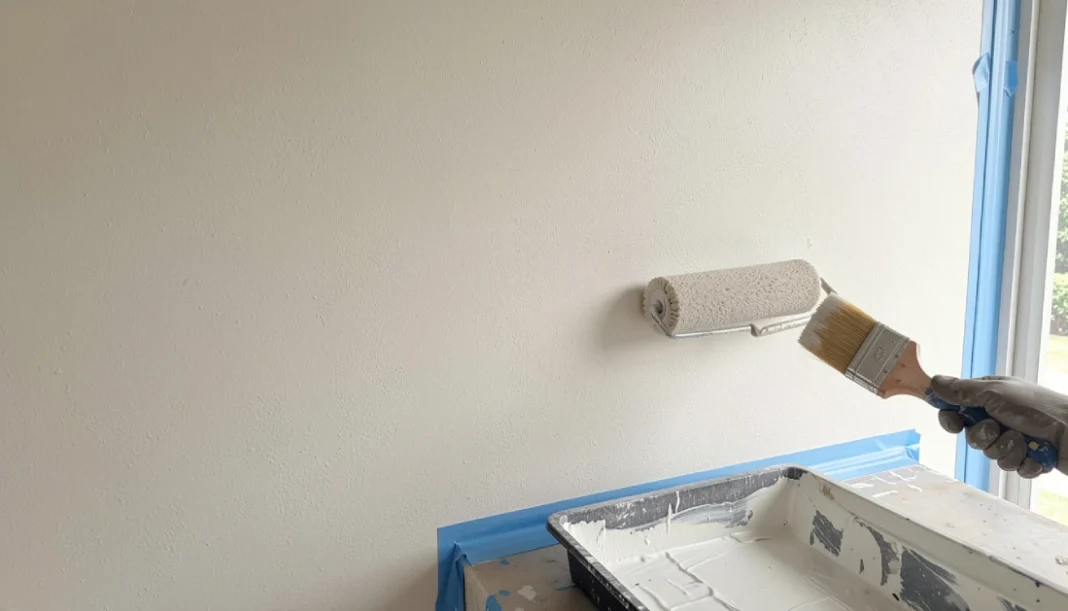
Cutting in means painting the edges of the wall — along the ceiling, baseboards, and corners — with a brush before you roll the open wall space. This creates clean lines and removes the need to tape everywhere.
How to Cut In Without Shaky Lines
Load your angled brush about a third of the way up the bristles — not fully loaded, or it will drip. Wipe one side lightly against the rim of the can to remove excess.
Start a couple of inches away from the edge you’re working toward, then gradually bring the brush closer. Use the flex of the bristle tip to guide paint right to the edge. Move in smooth, continuous strokes rather than short, choppy dabs.
“Invest in good brushes and rollers. Cheap ones leave streaks and lint behind, which ruins the surface — and no amount of technique fixes bad tools.” — Professional painting contractor
Work in sections of 3–4 feet at a time. Cut in one section, then roll that section while the edges are still wet. Wet-edge blending — where cut-in and rolled paint dry together — prevents lap marks. If you cut in the entire room first and then roll, you risk visible lines between the brush and roller work.
Tape guidance: Painter’s tape is helpful for beginners along trim and ceilings. For best results, press the tape edge firmly with a putty knife. Remove tape while the paint is still slightly tacky — not fully dry — to avoid pulling dried paint with it.
Step 6 — Roll the Walls
Rolling is where the magic happens — you’ll cover square feet in minutes, but only if your technique doesn’t leave behind streaks or lap marks. Getting the technique right prevents the two most common problems: stippling (a bumpy texture) and lap marks (visible overlap lines).
Choosing the Right Roller Nap
| Nap Thickness | Best For |
|---|---|
| 3/16–1/4 inch | Smooth drywall and ceilings |
| 3/8 inch | Most interior walls — the standard pick |
| 1/2 inch | Light orange-peel or slightly rough surfaces |
| 3/4 inch | Rough stucco, brick, or heavily textured walls |
For standard painted drywall, a 3/8-inch nap is your standard pick.
The Correct Rolling Technique
Load the roller fully by rolling it in the tray several times until it’s evenly saturated — not dripping. Start about 12 inches from the ceiling to avoid splattering onto it.
Use a W or M pattern: roll the paint onto the wall in a large W shape, then fill it in with vertical strokes without lifting the roller. This spreads paint before you start distributing it, which gives more even coverage than straight up-and-down passes.
Maintain a wet edge by working in sections and keeping your strokes overlapping the still-wet area. Don’t press too hard — the roller does the work when properly loaded. Finish each section with light, upward strokes to remove roller texture before the paint sets.
“Roll in a W or M motion, then fill in the gaps. Slow and steady is the rule — quick strokes introduce air bubbles that dry as craters.” — Professional painting contractor
Choosing the Right Paint Finish for Each Room
Paint sheen affects both appearance and durability. Choosing the wrong finish for a room is a common and fixable mistake.
❌ Mistake #3: Using Flat Paint in High-Traffic Areas → ✅ Fix: Choose Satin or Semi-Gloss for Durability
Flat paint hides wall flaws but won’t survive scrubbing. For hallways, kids’ rooms, or kitchens, pick satin (like Sherwin-Williams Duration Home) or semi-gloss for washable, moisture-resistant results.
| Finish | Characteristics | Best Rooms |
|---|---|---|
| Flat/Matte | Hides imperfections, harder to clean | Adult bedrooms, ceilings, and formal dining |
| Eggshell | Slight sheen, resists light scrubbing | Living rooms, hallways |
| Satin | Moderate sheen, moisture-resistant | Kids’ rooms, family rooms |
| Semi-gloss | Durable, washable, moisture-resistant | Kitchens, bathrooms, and all trim |
| High-gloss | Hard, wipeable surface | Trim, cabinetry, doors |
How Many Coats Do You Need?
One coat is rarely enough unless you’re painting a very similar color over a properly primed surface. Plan for two coats as the standard.
Let each coat dry fully before applying the next — typically 2–4 hours for latex paint, though humidity and temperature affect this. The paint should feel completely dry to the touch and not be tacky before you recoat. Applying a second coat too soon traps moisture and leads to peeling.
If you’re going from dark to light, a third coat may be necessary. A quality stain-blocking primer applied first will reduce the number of topcoats needed in these cases.
Common Beginner Mistakes (and How to Avoid Them)
❌ Mistake #1: Skipping Wall Washing → ✅ Fix: Wipe with TSP Substitute 24hrs Before Painting
Paint doesn’t bond well to greasy or dusty surfaces. Before priming, wipe walls with a damp sponge and a TSP substitute like Krud Kutter — especially in kitchens or high-traffic zones. This 20-minute step prevents peeling and blistering down the line.
❌ Mistake #2: Rushing Primer Dry Time → ✅ Fix: Wait Full Recoat Window + Extra Time in Humidity
A primer that isn’t fully dry causes the topcoat to drag and peel. Check the manufacturer’s recoat window (usually 1–2 hours for latex), then add 30–60 minutes in humid conditions. Painting too soon traps moisture and causes topcoat drag or peeling.
❌ Mistake #4: Overloading the Brush → ✅ Fix: Load Lightly, Tap Excess Off
Too much paint on your brush causes drips and thick, uneven edges. Load your angled brush about a third of the way up the bristles, then tap the bristles against the inside of the can instead of wiping both sides.
❌ Mistake #5: Rolling Too Fast → ✅ Fix: Slow, Steady Strokes for Level Finish
Quick roller strokes introduce air bubbles that dry as small craters. Use slow, steady strokes and maintain a wet edge to give the paint time to level out before it sets.
- Removing the tape too late. Tape left overnight — or longer — peels away dried paint when removed. Pull the tape off while the paint is still slightly wet for a clean edge.
- Skipping a second coat. A single coat looks fine when wet but often shows streaks and thin spots once dry. Budget time and paint for two full coats.
Cleanup After the Job
The project isn’t done when the last coat goes on. A proper cleanup protects your tools, your floors, and the environment.
Remove Painter’s Tape
Pull tape off while the final coat is still slightly tacky — never after it has fully dried. Pull at a 45-degree angle, back over itself, to get a clean edge without lifting cured paint.
Clean Your Brushes and Rollers
For latex or water-based paint: rinse brushes and roller covers under warm water, working paint out of the bristles from base to tip. Follow with warm, soapy water until the water runs clear. Reshape brush bristles and hang or lay flat to dry. A well-cleaned brush lasts for years.
For oil-based paint: use mineral spirits or paint thinner. Check the paint can label for the manufacturer’s cleaning recommendation.
Store Leftover Paint
Seal leftover paint tightly — place a piece of plastic wrap over the can opening before pressing the lid on. Store upside down for the first few minutes to create an airtight seal at the lid. Label the can with the room name, color, and date. Stored properly, latex paint lasts 2–5 years for touch-ups.
Dispose of Paint Properly
Never pour leftover paint down a drain or into a storm sewer. For small amounts (less than an inch in the can), leave the lid off and let it dry completely — fully dried latex paint can go in ordinary household trash. For larger quantities, take the can to a participating retailer via PaintCare (available in 10+ states) or check Earth911’s recycling locator — many hardware stores accept leftovers at no charge.
Time, Cost, and Difficulty at a Glance
| Factor | Details |
|---|---|
| Difficulty | Beginner |
| Time (12×12 room) | 4–6 hrs prep + 2–3 hrs painting (2 coats) |
| Primer cost | $15–$35 per gallon |
| Paint cost | $30–$70 per gallon (covers ~400 sq ft per coat) |
| Roller, brush, tape | $20–$40 for a quality set |
| Total estimate | $80–$200 for an average room |
| DIY recommendation | Yes — beginner-friendly with proper prep |
💡 Pro Tip: Prices reflect national averages. Urban areas (NYC, SF, Boston) may run 30–50% higher. Before buying, check real-time pricing at Home Depot, Lowe’s, or Sherwin-Williams using their store locators.