Thinking about converting your garage? You could add 200-500 sq ft of livable space for 30-50% less than a traditional home addition—without touching your foundation or roofline. But before you demo that concrete slab, you need to know which permits apply, what insulation actually works, and where DIY ends and a licensed contractor begins.
But “convert a garage” covers a wide range of outcomes. A basic gym or home office is a weekend-level finish job. A legal bedroom or accessory dwelling unit (ADU) is a permitted construction project that touches electrical, HVAC, insulation, and structural work. Knowing which category your project falls into changes every decision that follows.
Here’s exactly what you’ll learn: the 5 code requirements that make a garage ‘legal’ living space, how to navigate permit approvals without delays, and which insulation actually works (spoiler: the floor matters most).
What “Habitable Space” Actually Means
Your local building code requires five non-negotiables for any garage-to-bedroom conversion: 7+ ft ceiling height, emergency egress windows (5.7 sq ft minimum clear opening) per International Residential Code Section R303, natural light or mechanical ventilation, permanent heating source, and GFCI-protected electrical outlets per NEC standards.
- Ceiling height: At least 7 feet, often 7.5 feet, over the majority of the floor area
- Egress: A window or door that meets minimum opening dimensions for emergency exit (usually 5.7 sq ft of clear opening, 24 inches high, 20 inches wide)
- Natural light and ventilation: Windows totaling at least 8–10% of floor area, or mechanical ventilation
- Heating: A permanent heat source connected to the home’s system or a dedicated unit
- Electrical: Outlets, lighting, and GFCI protection per local code
A gym, storage room, or workshop doesn’t need to hit all of these. But a bedroom, office, or ADU does — and building inspectors will check every item on that list.
Permit requirements vary by municipality—California’s ADU laws (AB-68, SB-13) override many local zoning rules, while Texas cities like Austin and Houston enforce stricter setback and parking requirements. Always verify with your city’s building department portal before finalizing plans. The IRC (International Residential Code) is the baseline most jurisdictions follow, but local amendments are common.
Do You Need a Permit?
Short answer: almost certainly yes, if you’re creating livable space.
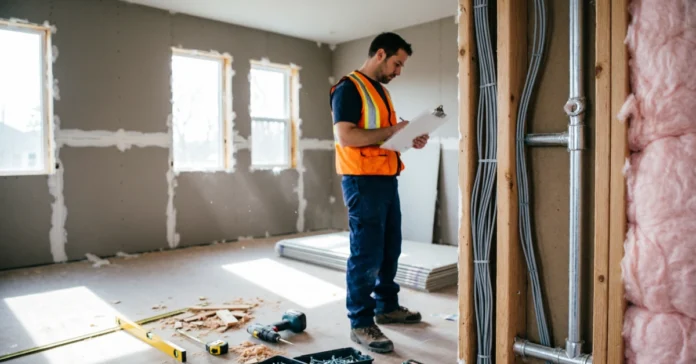
Permits are triggered when you change the use of a space, add or modify electrical, add or modify plumbing, or alter the building’s structural elements. A garage conversion touches most or all of these. Pulling a permit protects you in three concrete ways:
- Your work gets inspected, which catches errors before they become expensive problems
- Your homeowner’s insurance covers the finished space
- The square footage counts toward your home’s value when you sell
What happens without a permit: Skip the permit? That unpermitted conversion will flag on your seller disclosure form, scare off buyers’ agents, and could force you to demo the work—or pay to bring it up to code—before closing. The short-term savings aren’t worth it.
How to pull a permit: Contact your local building department (most have online portals now) or streamline approvals with permit expediting services like PermitFlow, which handle plan reviews and municipal submissions for a flat fee—especially valuable in backlog-heavy jurisdictions like Los Angeles or Seattle. You’ll submit a site plan, floor plan, and scope of work. Fees typically run $200–$1,500 depending on project size and jurisdiction. Expect 1–6 weeks for approval in most areas.
Insulation Requirements
Garages are not built to residential thermal standards. The walls, ceiling, and floor all need attention before the space is comfortable or code-compliant.
Walls
Most garage walls are uninsulated concrete block, CMU, or wood-framed with no cavity fill. For a wood-framed wall, the standard approach is to add batt insulation (fiberglass or mineral wool) between studs before hanging drywall. For DOE Climate Zones 4-5 (most of the U.S.), aim for R-13 to R-15 batt insulation in walls; if you’re in Zones 6-7 (Northern states), upgrade to R-21 mineral wool for superior thermal performance. Use the Department of Energy’s Climate Zone Map to confirm your region’s exact requirements before ordering materials.
If the existing wall has no stud framing, you have two options: fill out the wall with 2×4 framing to create an insulation cavity, or apply rigid foam board directly to the surface. Rigid foam (XPS or polyiso) at 2 inches gives roughly R-10, with no stud bay required.
Ceiling
If there’s an unfinished attic or floor above the garage, insulate the ceiling cavity to R-30 to R-60, depending on climate zone. If the garage is below a living area that’s already conditioned, you still want some insulation to separate temperature zones. If the garage has a flat roof or low pitch with no attic space, spray foam is often the most practical option — it adheres to rafters and handles the air-sealing at the same time.
Floor
Concrete slabs are cold in winter and prone to moisture transmission. For a finished floor, you have two practical paths:
- Rigid foam + sleeper system: Lay 1–2 inches of XPS foam on the slab, then attach 2×4 sleepers over it, then subfloor. This provides both insulation and a nailing surface for flooring. Adds 3–4 inches of height.
- Dimple mat + floating floor: A dimple mat (like Delta-FL) creates an air gap and moisture barrier between slab and subfloor. Less insulation value, but lower profile and faster to install.
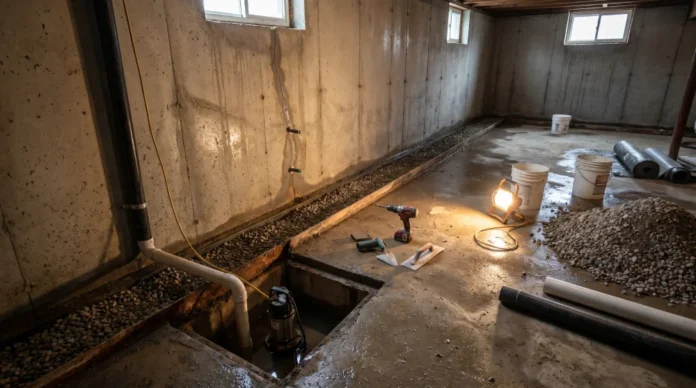
Vapor barriers matter more in garages than in above-grade living spaces because slabs wick moisture from the ground. Whatever floor system you use, a vapor barrier between the slab and the assembly is not optional.
Handling the Garage Door Opening
This is where most garage conversions stall. The opening is wide (typically 8–16 feet), and what you do with it shapes the entire room.
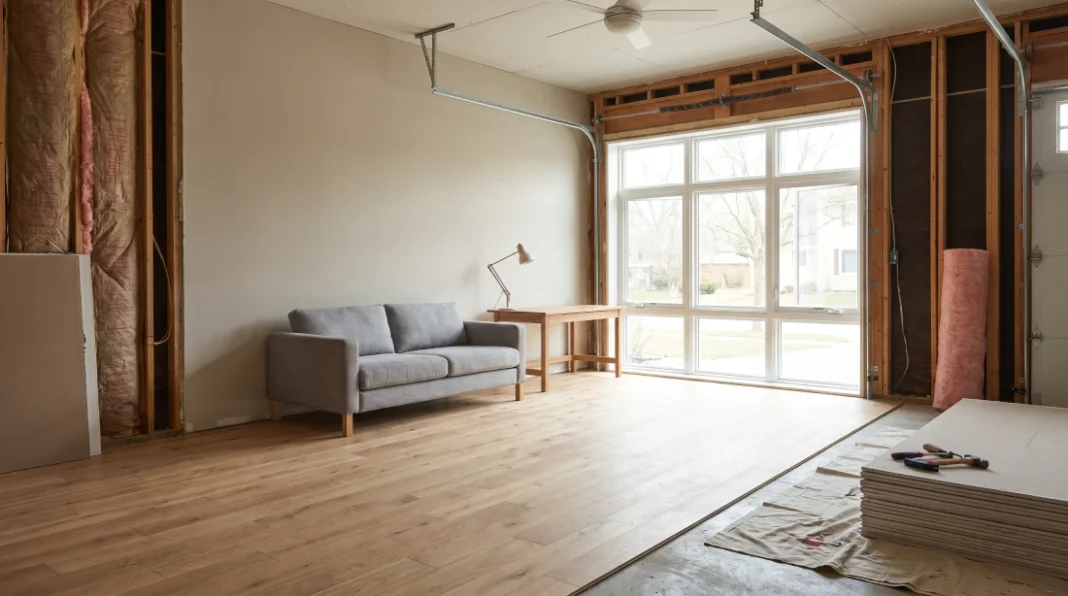
Option 1: Frame a wall with a window. The most common and cost-effective approach. Frame a standard stud wall across the opening, add a window or two for light, and insulate it like any exterior wall. This is permanent, adds good thermal performance, and looks like part of the house from the outside when finished properly.
Option 2: Frame in a door and window combination. If the converted space is a studio or ADU, you may want direct outdoor access. A standard exterior door plus a picture window fills the opening cleanly and adds functionality.
Option 3: Keep a modified garage door. Some homeowners keep the garage door but add a glass panel kit or replace it with a full-glass door for natural light. This works for a gym or workshop but doesn’t meet egress or insulation requirements for a habitable bedroom.
The framing for option 1 or 2 typically costs $800–$2,500 in materials and labor, depending on opening size and finish work.
Layout Options
The right layout depends on the conversion type, the garage footprint, and what the space needs to function.
Bedroom
A single-car garage (roughly 200–250 sq ft) is tight for a bedroom but workable. A two-car garage (400–500 sq ft) gives you comfortable bedroom dimensions plus a small closet or bathroom. For a legal bedroom, you need egress, a closet (in most jurisdictions), and a connection to the home’s HVAC. A half-bath or full bath can be added if there’s a nearby drain line to tap into — adding a bathroom adds $4,000–$12,000 to the project.
Home Office or Studio
The most flexible conversion type. Fewer code requirements, no egress window mandate in most jurisdictions (since it’s not a sleeping area), and the HVAC requirements are less strict. Budget for a dedicated circuit or two for equipment. For studios or home offices adjacent to living areas, sandwich Green Glue damping compound between two layers of 5/8″ drywall to reduce sound transmission by up to 90%—critical for focused work environments.
Home Gym
Requires durable, impact-resistant flooring — rubber gym tiles over a dimple mat work well. Ceiling height is the primary concern; most gym equipment needs at least 8 feet, and Olympic lifting requires 10+ feet. Mirrors and proper lighting round out the space. HVAC is important here; garages heat up fast under workout conditions.
ADU (Accessory Dwelling Unit)
The most complex conversion and the one with the highest return. An ADU is a self-contained unit with its own kitchen, bath, and separate entrance. It requires a full permit, may require a separate utility meter (varies by jurisdiction), and needs to meet all habitability standards. Detached garages are often better ADU candidates than attached ones due to fire-separation requirements. If full custom construction feels overwhelming, prefab ADU providers like Cover or Abodu offer permitted, turnkey garage conversion kits that can shorten your timeline by 40-60% while maintaining code compliance.
Garage Conversion Costs
Costs vary widely based on scope, region, and finish level. These ranges reflect national averages from RSMeans data; expect 15-30% higher costs in high-wage markets (SF Bay Area, NYC, Seattle) and 10-20% lower in rural Midwest/South regions. Always get 3+ local contractor quotes for accurate budgeting. Here’s a realistic breakdown:
| Scope | Estimated Cost Range |
|---|---|
| Basic finish (gym, workshop) | $5,000–$15,000 |
| Home office or studio | $10,000–$25,000 |
| Bedroom (no bath) | $15,000–$35,000 |
| Bedroom with a bath | $25,000–$55,000 |
| ADU (full unit) | $40,000–$120,000+ |
What drives cost up:
- Adding a bathroom (plumbing rough-in is the expensive part)
- HVAC extension or new mini-split installation ($2,000–$7,000)
- Panel upgrade if current electrical capacity is insufficient ($1,500–$4,000)
- Structural changes (raising the ceiling, adding headers)
- High-end finishes
What keeps costs down:
- Keeping it non-habitable (no permit, no HVAC, no egress)
- DIY on finishing work (drywall, painting, flooring)
- Using a ductless mini-split system from Mitsubishi or Fujitsu instead of extending ductwork—these deliver zone-controlled heating/cooling at 30-50% lower install cost and often qualify for federal energy efficiency tax credits
Labor typically accounts for 40–60% of the total project cost for a full conversion.
DIY vs. Hiring a Contractor
Do it yourself:
- Framing a new wall across the garage door opening (intermediate skill)
- Installing batt insulation
- Hanging and finishing drywall
- Installing flooring
- Painting
Hire a professional:
- Permit submission and plan preparation (unless you’re experienced)
- Electrical panel upgrades and new circuit runs
- Plumbing rough-in for any bathroom addition
- HVAC work (legally required to be licensed in most states)
- Any structural modifications
Here’s where most homeowners get tripped up: they budget for drywall and paint, then get blindsided by $8K-$20K in electrical and HVAC upgrades. Scope the mechanicals first. Get itemized quotes from at least three contractors before committing.
Does a Garage Conversion Add Home Value?
It depends on the type of conversion and the local market.
An ADU consistently delivers strong ROI — often 60–80% of project cost recouped at resale, plus rental income potential during ownership. In high-cost housing markets (California, Pacific Northwest, parts of the Northeast), ADUs can return more than 100% of the cost in added value.
A bedroom or living space addition adds value proportional to how much the home was under-bedroomed relative to the neighborhood. Going from 2 to 3 bedrooms in a 3-bedroom neighborhood is a clear win. Adding a 5th bedroom to a 4-bedroom home in a 3-bedroom market is not.
A gym or office adds convenience but limited appraised value. Buyers may actually discount it if they’d prefer a usable garage — consider how your local market values garage space before committing to a permanent conversion.
One consistent finding: unpermitted conversions reduce value. Buyers and their lenders treat them as liabilities.
Common Mistakes to Avoid
- Skipping the permit covered above, but worth repeating: the financial exposure at resale is real
- Ignoring ceiling height measure before planning; if you’re at 6’8″, a bedroom isn’t feasible without expensive structural work
- Underinsulating the floor, a cold, damp slab ruins the space, regardless of how well the walls and ceiling are done
- Not planning HVAC early, retrofitting HVAC after finishing work is expensive; it should be the first mechanical decision
- Blocking the attic access or utility connections if the garage houses your water heater or electrical panel, those need to remain accessible
Timeline
| Phase | Typical Duration |
|---|---|
| Planning and permits | 2–8 weeks |
| Framing and rough-in (electrical, HVAC, plumbing) | 1–3 weeks |
| Insulation | 1–3 days |
| Drywall and finish work | 1–2 weeks |
| Flooring, trim, fixtures | 1–2 weeks |
| Final inspection | 1–5 days after completion |
A full ADU conversion realistically takes 3–6 months from permit approval to move-in. A basic bedroom conversion can be done in 4–8 weeks.
Final Takeaway
A garage conversion is a legitimate way to add square footage, rental income, or functionality to a home. The gap between a good outcome and a costly mistake usually comes down to one early decision: did you pull the permit and properly plan the mechanicals?
Start with your local building department, clarify what your specific garage can legally become, get your HVAC and electrical scoped before finalizing a budget, and work backward from there. Ready to start? Download our free Garage Conversion Checklist (permits, insulation specs, contractor questions) or use our project cost estimator to scope your budget before contacting local builders.
FAQs
Q. Do I need a permit to convert my garage?
Yes, in almost every case where you’re creating livable space. Permits are required when you change a space’s use, modify electrical or plumbing, or alter structural elements — a garage conversion typically does all three. Without a permit, the space won’t count toward your home’s appraised value, your insurance won’t cover it properly, and you’ll likely have to disclose it as unpermitted work when you sell. The short-term savings aren’t worth the long-term liability.
Q. How much does a garage conversion cost?
It depends on what you’re converting it into:
- Basic gym or workshop: $5,000–$15,000
- Home office or studio: $10,000–$25,000
- Bedroom without a bathroom: $15,000–$35,000
- Bedroom with a bathroom: 25,000–$55,000
- Full ADU (self-contained unit): $40,000–$120,000+
The biggest cost drivers are adding a bathroom, extending or installing HVAC, and upgrading the electrical panel. Labor typically accounts for 40–60% of total project cost.
Q. Can I convert my garage into an ADU?
Yes, but it’s the most complex conversion type. An ADU requires a separate entrance, its own kitchen and bathroom, and must meet all habitability standards — ceiling height, egress, heating, lighting, and ventilation. You’ll need a full permit, and depending on your jurisdiction, a separate utility meter. Detached garages are often easier to convert to ADUs than attached ones because fire-separation requirements between the unit and the main house are less complicated. In many states, particularly California, ADU-friendly laws have made the permit process significantly faster than it used to be.
Q. What insulation do I need for a garage conversion?
You need to address three surfaces:
- Walls: R-13 to R-21 batt insulation in stud cavities, or rigid foam if walls aren’t framed
- Ceiling: R-30 to R-60 depending on your climate zone
- Floor: Rigid foam under a sleeper subfloor, or a dimple mat under a floating floor — plus a vapor barrier directly on the slab in either case
The floor is the most commonly underinsulated surface in garage conversions. A cold, damp slab will make the space uncomfortable regardless of how well the walls and ceiling are handled.
Q. Does converting a garage add home value?
It depends on the conversion type and your local market:
- An ADU typically returns 60–80% of project cost at resale, plus rental income potential. In high-cost markets, it can return more than 100%.
- A bedroom addition adds clear value if it brings the home in line with neighborhood norms (e.g., going from 2 to 3 bedrooms in a 3-bedroom market).
- A gym or office adds convenience but limited appraised value — and may actually reduce value if buyers in your area strongly prefer a functional garage.
Unpermitted conversions consistently reduce value. Buyers and lenders treat them as liabilities, not assets.
Q. How do I fill in the garage door opening?
Three practical options:
- Frame a wall with windows — the most common approach. A standard stud wall across the opening, insulated and sided to match the house exterior. Permanent, thermally solid, and looks intentional.
- Frame in a door and window combination — better if the space needs direct outdoor access, such as a studio or ADU entrance.
- Replace with a glass garage door — works for a gym or workshop where you want light and don’t need the space to meet habitable standards. Not suitable for a bedroom or ADU.
Framing and finishing the opening typically costs $800–$2,500 in materials and labor, depending on size and finish quality.