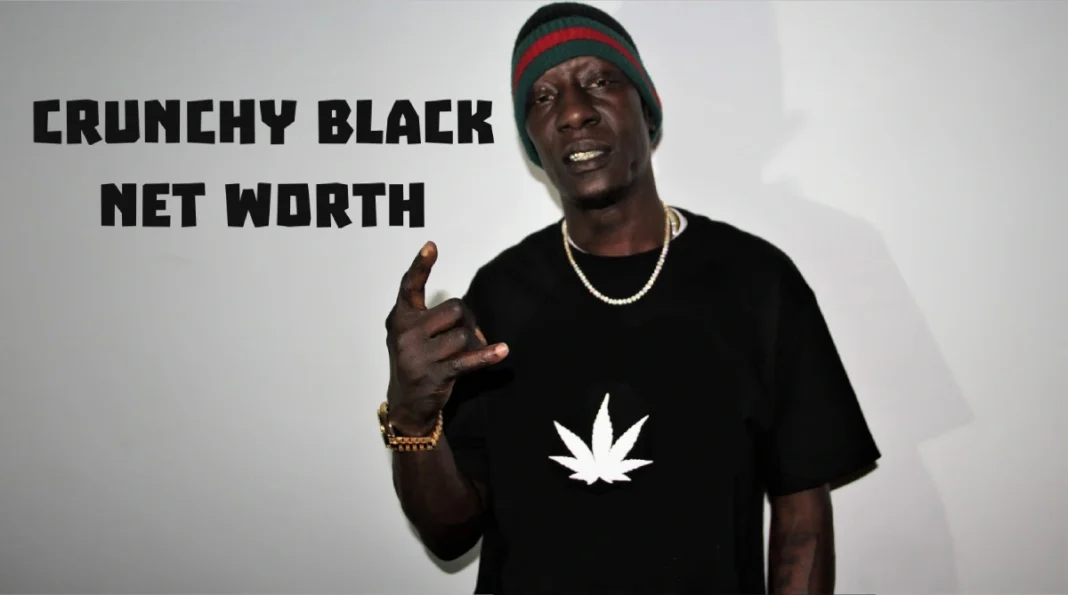
Estimated net worth: $5 million to $8 million
Darnell Carlton — known as Crunchy Black — spent three decades building wealth in one of music’s most competitive industries. As a core member of Three 6 Mafia, he helped push Memphis hip-hop from regional cassette tapes to an Academy Award stage. His individual fortune reflects group royalties, solo releases, acting work, and financial habits that have kept him solvent long after his commercial peak.
This article covers Crunchy Black’s net worth, his income sources, and Three 6 Mafia’s group finances as essential context.
Three 6 Mafia Net Worth (The Foundation Group)
Understanding Crunchy Black’s individual wealth requires starting with the group.
Three 6 Mafia has a combined estimated net worth of approximately $20 million. The group was founded in Memphis in the early 1990s by DJ Paul (Paul Beauregard) and his half-brother Lord Infamous (Ricky Dunigan), with Juicy J (Jordan Houston) joining shortly after. They originally operated under the name Backyard Posse before building their catalog through their independent label, Hypnotize Minds. Later members included Gangsta Boo, Koopsta Knicca, Project Pat, and Crunchy Black.
Group Album Earnings (Estimated, Based on RIAA Certifications)
| Year | Album | RIAA Certification | Estimated Earnings |
|---|---|---|---|
| 1995 | Chapter 1: The End | — (200,000 copies independently) | ~$200,000 |
| 1996 | Chapter 2: World Domination | Gold | ~$500,000 |
| 1999 | When the Smoke Clears: Sixty 6, Sixty 1 | Platinum | ~$1,000,000 |
| 2002 | Da Unbreakables | Gold | ~$500,000 |
| 2005 | Most Known Unknown | Platinum | ~$1,000,000 |
Early Life
Born on August 20, 1974, in Memphis, Tennessee, Crunchy Black grew up in a city with a thriving underground rap scene that was largely disconnected from the major-label world dominated by New York and Los Angeles artists. His childhood friendships in Memphis included future Three 6 Mafia members DJ Paul and Juicy J — connections that placed him at the center of what would become one of hip-hop’s most influential groups.
Career With Three 6 Mafia
“Mystic Stylez” and the Underground Years (1991–1999)
Three 6 Mafia built their early fanbase by selling cassette tapes locally across Memphis and the surrounding South. Their 1995 debut studio album, “Mystic Stylez,” is now regarded as one of the most important Southern hip-hop records ever made. Its dark production — eerie synths, heavy bass lines, and hypnotic loops — laid the groundwork for what later became trap music and the phonk genre, both of which remain commercially relevant today.
Crunchy Black joined the group during this underground period, bringing a physical energy and a now-signature dance style that became a visual trademark at live shows. The group operated through Hypnotize Minds, releasing a series of independent albums, including “Chapter 1: The End” and “Chapter 2: World Domination,” that expanded their audience across the South without mainstream label support.
Mainstream Breakthrough (2000–2005)
The commercial turn came with “When the Smoke Clears: Sixty 6, Sixty 1” (1999), which went platinum and produced the hit “Sippin’ on Some Syrup.” By 2005, “Most Known Unknown” debuted at #3 on the Billboard 200 — the highest chart position the group had reached — and generated “Stay Fly,” one of their most widely recognized singles. These releases brought Three 6 Mafia from regional cult status to national commercial presence.
Academy Award Win (2006)
Three 6 Mafia made history at the 78th Academy Awards in 2006, winning Best Original Song for “It’s Hard out Here for a Pimp” from the film Hustle & Flow. The song was co-written by Juicy J, DJ Paul, and Frayser Boy. The win made them the first hip-hop group to receive an Oscar.
The cultural impact was immediate. Their performance of the track during the ceremony introduced Three 6 Mafia to an audience far beyond hip-hop, expanded their touring market, and gave the catalog a visibility boost that continues paying royalties to this day.
During his years with the group, Crunchy Black contributed to three major certified releases: “When the Smoke Clears” (platinum, 1999), “Da Unbreakables” (gold, 2002), and “Most Known Unknown” (platinum, 2005).
Solo Career (2006–Present)
Crunchy Black parted ways with Three 6 Mafia in 2006. His debut solo album, “On My Own,” released the same year, was his first step as an independent artist without the group’s established brand behind him.
The solo path came with predictable trade-offs: lower commercial reach, harder bookings, smaller advances — but a larger personal share of whatever revenue he generated. Throughout the 2010s, he released mixtapes and projects including “Money Ain’t No Issue” and “From Me to You,” keeping his name active in underground hip-hop circuits and generating income through digital sales and streaming.
His solo catalog is modest by mainstream standards, but it has provided consistent, low-overhead income for nearly two decades.
Royalty Disputes and the Group Finance Question
One significant factor that complicates any precise net worth estimate: documented disputes over royalties between Crunchy Black and other Three 6 Mafia members — particularly DJ Paul. These disputes, which surfaced publicly on social media, suggest that royalty income from the group’s catalog has not been distributed equally among all members.
The internal structure of Hypnotize Minds and the split arrangements between members are not publicly disclosed. This means any estimate of how much Crunchy Black personally earns from the group’s streaming catalog involves real uncertainty. Sources that assign him a fixed net worth without acknowledging this gap are guessing.
How Crunchy Black Makes Money
- Catalog royalties are the primary passive income source. Three 6 Mafia’s late-1990s and 2000s catalog generates consistent streaming revenue on Spotify, Apple Music, and YouTube. Tracks like “Sippin’ on Some Syrup,” “Stay Fly,” and “It’s Hard out Here for a Pimp” remain widely played. How much of that flows to Crunchy Black specifically is unclear, given the royalty disputes above.
- Live performances remain his most consistent active income. Artists at his level typically earn between a few thousand dollars and $20,000 per booking, depending on venue size and event type. He has maintained an active presence at clubs, festivals, and hip-hop-specific events.
- Acting added a modest revenue stream. His appearances in Choices and Choices II: The Setup generated upfront fees and some residual income, though neither was a major commercial release.
- Merchandise — branded T-shirts and similar items — provides direct-to-consumer income with higher margins than traditional retail. This is a smaller stream than royalties or touring, but it adds to the total.
- Real estate and local investment in Memphis provide an underappreciated advantage. Memphis has a significantly lower cost of living than major entertainment markets like Los Angeles or New York, meaning his wealth stretches further, and local property investments carry lower entry costs.
Why the Legacy Still Pays?
Three 6 Mafia’s influence on modern music is not a minor footnote. Their production techniques — rapid hi-hat patterns, horror film-influenced aesthetics, dark melodic loops — became foundational elements of trap music and phonk. Both genres are commercially dominant across streaming platforms in 2025, introducing new listeners to the Three 6 Mafia catalog every year.
Television Presence
In 2007, DJ Paul and Juicy J starred in the MTV reality show “Adventures in Hollyhood,” which followed the duo’s life in Los Angeles while maintaining their Memphis identity. Crunchy Black had already left the group by this point, but the show’s success kept the Three 6 Mafia name in mainstream pop culture and continued driving catalog streams — a passive benefit for all members with royalty stakes.
Lord Infamous
Lord Infamous (Ricky Dunigan), a founding member and one of the group’s most distinctive creative voices, died in December 2013. His death closed a chapter on the group’s original lineup and reinforced how few members from that founding era remain active. Crunchy Black is one of them — a fact that adds cultural weight to his continued presence in hip-hop.
Personal Life
Crunchy Black keeps his private life largely out of public view. He has two children — a daughter, Ladee Pooh Carlton, and a son. He has remained based in Memphis, which reflects both personal roots and practical financial sense. Unlike many of his peers, he has not been publicly associated with the kind of financial collapses — lawsuits, bankruptcy, public debt — that have affected other artists from the same era.
What is Crunchy Black’s Net Worth today?
Estimates range between $5 million and $8 million, depending on the source and methodology. The spread exists for a reason:
- His share of Three 6 Mafia’s group royalties is undisclosed and disputed
- Solo catalog earnings are difficult to verify independently
- Real estate holdings in Memphis are not publicly documented
- Touring income figures are estimates, not filed records
The group’s combined net worth is estimated at $20 million. An even split among core members would suggest a significant individual share. But the documented royalty disputes with DJ Paul indicate the distribution is likely uneven.
A conservative, defensible estimate places Crunchy Black’s net worth at $5 million. The upper range of $8 million is plausible if his real estate and catalog earnings are stronger than publicly known. No estimate in this range should be taken as precise — including this one.
Final Summary
Crunchy Black’s financial position in 2025 reflects what three decades of consistent work actually looks like in hip-hop: not extreme wealth, but durable income built from multiple sources over a long career. The Academy Award win with Three 6 Mafia gave him a platform most regional artists never reach. His solo work kept him active after leaving the group. His Memphis base has helped him manage costs. And his portion of one of hip-hop’s most influential catalogs continues generating passive income.
The unresolved question — how much of that catalog income actually reaches him — remains the central unknown in any honest assessment of his net worth.