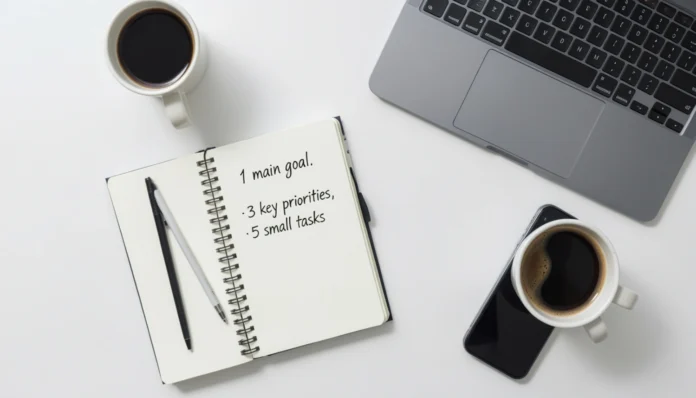
The “Perfect Day” exercise is a visualization technique where you imagine and write out your ideal day from morning to night, focusing on sensory details and emotions. By mapping six key moments—waking, morning routine, midday activities, afternoon focus, evening wind-down, and sleep—you create clarity about what fulfillment actually looks like, making it easier to incorporate those elements into your current life.
You wake up. The alarm blares. Coffee happens on autopilot. Work fills the middle hours. Evening arrives without much thought. Sleep comes eventually.
Days blur together when you live them reactively instead of intentionally. You know something feels off, but pinpointing what your ideal day actually looks like—beyond vague wishes for “less stress” or “more balance”—proves surprisingly difficult.
The “Perfect Day” exercise gives you a practical framework for getting specific. Not about fantasy vacations or lottery wins, but about ordinary days that leave you feeling fulfilled. This guide breaks the exercise into six key moments, showing you how to visualize each one and, more importantly, how to start building that vision into your actual routine.
These recommendations reflect widely accepted lifestyle practices used by individuals seeking sustainable personal improvement.
Why You Feel Stuck Without a Clear Vision
Most people spend more time planning vacations than designing their daily lives. You optimize your work schedule, your budget, your fitness routine—but rarely ask whether your typical Tuesday aligns with who you want to be.
Without a clear picture of what fulfillment looks like in practice, you default to habits formed years ago. You take the path of least resistance. You say yes to things that don’t matter and no to things that do, simply because you haven’t defined your priorities clearly enough.
Research shows that visualization works not through magic but through focus. When you create a detailed mental picture of something, your brain starts recognizing opportunities to make it real. You notice the gap between where you are and where you want to be. That awareness drives change.
The problem isn’t lack of ambition. It’s lack of specificity. “I want to be happier” doesn’t give you much to work with. “I want mornings where I wake naturally, spend 20 minutes reading before anyone else is awake, and feel calm instead of rushed” does.
The 6 Key Moments That Define Your Day
The “Perfect Day” exercise works by breaking your day into distinct moments. Each one serves a different purpose in creating fulfillment. You’ll write about all six, but start wherever feels most important to you right now.
Moment 1: Waking Up
Your first conscious moments set the tone for everything that follows. In your perfect day, how do you wake? Naturally, without an alarm? To sunlight filtering through curtains? To the smell of coffee brewing?
Get specific about the details. What sounds do you hear first? Traffic, birds, silence, breathing beside you? How does your body feel—rested, energized, comfortable?
This moment reveals what conditions help you start well. If you imagine waking naturally at 6:30 AM feeling refreshed, but currently rely on three alarms and still feel groggy, that gap tells you something about your sleep habits or evening routine.
Action step: Write 3-4 sentences describing your ideal waking moment. Focus on sensory details—what you see, hear, feel.
Moment 2: Morning Routine
The hours between waking and starting your main activities shape your mental state. In your perfect day, what happens during this window?
Maybe you picture yourself doing gentle stretches, making breakfast without rushing, reading for pleasure, or having unhurried conversation. Maybe you see yourself working out, journaling, or simply enjoying coffee in silence.
Your ideal morning routine reflects your values. Someone who visualizes meditation and slow movement values calm and presence. Someone who imagines an early gym session followed by a productive planning session values energy and accomplishment.
The key is honest visualization. Don’t picture what you think you should want. Picture what actually sounds appealing when you remove external pressure.
Action step: Map your ideal morning hour by hour. Include time estimates and transitions between activities.
Moment 3: Midday Work or Activity
This is where most people spend the bulk of their hours. In your perfect day, what fills this time? What type of work are you doing? Who are you doing it with or for?
Maybe you see yourself tackling creative projects with deep focus. Maybe you imagine collaborative work with people you respect. Maybe you picture yourself outdoors, working with your hands, or helping others directly.
Pay attention to the environment. Are you at home, in an office, somewhere else entirely? Is music playing? Are windows open? These details matter because they reveal what conditions help you do your best work.
Also notice the emotional quality. Do you feel challenged but capable? Peaceful and absorbed? Energized by interaction? Your feelings during work hours indicate whether your current career or daily activities actually align with what engages you.
Action step: Describe your ideal midday in 5-6 sentences. Include the type of work, the environment, and how you feel while doing it.
Moment 4: Afternoon Focus
Afternoons often slump. Energy drops. Motivation wavers. In your perfect day, how do you navigate this time?
Maybe you picture yourself taking a walk, having a genuine conversation with someone, working on a passion project, or simply allowing yourself rest without guilt. Maybe you see yourself energized by a new activity that breaks up the day’s pattern.
This moment reveals how you want to handle transitions and lower-energy periods. If you imagine afternoon walks in nature but currently sit at a desk pushing through fatigue, that’s actionable information.
Action step: Write 3-4 sentences about your ideal afternoon. What happens? How do you feel? What makes this time meaningful instead of just “getting through” it?
Moment 5: Evening Wind-Down
Evenings often get lost to screens, obligations, or numbness after long days. In your perfect day, how do you transition from doing to being?
Maybe you picture cooking a real meal instead of grabbing something quick. Maybe you see yourself having quality time with family or friends. Maybe you imagine reading, creating something, or engaging in a hobby you never make time for.
Your ideal evening shows what recharges you after expending energy all day. It also reveals what connection looks like for you—whether that’s social interaction, solitude, creative expression, or physical activity.
Action step: Describe your ideal evening routine in 4-5 sentences. What activities fill this time? Who’s present? How do you feel as the day ends?
Moment 6: Preparing for Sleep
Your final moments awake influence how well you rest and how you’ll wake tomorrow. In your perfect day, what does this transition look like?
Maybe you imagine a consistent routine—skincare, reading, light stretching, gratitude reflection. Maybe you see yourself simply feeling satisfied with the day behind you and calm about the day ahead.
This moment reveals what helps you release the day and rest properly. If you currently scroll on your phone until you pass out but imagine yourself reading peacefully before sleeping at a consistent time, that points to a specific habit worth building.
Action step: Write 2-3 sentences about your ideal sleep preparation. What’s the last thing you do before closing your eyes? How do you feel?
How to Actually Use This Exercise
Visualization alone doesn’t change anything. The value comes from what you do with the clarity it provides.
Step 1: Write It Down (15-30 Minutes)
Set aside uninterrupted time. Close your eyes first and let yourself experience each moment as if it’s happening. Don’t force the details—let them emerge naturally. Then write everything out in present tense, as if describing today.
Use a notebook, not your phone. The physical act of writing engages your brain differently than typing. Plus, you can return to these pages later without digital distractions.
Step 2: Identify the Gaps (10 Minutes)
Read what you wrote. Compare it honestly to your current days. Where are the biggest disconnects?
Maybe your perfect day includes morning movement, but you currently skip it because you’re rushed. Maybe you imagine work that absorbs you, but your current job feels hollow. Maybe you picture quality time with loved ones, but evenings currently disappear to separate screens.
Write down the top 3-5 gaps. These become your focus areas.
Step 3: Start Ridiculously Small (Immediate)
Don’t try to overhaul everything at once. Pick one element from one moment and test it this week.
If your perfect morning includes reading, start with five minutes. If your ideal evening involves cooking real food, try it once this week instead of seven times. If your perfect afternoon includes a walk, take one tomorrow.
Small changes stick when they feel manageable. You’re not trying to achieve your entire perfect day immediately—you’re testing whether incorporating one element actually makes your real days feel better.
Step 4: Revisit Quarterly (Every 3 Months)
Your perfect day will change as you do. Revisit this exercise every few months. Notice what’s shifted in your vision. Notice what you’ve successfully incorporated from previous versions.
This isn’t a one-time activity. It’s an ongoing practice of checking whether your life matches your values or whether you’ve drifted off course.
Common Obstacles and How to Handle Them
“My perfect day feels impossible given my responsibilities”
Your perfect day doesn’t have to be your every day. The exercise shows you what fulfillment feels like so you can incorporate elements of it within constraints.
If you have young kids, your perfect morning might not include two hours of silence—but it might include 15 minutes of peaceful coffee before anyone wakes. That’s still valuable and achievable.
“I can’t picture anything clearly”
Start with one moment instead of the full day. Just describe your ideal waking or your ideal evening. Build from there.
Also try negative visualization: what would an awful day look like? Defining what you don’t want often clarifies what you do.
“My perfect day reveals I’m in the wrong career/relationship/city”
The “Perfect Day” exercise sometimes surfaces uncomfortable truths. That’s valuable information, even if acting on it takes time.
You don’t have to quit your job tomorrow. But knowing your work doesn’t align with what engages you helps you start planning—whether that means changing roles, companies, or industries.
Big changes start with awareness. This exercise gives you that awareness.
Making Changes Sustainable
Small adjustments compound over time. Adding five minutes of morning reading doesn’t sound impressive. But over a year, that’s 30+ hours of reading—potentially 15-20 books that shift your thinking.
Focus on consistency over intensity. A 10-minute evening walk every day beats occasional hour-long hikes. A brief morning stretch routine you actually do outperforms an elaborate yoga practice you skip most days.
Also revisit your written perfect day regularly. Read it before sleep or first thing in the morning. This keeps your vision active in your mind, making your brain more likely to recognize opportunities to move toward it.
Track what you implement without judgment. Notice patterns. If you consistently skip your intended morning routine, that might mean you need to adjust your evening habits to wake easier. If afternoon walks feel great when you do them but rarely happen, that reveals a scheduling or priority issue to address.
The goal isn’t perfection. It’s living more days that feel like your version of a good day. That accumulation is what transforms your life.
FAQs
How long should I spend on the “Perfect Day” exercise?
Plan for 20-40 minutes total. Spend 5-10 minutes visualizing with your eyes closed, letting details emerge naturally. Then spend 10-30 minutes writing everything out in present tense. The more specific your description, the more useful the exercise becomes. Include sensory details, emotions, and the flow of activities from morning to night.
Should I visualize 5 years from now or tomorrow?
Both approaches work depending on your goal. For career or life direction clarity, imagine 5 years ahead. For improving current daily habits and routines, visualize tomorrow or next week. The “Perfect Day” exercise works best when you focus on an ordinary day, not special occasions. You’re designing sustainable fulfillment, not fantasy.
What if my perfect day conflicts with my current reality?
Conflicts reveal what matters to you. If you imagine mornings without rushing but currently wake late and scramble, that shows you value calm starts—so you might adjust your evening routine to wake easier. If you picture work that engages you but your current job doesn’t, that’s information for career planning. Don’t ignore conflicts. Use them to guide change.
How often should I revisit this exercise?
Aim for quarterly reviews—every 3 months. Your perfect day shifts as you grow, as seasons change, and as life circumstances evolve. What fulfilled you in January might not in July. Regular revisits keep your vision aligned with who you’re becoming. Many people also read their written perfect day weekly or monthly to stay focused on their values.
Do I have to implement everything I visualize?
No. Start with one or two elements that feel most important or achievable right now. If your perfect day includes morning yoga, afternoon creative work, and evening socializing, pick one to test first. See how incorporating it affects your actual days. Add another element once the first becomes routine. Building your perfect day is gradual, not immediate.
What if I can’t picture details clearly or my mind stays blank?
This is common, especially when stressed or tired. Try the exercise when well-rested. If visualization remains difficult, answer specific questions instead: What time do you wake? What’s the first thing you do? Who are you with at lunch? What sounds do you hear in the evening? Sometimes writing answers to concrete questions reveals your vision more easily than open-ended imagining.
Start Your Next Day Differently
You don’t need to overhaul your entire life tomorrow. You just need one clear picture of what fulfillment looks like for you and one small step toward it.
The “Perfect Day” exercise gives you that picture. The six moments—waking, morning routine, midday work, afternoon focus, evening wind-down, and sleep preparation—create a framework for understanding what makes your days feel worthwhile.
Set aside 30 minutes this week. Close your eyes. Let yourself experience your ideal ordinary day. Write it down. Then pick one element and test it. That’s how change starts.
Your perfect day won’t arrive fully formed. You build it gradually, one intentional choice at a time. And those choices, repeated consistently, eventually become your actual life.
Sidebar: Why Small Changes Compound Over Time
The “Perfect Day” exercise reveals your vision. Small, consistent actions turn that vision into reality.
Think about compound interest in your bank account—modest deposits grow exponentially given enough time. Daily habits work the same way.
Reading 10 minutes each morning seems insignificant. Over a year, that’s 60+ hours—enough to finish 20-30 books. Those books shift your thinking, vocabulary, and perspectives in ways that influence decisions for years afterward.
A 15-minute evening walk feels minor. But over months, that habit improves your sleep, reduces stress, clears your mind for better decisions, and creates hundreds of moments outdoors instead of on screens.
The mistake most people make is expecting dramatic results immediately. They try to completely redesign their mornings, then quit when it doesn’t stick. Sustainable change requires patience with yourself.
Start so small it feels almost silly. If your perfect day includes yoga but you currently do none, start with two minutes of stretching. If your ideal evening involves reading but you currently watch TV, start with one page before bed.
These tiny changes work because they bypass the resistance your brain creates around big changes. Your mind doesn’t rebel against two minutes of stretching. It does rebel against completely overhauling your morning routine.
Once small changes become automatic—usually 2-4 weeks—add another. Stack habits gradually. That’s how you build a life that actually resembles your perfect day without overwhelming yourself or burning out.
The timeline matters less than the direction. Moving 1% closer to your ideal day each week means you’re 50% closer after a year. That’s the power of consistency over intensity.