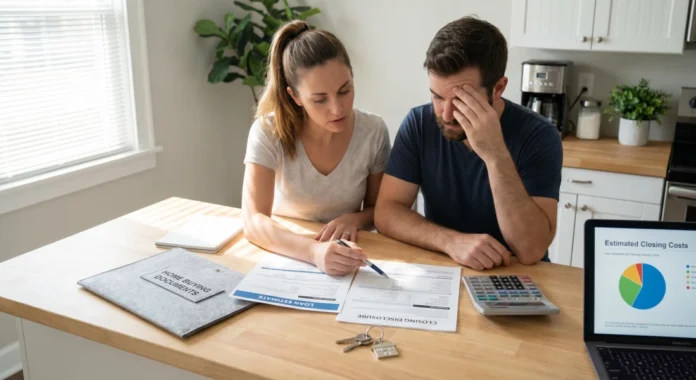
Marcus had been watching the market for eight months. He knew the neighborhood, had his financing sorted, and had already toured 11 homes. When his dream house hit the market, he called the listing agent directly — no buyer’s agent. He saved roughly $14,000 in commission. He also overpaid by $22,000 because nobody told him the seller had dropped the price twice already and was desperate.
That story isn’t rare. Neither is its opposite — buyers who used an agent, paid for the service, and got very little value in return on a straightforward deal. So when you ask “do I need a real estate agent to buy a house?” the correct answer is: it depends on you, the deal, and what the market looks like right now.
Here’s the honest breakdown.
What changed with the 2024 NAR settlement
Before August 2024, the standard setup was simple: the seller paid both their listing agent (around 3%) and the buyer’s agent (another 2.5–3%). Buyers never wrote a check for representation.
That changed after the National Association of Realtors settled a major antitrust lawsuit for $418 million. The rule that forced sellers to offer buyer’s agent compensation was eliminated. Now, buyer’s agent fees must be negotiated separately — and buyers may need to pay their own agent directly.
What this means in practice:
- Buyers must now sign a written representation agreement before touring homes with an agent. That agreement specifies the fee.
- Sellers can still offer to cover buyer’s agent costs, and many do — especially in slower markets. But it’s no longer guaranteed.
- On a $400,000 home, a 2.5% buyer’s agent commission is $10,000. That’s money you may now see itemized on your closing disclosure.
This changes the math significantly. But it also means buyers finally have something they never had before: the ability to negotiate their agent’s fee like any other professional service.
What you actually lose without an agent
Let’s be direct. Going without a buyer’s agent is not just about saving money. You are taking on a set of responsibilities that require time, market knowledge, and negotiation confidence.
Access to listings.
Agents have MLS access, which includes every listing — including pocket listings and pre-market properties that never appear on Zillow or Redfin. If you’re only searching public portals, you may be working with 80–90% of available inventory. In competitive markets, the missing 10–20% can matter.
Comparative Market Analysis (CMA).
Before making an offer, you need to know what the home is actually worth based on recent comparable sales. Zillow estimates are often 5–10% off. Agents pull real, recent comp data and can tell you whether the asking price is justified. Without this, you’re guessing.
Contract review and contingencies.
A purchase agreement is a legally binding contract with clauses for financing, inspection, appraisal, and title. Skipping key contingencies — or not knowing when to invoke them — can cost you your deposit or lock you into a bad deal. In some states, a real estate attorney can fill this role at a flat fee ($500–$1,500), which is cheaper than a full commission.
Negotiation.
This is the biggest gap. Experienced agents know how to read the seller’s position, how long the property has been sitting, what the seller’s motivation is, and how to structure an offer that wins without overpaying. Unrepresented buyers regularly overpay — not because they’re not smart, but because they lack market context.
Coordination and due diligence.
Scheduling inspections, managing deadlines, dealing with title companies, lenders, and listing agents — an agent holds all of this together. Doing it yourself is manageable, but it takes real time and attention.
What you actually save without an agent
The direct saving is clear: you avoid paying a buyer’s agent commission, which typically ranges from 2–3% of the purchase price.
| Home Price | 2% Commission | 2.5% Commission |
|---|---|---|
| $300,000 | $6,000 | $7,500 |
| $500,000 | $10,000 | $12,500 |
| $750,000 | $15,000 | $18,750 |
But here’s the nuance: the seller may still offer to cover your buyer’s agent fee to attract offers. If you go unrepresented, you don’t automatically pocket that money — the seller simply keeps it. Some buyers successfully negotiate a price reduction equal to the foregone commission. Most don’t, because they don’t know how to ask.
If you’re confident, prepared, and dealing directly with a seller who is motivated to close, you can legitimately save that full commission. If you’re relying on a seller’s goodwill or market ignorance, that saving is mostly theoretical.
When buying without an agent actually makes sense
Going solo isn’t always reckless. There are genuine situations where it’s the smarter call.
- You’re buying directly from someone you know. Purchasing from a family member, employer, or known seller eliminates most of the conflict that agents help navigate. A real estate attorney handles the paperwork and you’re done.
- You’re an experienced buyer. If you’ve bought and sold multiple properties, understand contract terms, know how to read comparable sales data, and are comfortable negotiating, you may not need the hand-holding a buyer’s agent provides.
- It’s a simple, well-priced deal. If the listing is fairly priced, the inspection comes back clean, and the seller isn’t playing games, the transaction is largely administrative. A good real estate attorney or escrow company can close it cleanly.
- You’re buying new construction. In most new construction purchases, the builder’s sales agent represents the builder — not you. Whether or not you bring your own agent, you need to understand that clearly. Unrepresented buyers sometimes negotiate upgrades or price reductions in place of agent fees, though results vary.
When you should use a buyer’s agent
The calculation shifts in several situations where professional representation pays for itself.
- You’re a first-time buyer. The process is complex, contracts are unfamiliar, and mistakes are expensive. A buyer’s agent who explains every step and advocates for your interests is worth paying for.
- The market is competitive. In a seller’s market with multiple offers, an experienced agent knows how to structure an offer that stands out — escalation clauses, waived contingencies where appropriate, personal letters, or simply getting the offer in early. Going it alone in a hot market often means losing repeatedly and overpaying when you finally win.
- The property has issues. If the inspection turns up problems, negotiating credits or repairs requires knowing what’s reasonable and what’s not. An agent with local contractor knowledge can give you real numbers.
- You’re buying in an unfamiliar area. Local market knowledge is not something you can get from a Zillow map. An agent who works that specific area knows which streets have noise problems, which HOAs are poorly managed, and where the school boundaries actually fall.
- The deal is complex. Investment properties, short sales, foreclosures, properties with title issues, estate sales — these all have specific processes that can go wrong in non-obvious ways.
The new negotiation reality
Since the NAR settlement, buyer’s agent fees are now openly negotiable. This is actually good for buyers who know how to use it.
A few things worth knowing:
- You can negotiate the buyer’s agent commission before signing a representation agreement. 1.5% is not unusual for a straightforward transaction in a mid-range market. Push for it.
- You can ask your agent to work on a flat-fee basis for limited services — such as making offers on homes you’ve already found yourself.
- If the seller offers 2.5% buyer’s agent compensation and your agent’s fee is 1.5%, your agent may pocket the difference — or you may negotiate a price reduction. Clarify this upfront.
- Discount brokerages like Clever Real Estate, Redfin, and Flat Fee MLS services offer partial representation at a lower cost. These aren’t the right fit for every situation, but for a confident buyer in a stable market, they’re worth considering.
The hidden costs most buyers don’t factor in
Whether you use an agent or not, some costs catch buyers off guard.
1. Inspection costs.
A standard home inspection runs $300–$600. Specialized inspections — radon, mold, sewer scope, roof — add $100–$300 each.
2. Appraisal.
Required by most lenders, typically $500–$750. Paid by the buyer even if the deal falls through post-appraisal.
3. Title insurance.
Lender’s title insurance is usually required. Owner’s title insurance is optional but worth having. Combined, expect $1,000–$2,000.
4. Attorney fees.
In states where attorneys are required at closing (New York, Massachusetts, Georgia, etc.), add $500–$1,500. If you’re buying without an agent in any state, hiring a real estate attorney is not optional — it’s necessary.
5. Closing costs.
Beyond agent fees and attorney costs, closing typically adds 2–5% of the loan amount — covering loan origination fees, prepaid insurance, property taxes, and recording fees.
FAQs
Q. Can I make an offer on a house without a realtor?
Yes. You can submit an offer directly to the listing agent or seller. Just make sure the purchase agreement includes standard contingencies — financing, inspection, and appraisal — and have a real estate attorney review it before you sign.
Q. Does the seller’s agent represent me if I don’t have my own?
No. The listing agent represents the seller. They are legally required to be honest with you, but their job is to get the best outcome for the seller. Never mistake cordiality for representation.
Q. Is it harder to get your offer accepted without a buyer’s agent?
It can be, especially in competitive markets. Some listing agents are less experienced working with unrepresented buyers and may perceive the transaction as more complicated. This can be offset by being organized and responsive.
Q. How do real estate agents get paid after the NAR settlement?
Agents are paid through a buyer representation agreement that specifies their fee upfront. Sellers can still offer to cover this cost, but they are no longer required to. Buyers who don’t have an agent don’t automatically receive that money — it typically stays with the seller or is used in price negotiation.