Hwang Dong-hyuk spent 12 years trying to get Squid Game made. Studios rejected it. Actors passed. He reportedly had to sell his laptop just to cover basic expenses. Then Netflix said yes — and the show became the platform’s most-watched series ever, generating an estimated $900 million in value for the company.
So what did the creator actually walk away with?
That question is what most people searching Hwang Dong-hyuk’s net worth really want answered — not an isolated number, but the story behind it. Because the gap between what Squid Game earned and what Hwang personally took home is one of the clearest examples of how streaming contracts actually work. Here is everything we know.
Quick Facts
| Detail | Information |
| Full Name | Hwang Dong-hyuk |
| Date of Birth | May 26, 1971 |
| Nationality | South Korean |
| Education | Seoul National University (Communications); USC (MFA) |
| Occupation | Writer, Director, Producer |
| Notable Works | Squid Game, Silenced (The Crucible), Miss Granny, The Fortress |
| Production Company | Siren Pictures |
| Net Worth (2026 est.) | $5–10 million |
| Major Award | 2022 Emmy – Outstanding Directing for a Drama Series |
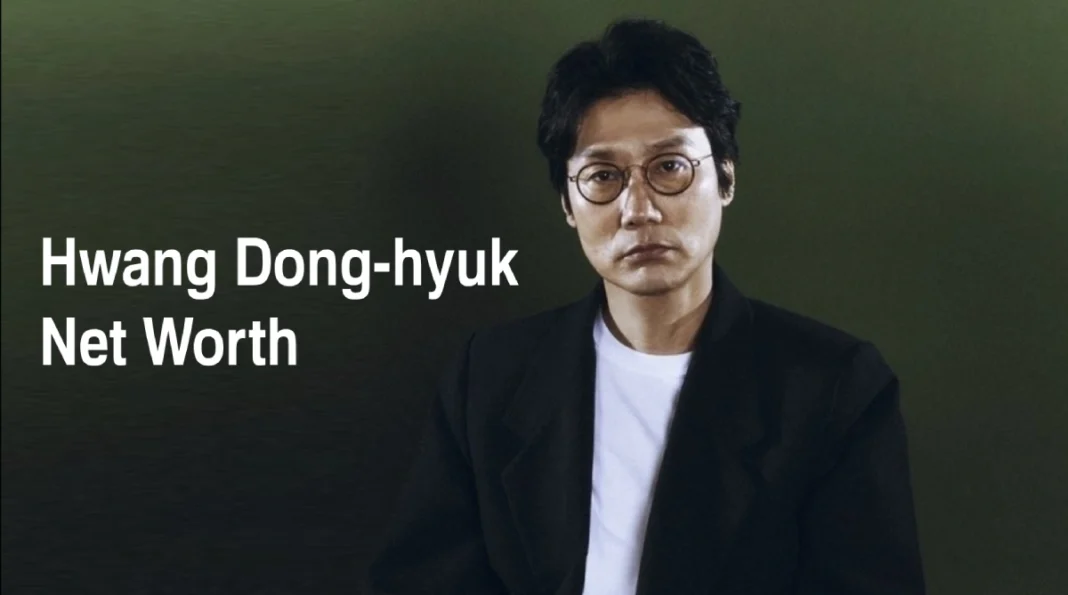
Hwang Dong-hyuk Net Worth in 2026
Hwang Dong-hyuk’s net worth in 2026 is estimated between $5 million and $10 million, with most credible estimates closer to the $5–7 million range.
That figure sounds low for someone whose creation generated nearly $1 billion for a streaming platform. But it reflects how he earns: through fixed directing and writing fees agreed before production starts, not through a share of what a show earns afterward.
South Korea’s top marginal tax rate sits at around 40%, which reduces take-home pay significantly. His lifestyle, personal investments, and non-public assets are not known, so any estimate carries some uncertainty.
Hwang himself gave the clearest summary of his financial position in a 2021 interview with The Guardian:
“I’m not that rich. But I do have enough. I have enough to put food on the table. And it’s not like Netflix is paying me a bonus. Netflix paid me according to the original contract.”
Net Worth Over Time
| Year | Estimated Net Worth | Key Reason |
| 2019 | ~$1 million | Pre-Squid Game; income from Korean film projects only |
| 2021 | ~$1–2 million | Squid Game Season 1 released; flat-fee contract, no residuals |
| 2022 | ~$2–4 million | Emmy win, increased directing fees, speaking engagements |
| 2024 | ~$3–6 million | Squid Game Season 2 released; renegotiated contract terms |
| 2026 | ~$5–10 million | Ongoing projects via Siren Pictures; Season 3 in progress |
Who Is Hwang Dong-hyuk?
Hwang Dong-hyuk was born on May 26, 1971, in Ssangmun-dong, Seoul, South Korea. He grew up reading manhwa and manga at comic book cafes — an early habit that would, decades later, directly shape the creative foundation of Squid Game.
He studied communications at Seoul National University and later earned an MFA from the University of Southern California (USC), making him one of the few South Korean directors of his generation to receive formal film training in the United States.
His directorial debut, My Father (2007), introduced his ability to blend personal storytelling with social commentary. What followed was a slow but deliberate career in Korean cinema — not a fast rise, but a series of critically respected films that built his reputation as a director willing to take on difficult subjects.
In 2022, he won the Emmy Award for Outstanding Directing for a Drama Series for the Squid Game episode ‘Red Light, Green Light,’ becoming the first South Korean to win in that category. That same year, he received South Korea’s Geumgwan (1st Class) Order of Cultural Merit — the country’s highest cultural honor.
Before Squid Game, he was respected in Korea. After it, he was known everywhere. The two things did not produce the same financial result.
Early Career and Financial Struggles
Hwang’s path was not smooth, and the financial pressure during the development of Squid Game was personal, not just professional.
During the global financial crisis of 2008–2009, Hwang found himself in a difficult position. His mother had retired from her job, a film he was developing could not secure financing, and he spent nearly a year unable to work. He later described spending time in comic book cafes in Seoul because he could not afford much else.
It was during this period that he first encountered the survival-game comics — Battle Royale and Liar Game — that would directly inspire Squid Game. He identified with characters who were desperate for money and willing to take extreme risks to get it.
“I related to the people in them, who were desperate for money and success. That was a low point in my life. If there was a survival game like this in reality, I wondered, would I join it to make money for my family?”
His breakthrough came with Silenced (2011), also released as The Crucible. The film was based on a true case of abuse at a school for hearing-impaired children in Gwangju, South Korea. It attracted approximately 4.7 million viewers in Korea and grossed around $31 million worldwide — and more significantly, it prompted real legal reform in South Korea, leading to stronger protections for disabled people. Miss Granny (2014) followed, selling approximately 8.65 million domestic tickets and grossing around $59 million globally.
These were genuine successes. But Korean film directors typically earn a fixed per-project fee, not a percentage of box office revenue. Each success built his profile. It did not build his savings.
Squid Game: The Breakthrough That Paid Netflix $900 Million
Hwang first developed the concept for Squid Game in 2009, but spent years unable to get it produced. Korean studios found the material too extreme and too difficult to market. He shelved the script and continued making other films through the 2010s.
The project only moved forward after Netflix launched its Asia content division in 2018. Kim Minyoung, one of Netflix Korea’s senior content officers, recognized Hwang’s earlier work and saw potential in the Squid Game script. Netflix formally announced the series in September 2019. The original film concept was expanded into a nine-episode series, with the final episode split into two parts because the material exceeded a single episode’s length.
It took 12 years to get Season 1 made. It took 12 days for it to become the most-watched Netflix series in history.
Season 1: Key Numbers
- Households that watched (first 4 weeks) ~142 million
- An estimated value of ~ $900 million was generated for Netflix
- New Netflix subscriptions attributed to ~4.4 million
- Production cost ~ $21.4 million (~£15.5M)
- Cost per episode (9 episodes) ~$2.38 million
- Hwang’s personal earnings: Fixed contractual fee only — amount undisclosed
How Much Did Hwang Dong-hyuk Earn from Squid Game?
This is the section most people searching his name actually want to read, and the answer is uncomfortable.
According to reporting by the Los Angeles Times, Hwang forfeited all intellectual property rights when he sold the series to Netflix and received no residuals from its performance. His contract included no clause that would pay him more if the show exceeded expectations. He received a fixed upfront fee — standard for Netflix’s international content deals at the time — and nothing beyond that.
In his own words to the BBC: ‘Even though the first series was such a huge global success, honestly I didn’t make much.’
Netflix, for its part, stated it ‘pays fair, highly competitive rates with K-Content creators and sets clear standards for Korean production partners.’ That may reflect industry standards. But it also shows exactly how those standards work against creators when a show massively outperforms what anyone expected.
The Writers Guild of America (WGA) responded publicly to coverage of Hwang’s compensation situation with a pointed statement: ‘The irony is not lost on us. Pay your writers.’
The broader issue is structural. Streaming platforms pay upfront for content, retain ownership, and do not share in the value created when something becomes a cultural phenomenon. Hwang’s Squid Game situation made this visible in a way few cases had before.
Where Hwang Dong-hyuk’s Income Actually Comes From
| Income Source | Estimated Share | Notes |
| Directing & screenwriting fees | ~70–80% | Core income from all projects, including Squid Game |
| Producer / Executive Producer fees | ~10–15% | Applies to Squid Game seasons |
| Copyright royalties (overseas) | ~5% | Modest; pooled and distributed among multiple directors |
| Endorsements / advisory work | ~0–5% | Includes creative consultancy; e.g., Louis Vuitton 2023 show |
A few clarifications on the above:
- The directing and writing fees are fixed per-project amounts negotiated before production. They do not scale with performance.
- The 2023 overseas royalties pooled approximately KRW 270 million (around $210,000 USD), distributed across 60–70 Korean directors — meaning Hwang’s individual share was modest.
- The Louis Vuitton creative consultancy reference relates to his involvement in the brand’s 2023 show, which was thematically inspired by Squid Game’s aesthetic. The financial terms were not disclosed.
- Season 2 and Season 3 fees are expected to be materially higher than Season 1, based on Hwang’s own public statements (see below).
Season 2, Season 3, and Renegotiated Terms
When Hwang confirmed he would return for Season 2, he was direct about his motivation. In a 2023 interview, he stated that money was the primary reason — and that the new deal would ‘help compensate me for the success of the first one too.’
This is the most significant shift in his financial story. A creator who once accepted a flat fee for what became the most-watched streaming show in history was now negotiating from a position of complete leverage. Netflix needed him specifically. There was no version of Squid Game Seasons 2 and 3 without Hwang Dong-hyuk.
The specific terms of Seasons 2 and 3 have not been made public. But it is reasonable to assume they include higher upfront fees and possibly some form of performance-linked compensation — a structural improvement over the Season 1 deal.
Season 2 was released in December 2024. Season 3 is in production.
Siren Pictures: His Production Company and What It Means
Hwang founded Siren Pictures as his production vehicle. The company is set to produce a live-action adaptation of the manga All of You for Netflix — a project that positions Hwang not just as a director-for-hire but as a content producer with backend interests.
The distinction matters. As a hired director under a flat-fee contract, Hwang gets paid once, and that is it. As a producer through his own company, he can structure deals differently — including profit participation, IP co-ownership, and ongoing royalty rights.
Siren Pictures is the clearest signal that Hwang understands the structural problem with his Season 1 deal and is actively building around it.
Awards and Recognition
Awards rarely convert directly into money, but they change what a creator can demand in future negotiations.
- 2022 Emmy Award for Outstanding Directing for a Drama Series (Squid Game, ‘Red Light, Green Light’) — first South Korean to win in this category
- 2022 Geumgwan (1st Class) Order of Cultural Merit — South Korea’s highest cultural honor
- Grand Prize at the Blue Dragon Film Awards
- Best Director at the Asian Film Awards for Squid Game
The practical consequence of these awards is straightforward: a director who once spent 12 years unable to get a script greenlit can now walk into any room in Hollywood. That shift in position has real financial value — even if it does not appear in any net worth estimate.
Full Filmography and Revenue
| Year | Project | Role | Revenue / Value |
| 2007 | My Father | Writer / Director | $6.06M (Korea) |
| 2011 | Silenced (The Crucible) | Writer / Director | $31M (Global) |
| 2014 | Miss Granny | Writer / Director | $59M (Global) |
| 2017 | The Fortress | Writer / Director | $28.6M (Global) |
| 2020 | Collectors | Screenwriter | $12.6M (Global) |
| 2021 | Squid Game — Season 1 | Creator / Writer / Director / EP | ~$900M value to Netflix |
| 2024 | Squid Game — Season 2 | Writer / Director / EP | Not publicly disclosed |
Future Projects and Where His Net Worth Goes From Here
Three things are working in Hwang’s favor going forward:
- Squid Game Season 3 fees are almost certainly higher than Season 1
- Siren Pictures gives him a production structure that allows for IP ownership and backend deals
- His global profile means he can attract non-Netflix projects on better terms than before
A growth from $5–7 million today to $15–20 million within five years is plausible, though not supported by any disclosed contract figures. It depends on the Season 3 deal structure and whether Siren Pictures successfully develops and sells additional IP.
What is clear: the structural problem that capped his Squid Game Season 1 earnings — flat fee, no IP ownership, no residuals — is one he is actively working around. His production company is the most visible sign of that.
The Bottom Line
Hwang Dong-hyuk created the most-watched show in Netflix history. He carried the concept for over a decade before it reached screens. He wrote, directed, and produced nine episodes largely by himself — a process he described as physically, mentally, and emotionally draining, one that cost him six teeth from stress.
When it generated close to $1 billion in value for the platform, his contract meant he saw a fraction of that. His estimated net worth of $5–10 million reflects a successful career by most standards — but measured against Squid Game’s scale, it is a quiet argument for why creator compensation in the streaming model is broken.
His position today is nothing like it was in 2019. He has a production company, renegotiated contracts, global recognition, and projects in development under better terms. The financial story from this point forward looks materially different from the one that came before it.