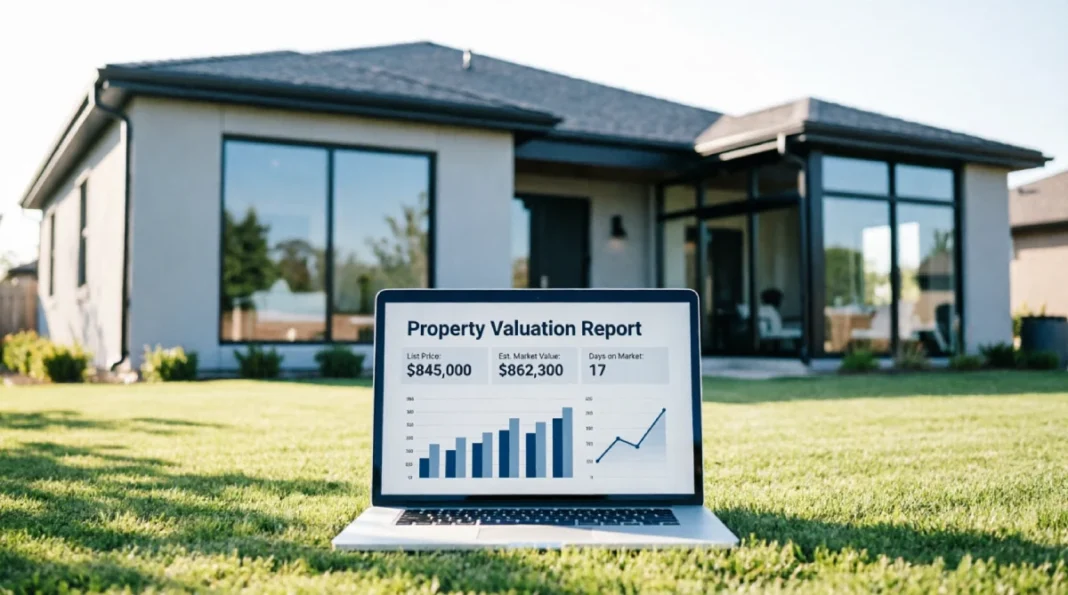
You type your address into a home value estimator, and within seconds, a number appears — say, $485,000. Your neighbor just sold for $510,000. The house two streets over is listed at $460,000. Now you’re second-guessing everything.
This is the reality for most homeowners trying to price a property. Automated tools give you a starting point, but they don’t tell you why your number landed where it did, which factors carry the most weight, or what you can actually do to move the needle before you list.
This guide breaks that down clearly — for sellers who want to make informed decisions, not just accept a number.
What Is a Home Value Estimator?
A home value estimator (also called an Automated Valuation Model, or AVM) is a software tool that uses public data to calculate what your home is likely worth at a given point in time. Tools like Zillow’s Zestimate, Redfin Estimate, and similar platforms pull from tax records, MLS listings, prior sale prices, and property characteristics to produce an instant figure.
They’re useful for getting a rough sense of market position. They are not a substitute for a professional appraisal — and understanding why requires understanding what they can and can’t see.
How AVMs Calculate Your Home’s Value
AVMs work by pulling comparable sales — properties similar in size, type, and location that sold recently — and applying statistical weighting to arrive at a price. The more sales data available in your area, the more accurate the estimate tends to be.
Key data inputs include:
- Last sale price of your home and nearby properties
- Square footage and lot size from public records
- Property tax assessments
- Days on market and list-to-sale price ratios in your zip code
- Basic property characteristics like bedroom and bathroom count
Why Online Estimates Are Often Off
AVMs have a known weakness: they can’t see inside your home. They don’t know your kitchen was gut-renovated last year, that the roof is 25 years old, or that the basement floods seasonally. They also struggle in markets with few comparable sales — rural areas, unique properties, or neighborhoods where most owners don’t move.
Zillow’s own data shows a national median error rate around 2–3% for on-market homes, but that figure jumps to 6–7% for off-market properties. In low-volume markets, errors exceeding 10% are not unusual.
The tool gives you a range, not a certainty. Treat it that way.
The Factors That Move Your Home Value the Most
Not all pricing factors carry equal weight. Here’s how they actually stack up.
Location and Neighborhood Comparables
Location is not just a real estate cliché — it genuinely accounts for the largest single portion of your home’s value. Within that, the most direct driver is what comparable homes in your immediate area have recently sold for. Appraisers call these “comps,” and they form the foundation of any serious valuation.
Factors embedded in location include school district ratings, proximity to employment centers, walkability scores, crime rates, and access to transit. These aren’t things you can change. They’re priced into your property whether you like it or not.
A 1,500 sq ft home in a high-demand urban neighborhood can legitimately be worth twice what an identical structure is worth in a declining suburb 20 miles away. Location determines the ceiling.
Square Footage and Usable Space
Above-grade living space (finished floors above ground level) carries the most valuation weight per square foot. Basements, even finished ones, are typically valued at a lower rate. Garages add value, but not at the same rate as living space.
Appraisers calculate cost per square foot by dividing recent comparable sale prices by above-grade square footage. If comps in your area are selling at $220/sq ft and your home is 1,800 sq ft, the math sets a baseline around $396,000 before adjustments.
Raw size matters, but so does how that space is laid out. Open floor plans, functional room flow, and adequate storage all affect buyer perception — and therefore offer prices.
Property Condition and Age
A home’s physical condition directly affects both appraised value and buyer’s willingness to pay the asking price. Appraisers make condition adjustments — typically ranging from $5,000 to $30,000+, depending on the market — based on the property’s overall state relative to comps.
Key condition factors:
- Roof age and condition (replacement costs $8,000–$20,000+, depending on size and material)
- HVAC systems (age, efficiency, service history)
- Plumbing and electrical (updated vs. outdated)
- Foundation integrity
- Windows and insulation
A home built in 1975 with all original systems will appraise and sell lower than a comparable home of the same age that has been systematically maintained — even if the cosmetics look identical.
Recent Renovations and Upgrades
Renovations add value, but not dollar-for-dollar. The return on investment varies significantly by project type:
| Renovation | Avg. Cost Recouped at Sale |
|---|---|
| Minor kitchen remodel | 70–80% |
| Bathroom addition | 50–65% |
| New garage door | 85–95% |
| Major kitchen overhaul | 50–60% |
| Adding a swimming pool | 30–50% (market-dependent) |
| Fresh exterior paint | 50–100%+ |
The pattern: improvements that affect curb appeal and first impressions tend to return more than high-cost interior projects that buyers undervalue relative to what you spent.
Factors That Have Less Impact Than You Think
Many sellers overestimate the return on:
- High-end appliances — Buyers rarely pay much more for a $5,000 refrigerator
- Landscaping beyond basic maintenance — Professional hardscaping rarely returns full cost
- Room-specific cosmetic upgrades — New light fixtures and fresh paint help, but they don’t move appraisals meaningfully
- Personalized design choices — Bold tile selections, custom built-ins, or unusual layouts can actually reduce the buyer pool rather than increasing value
Cosmetic improvements influence buyer interest and speed of sale. They rarely produce large appraisal adjustments.
How a Formal Property Appraisal Differs
A property appraisal is a formal valuation conducted by a licensed appraiser — typically required by lenders before approving a mortgage. It costs $300–$600 for a standard residential appraisal and takes 1–2 weeks to complete.
The key differences from an AVM:
- Physical inspection included — The appraiser walks the property and notes condition, quality, and features that data can’t capture
- Appraiser-selected comps — A licensed professional selects comparable sales using judgment, not just an algorithm
- Defensible for lending purposes — Lenders require formal appraisals; they will not lend against a Zestimate
- Legal standing — Formal appraisals carry weight in disputes, divorces, and estate settlements
If you’re pricing a home for sale, a pre-listing appraisal ($300–$500) can be a worthwhile investment. It removes guesswork and gives you a defensible number when buyers push back.
What Sellers Can Actually Control Before Listing
Given the above, here’s where your effort is best spent:
High-impact, lower cost:
- Deep cleaning and decluttering (affects photography and first impressions significantly)
- Addressing deferred maintenance — fix what’s visibly broken before an appraiser or buyer spots it
- Fresh neutral interior paint
- Replacing dated light fixtures
- Landscaping, cleanup, and curb appeal
Worth considering if budget allows:
- Minor kitchen updates (hardware, cabinet refacing, countertops if badly dated)
- Bathroom refresh (re-grouting, fixture replacement)
- Replacing carpet in heavily worn areas
Usually not worth the spend before sale:
- Full kitchen or bathroom gut renovations
- Room additions or structural changes
- Swimming pool installation
The goal before listing is to present the home at its best condition for its age and price point — not to bring it to luxury spec if the neighborhood doesn’t support those prices.
Common Mistakes That Skew Your Estimate
- Comparing the list prices instead of the sold prices. What a home is listed for is aspirational. What it sold for is reality. AVMs and appraisers use sold prices; you should too.
- Ignoring market timing. A home value estimator reflects current market conditions. In a rapidly cooling market, an estimate from three months ago may already be stale.
- Over-relying on one tool. Zillow, Redfin, and your county tax assessment will often produce three different numbers. None is definitively correct. Use them as a range, not a fixed value.
- Treating all square footage equally. A finished basement is worth less per square foot than above-grade living space. A converted garage may not count as a living area at all, depending on how the permit work was handled.
- Not accounting for location-specific adjustments. Being on a busy road, backing up to commercial property, or sitting at the end of a flight path affects value even if comps nearby look similar on paper.
When to Trust the Tool — and When to Call a Professional
Use a home value estimator for:
- Early-stage research before deciding to sell
- Tracking your home’s value over time
- Comparing your neighborhood to others quickly
- Getting a ballpark before talking to an agent
Call a licensed appraiser or experienced real estate agent when:
- You’re actively preparing to list
- The market in your area has shifted significantly in the past 6 months
- Your property has unique features (unusual size, location, condition) that an algorithm can’t fairly weigh
- You need a number that will hold up in a negotiation or legal context
The tool narrows the field. A professional closes it.
FAQ
Q. How accurate are home value estimators?
For on-market homes in active markets, error rates typically run 2–4%. For off-market or unique properties, errors of 6–10%+ are common. Use them as a range, not a precise figure.
Q. Does renovating a bathroom increase home value?
It can, but returns vary. A mid-range bathroom renovation typically returns 50–65% of its sale cost. Focus on condition and cleanliness over luxury finishes unless your market and price point support it.
Q. What’s the difference between market value and appraised value?
Market value is what a buyer will actually pay. Appraised value is a licensed professional’s estimate of what the home is worth based on comparable sales. They’re usually close, but they can diverge — especially in fast-moving markets where sale prices have outpaced recent comps.
Q. How often should I check my home’s estimated value?
Once or twice a year is reasonable for tracking purposes. If you’re actively planning to sell, check it monthly in the 6 months before your target listing date to track market movement.
Q. Can I dispute a low appraisal?
Yes. You can request a reconsideration of value through the lender, providing specific comparable sales you believe the appraiser missed. Success depends on the quality of your evidence.