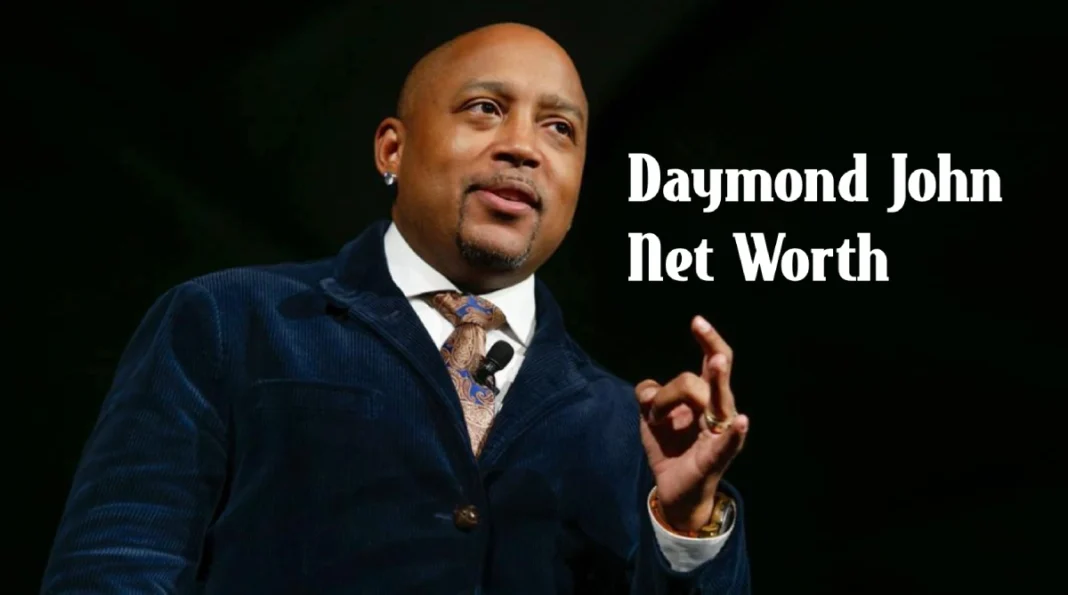
Daymond John’s net worth in 2026 is estimated at $350 million. He built that fortune across three decades — starting with a clothing line sewn in his mother’s Queens home, scaling it into a global brand worth over $6 billion in lifetime sales, then reinventing himself as one of the most active investors on ABC’s Shark Tank.
His path is worth studying not because it’s inspiring (though it is), but because it’s structurally unusual. Most wealthy entrepreneurs get rich once, from one thing. Daymond got rich three times — from FUBU, from Shark Tank deals, and from brand consulting — and each phase funded the next.
Quick Facts
| Detail | Info |
|---|---|
| Net Worth (2026) | $350 million |
| Born | February 23, 1969, Brooklyn, NY |
| Raised | Hollis, Queens, NY |
| Main Wealth Sources | FUBU, Bombas stake, The Shark Group, Shark Tank salary |
| Shark Tank Since | 2009 |
| FUBU Founded | 1992 |
Where Daymond John’s $350 Million Comes From
1. FUBU — The Foundation
FUBU (For Us, By Us) launched in 1992 when Daymond and three friends — Carlton Brown, J. Alexander Martin, and Keith Perrin — saw a clear gap: hip-hop was driving fashion culture, but no major brand was actually built by or for that community.
They started by making wool ski hats in Daymond’s mother’s home in Hollis, Queens. His mother, Margot, taught him to sew and later mortgaged the family home for $100,000 to fund early operations. The house itself became a makeshift factory.
Their first major sales day: 90 hats sold on Queens streets at $10 each — $800 in a single afternoon.
The brand’s first real breakout came when LL Cool J, a friend from the neighborhood, wore a FUBU hat in a Gap commercial and a FUBU shirt in promotional campaigns. That placement gave the brand national reach. FUBU then secured product placement in over 30 music videos, locking in credibility within hip-hop.
Scaling production required capital they didn’t have. After being turned down by 27 banks, the team spent their remaining money on a single ad in the New York Times. That gamble connected them with Samsung Textiles, which provided the manufacturing partnership needed to fulfill $300,000 in pending orders.
By 1998, FUBU was generating $350 million in annual revenue. To date, the brand has produced over $6 billion in global sales, according to Forbes.
US sales declined in the early 2000s as fashion trends shifted, but FUBU found strong international markets — particularly South Korea and Japan — through licensing deals. In recent years, Daymond has worked on reviving the brand domestically, including a partnership with Urban Outfitters.
2. Bombas — His Most Valuable Investment
Daymond’s stake in Bombas is, by a significant margin, his most financially impactful Shark Tank deal.
In 2014, founders David Heath and Randy Goldberg pitched the sock company when it had just $45,000 in sales. The model: premium, seamless socks with a one-for-one donation to homeless shelters. Daymond was the only Shark interested. He invested $200,000 for a 17.5% stake.
The numbers since then:
- 2015: $4.6 million in revenue
- 2017: $46.6 million
- 2018: ~$100 million
- 2024: Crossed $1 billion in lifetime sales, the highest of any Shark Tank company in the show’s history
- 2025 projection: ~$500 million in annual revenue, per Bloomberg
Even at a conservative 1x revenue valuation, Daymond’s 17.5% stake is worth approximately $85–100 million. That single deal accounts for roughly a quarter to a third of his entire net worth.
3. Other Shark Tank Investments
Beyond Bombas, Daymond has invested over $8.5 million of his own money across Shark Tank deals. A few notable ones:
Bubba’s-Q Boneless Ribs — Al “Bubba” Baker, a former NFL player, pitched his de-boned baby back rib concept. Daymond invested $300,000 for 30%. After the deal, Baker’s annual revenue jumped from $154,000 to $16 million in three years. The relationship later deteriorated into a legal dispute (covered below).
Sun-Staches — Novelty sunglasses. Daymond invested $300,000 for 20%. The company went on to generate millions in sales.
Moki Doorstep — A simple step that attaches to a car’s door latch, allowing roof-rack access. Daymond invested $450,000 for 20%. The company was acquired by a larger firm shortly after the deal closed.
4. Shark Tank Salary
According to Variety, the Sharks earn approximately $50,000 per episode. With a typical season running 24–26 episodes, that adds up to roughly $1.2–1.3 million per season from appearance fees alone — before any investment returns.
Daymond has appeared on the show since Season 1 in 2009, meaning his cumulative Shark Tank earnings from salary alone are in the tens of millions of dollars.
5. The Shark Group
After Shark Tank raised his profile, Daymond founded The Shark Group, a brand consulting and marketing firm. It works with both Fortune 500 companies and smaller businesses on brand strategy, licensing, influencer marketing, and product launches.
Clients have included Shopify, Chase, Pepsi, and Miller Lite. This firm generates steady consulting income and reinforces Daymond’s positioning as a brand strategist rather than just a TV personality.
6. Books and Speaking
Daymond has written five books, several of which hit the New York Times and Wall Street Journal bestseller lists:
- Display of Power
- The Brand Within
- The Power of Broke — received an NAACP Image Award for Outstanding Instructional Literary Work
- Rise & Grind
- Little Daymond Learns to Earn
He charges between $25,000 and $50,000 per speaking engagement. He has also built out digital education through programs like Daymond on Demand and Next Level Success, which teach business and branding to aspiring entrepreneurs.
In 2021, he signed a deal with Audible, expanding into audio content.
7. Real Estate
Daymond owns a 5,000-square-foot home in New York City and a property in Florida. He has spoken publicly about prioritizing experiences over accumulation, particularly since his 2017 cancer diagnosis.
Daymond John vs. Other Shark Tank Investors
| Shark | Estimated Net Worth |
|---|---|
| Mark Cuban | ~$6 billion |
| Kevin O’Leary | ~$400 million |
| Daymond John | ~$350 million |
| Robert Herjavec | ~$200 million |
| Lori Greiner | ~$150 million |
| Barbara Corcoran | ~$100 million |
Daymond is not the wealthiest Shark, but his starting point was lower than all of them. Cuban sold Broadcast.com for $5.7 billion. O’Leary sold SoftKey to Mattel. Daymond started with hats on a street corner.
Legal Disputes
The Bubba’s-Q Case (2023)
After Daymond’s investment in Bubba’s-Q, Al Baker and his family later accused Daymond of taking more than his agreed-upon share of profits. They broke a 2019 settlement agreement in May 2023 by making public statements against him, including a Los Angeles Times article.
A federal judge ruled in Daymond’s favor. He was granted a permanent injunction requiring the removal of defamatory statements and barring the Bakers from making further comments against him.
$30 Million Lawsuit (April 2026)
In April 2026, Daymond filed a $30 million lawsuit against former business partners related to COVID-19 personal protective equipment deals. He alleged that he helped secure contracts worth approximately $150 million but was cut out of agreed-upon commissions. The case is ongoing.
Recognition and Public Role
- Appointed by President Barack Obama as a Presidential Ambassador for Global Entrepreneurship, focused on underserved communities
- Named NAACP Entrepreneur of the Year and Ernst & Young New York Entrepreneur of the Year
- FUBU is featured in the Smithsonian’s National Museum of African American History and Culture
- Shared multiple Primetime Emmy Awards with the Shark Tank cast for Outstanding Structured Reality Program
- Founder of Black Entrepreneurs Day, an annual event supporting Black-owned businesses
Personal Life
Daymond has two daughters, Destiny and Yasmeen, from his first marriage. In 2018, he married Heather Taras. They have a daughter together named Minka Jagger John.
He has been open about his dyslexia throughout his career, crediting it with pushing him to develop alternative problem-solving approaches. In 2017, he was diagnosed with stage II thyroid cancer. The tumor was surgically removed, and he has been cancer-free since. He now advocates for early detection and preventive health screenings.
How Daymond’s Net Worth Has Grown Over Time
| Period | Key Events | Estimated Net Worth |
|---|---|---|
| 1992–1998 | Built FUBU to $350M in annual sales | Low-to-mid millions |
| 1999–2008 | US sales decline; FUBU licensing internationally | Tens of millions |
| 2009–2014 | Joins Shark Tank; early investments including Bombas | ~$100M |
| 2015–2020 | Bombas scales; Shark Group grows; books published | ~$250M |
| 2021–2026 | Bombas crosses $1B lifetime sales; consulting expands | ~$350M |
FAQs
Is Daymond John a billionaire?
No. His net worth is estimated at $350 million as of 2026. He has not reached billionaire status, though his Bombas stake continues to grow in value.
Who is the richest Shark on Shark Tank?
Mark Cuban, with an estimated net worth of around $6 billion. Daymond ranks third among the main cast.
How much did Daymond make from Bombas?
He invested $200,000 in 2014 for a 17.5% stake. Bombas crossed $1 billion in lifetime sales in 2024 and is projecting $500 million in annual revenue for 2025. His stake is estimated to be worth approximately $85–100 million, making it by far his most profitable Shark Tank deal.
How much does Daymond earn per episode of Shark Tank?
Variety reported the Sharks earn approximately $50,000 per episode.
Is FUBU still in business?
Yes. FUBU is no longer at its 1990s peak in the US, but continues to generate income through licensing deals and international markets. Daymond has been actively working to revive the brand domestically, including partnerships with retailers like Urban Outfitters. FUBU is recognized by the Smithsonian’s National Museum of African American History and Culture as a culturally significant brand.
What is The Shark Group?
It is Daymond’s brand consulting and marketing firm, working with companies ranging from startups to Fortune 500 clients such as Chase, Shopify, and Miller Lite on strategy, licensing, and marketing.